












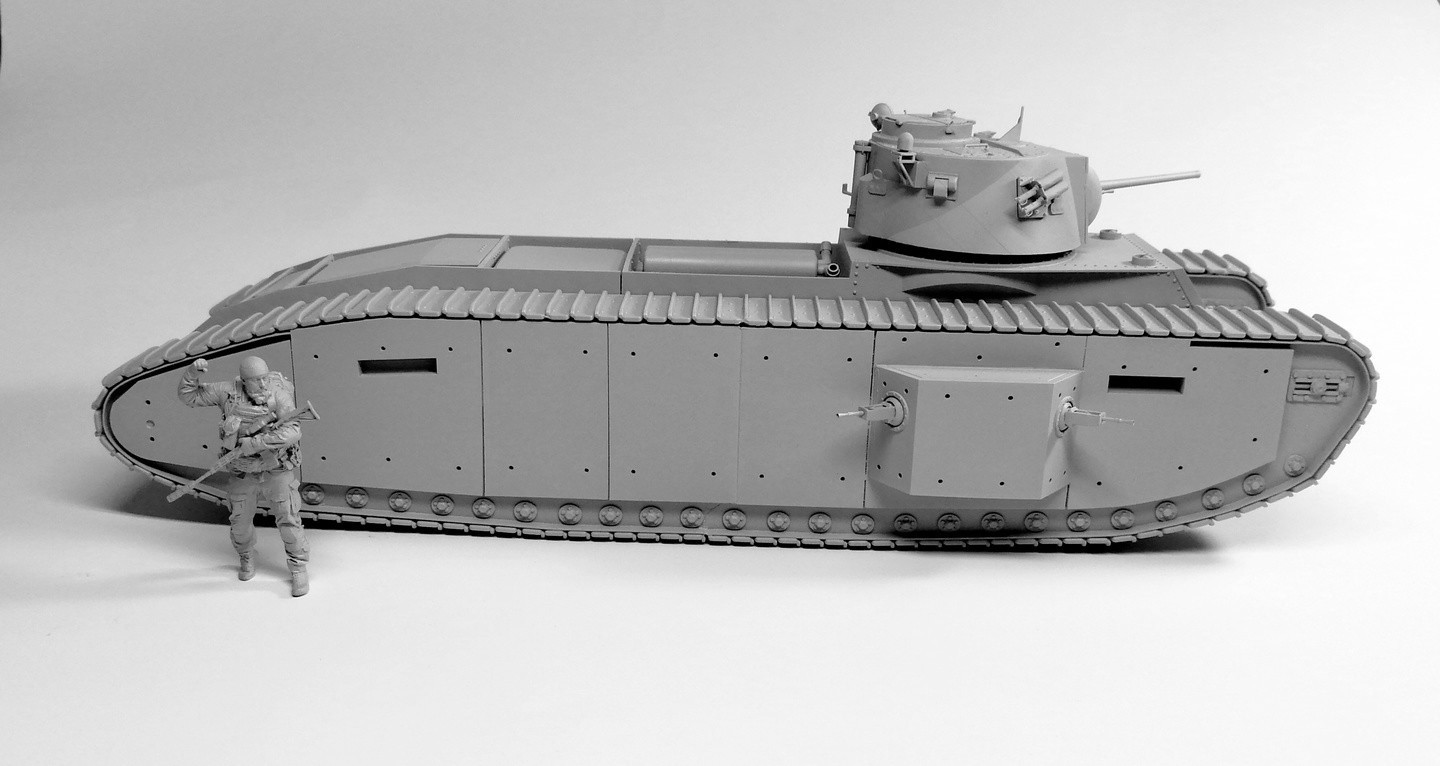
V&K is a Czech company that offers 3D-printed kits of unusual tanks. For this review, we have the TOG I, a vehicle which, despite its First World War appearance, was designed in 1939 and of which a prototype was eventually built. It was a very large tank and, as such, the 1/35 scale model is equally large, measuring some 28cm in length.
The model came in a standard cardboard box; there is no box art. Although it’s nice to see an attractive box design, once the model is finished the box almost always ends up in the bin, so it’s not a great loss either.
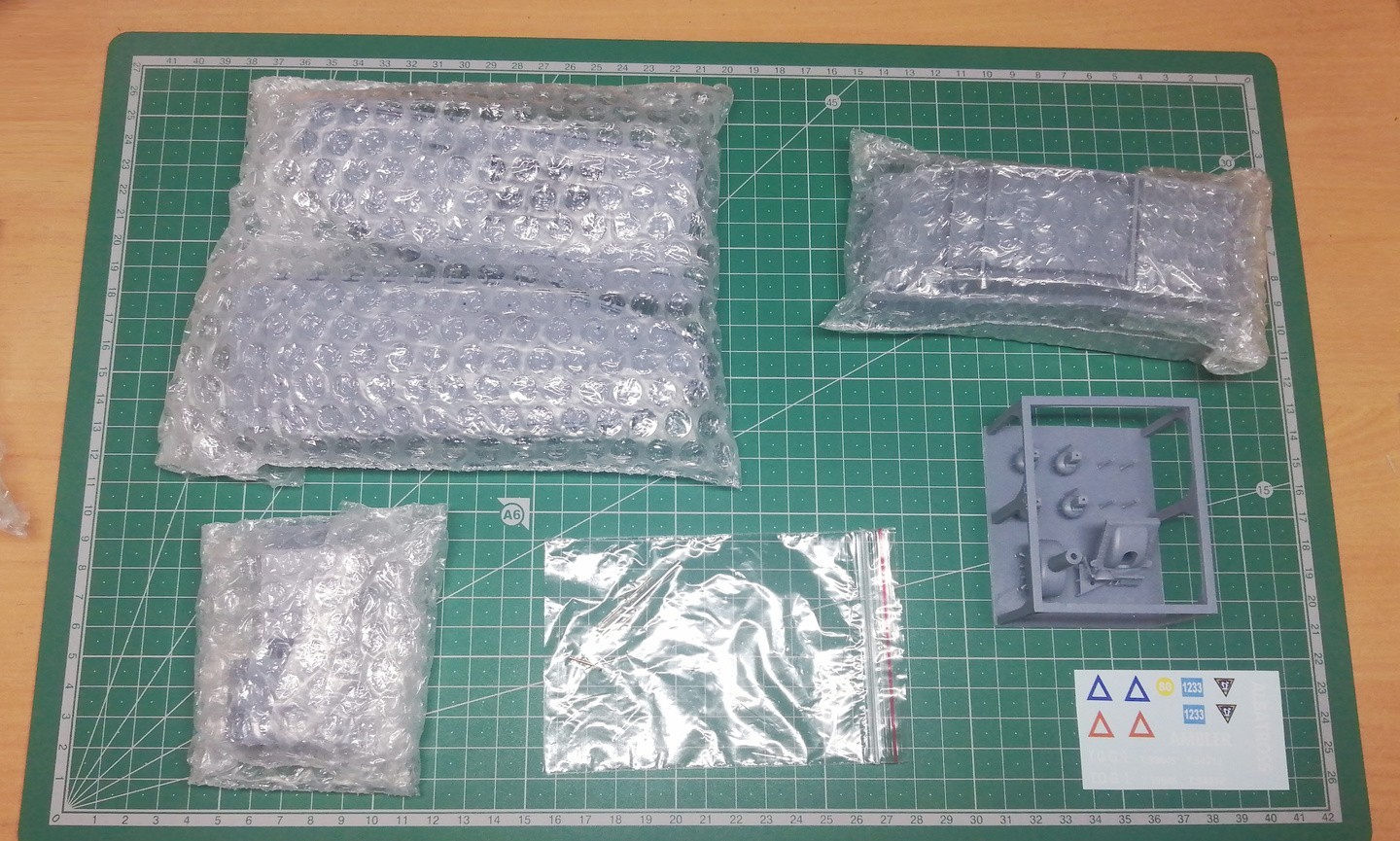
The kit is a 3D-printed model comprising just over twenty parts, many of which are quite large.
The print quality is very good; there are only subtle print lines on some sides.
The larger parts come clean without supports , while the smaller ones come in two cages.
Except for the hull gun, my edition came with nice metal barrels for the main turret gun,its coaxial machine gun and the side Besa machine guns. The turret main gun is made of aluminium, while the Besa machine guns are in brass. The 3D printed versions looked fine and straight.
A small sheet of decals is also included.
The instructions consist of two A4 pages printed in colour; they are simple but sufficient, featuring a historical introduction, a parts list and the assembly instructions themselves. The diagrams are good sized and leave no doubt as to where the parts should be placed. However, there are no painting guidelines or instructions on where the decals should go.

Assembly is very simple and straightforward. The kit is essentially divided into the front and rear halves of the hull, the front and rear halves of each side and the turret. You do not have to spend hours assembling tracks link by link, as they come pre-assembled along the entire tank side in just two parts per side. I will not complain.
The larger parts are virtually clean, with just a few traces of supports on the joining surfaces which should be sanded down to ensure a good fit; on some of their faces, there are very subtle mould lines. Not easy to see with a naked eye but may be noticeable when giving a wash so better be sanded. For some reason, they are more prominent on the front hull.
Removing the supports from the smaller parts was easy and quick as there are only a few of them per part.
The fit is quite good; you barely need to sand the parts a little to get them to fit in place. The join between the two side halves leaves a gap that is best filled with putty, as are the protrusions where the machine guns are housed. Perhaps by sanding a little more in certain areas, the fit of these parts could be improved, eliminating the need for putty.
Both the turret and the two main guns, as well as the four side machine guns, can be positioned freely.
For large parts like these, I prefer using epoxy glue, which is stronger but takes longer to dry, so in a couple of afternoons I was able to have the whole model assembled and ready for painting. Using cyanoacrylate makes the process even quicker.
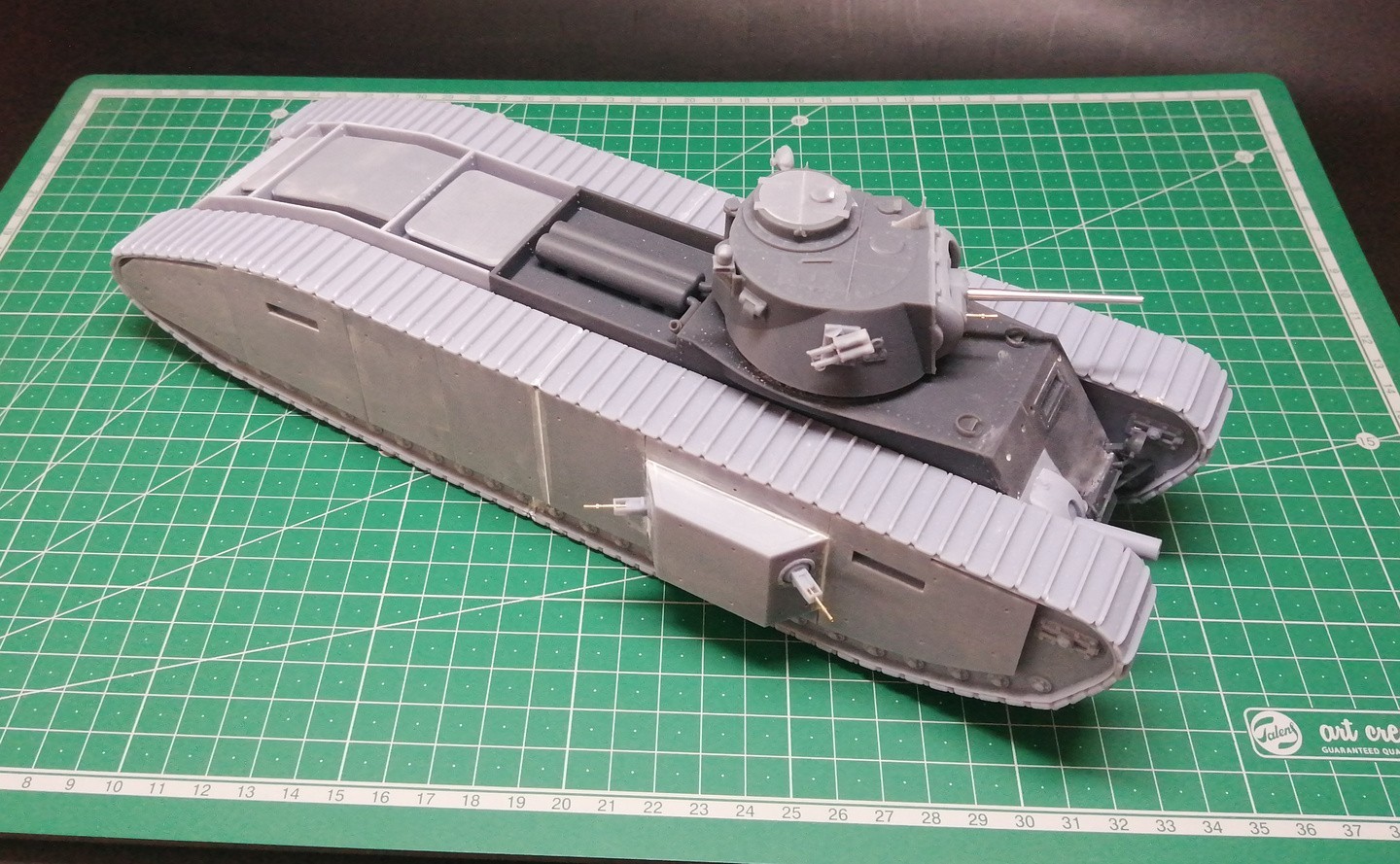
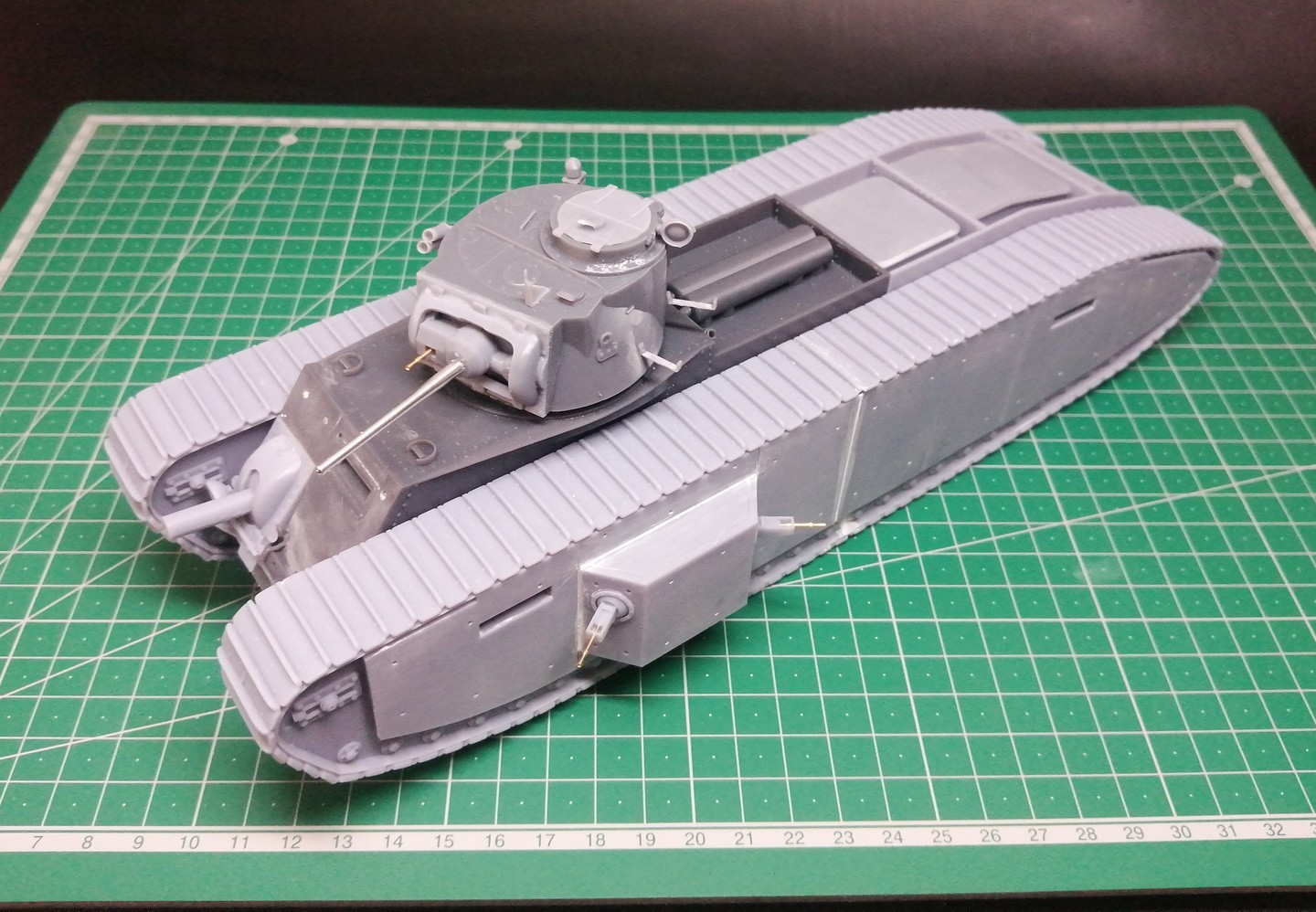
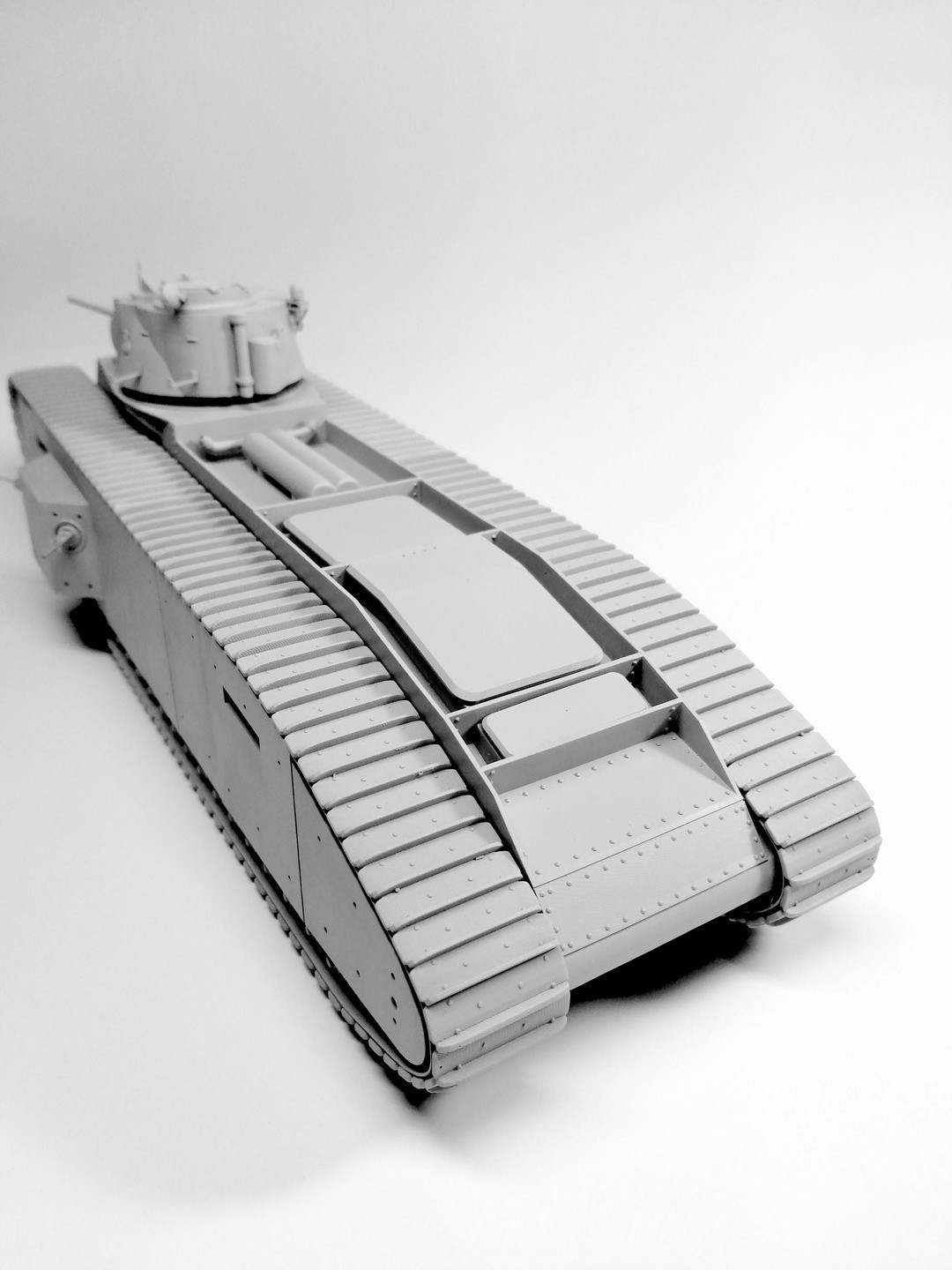
And this is the finished built model with primer.
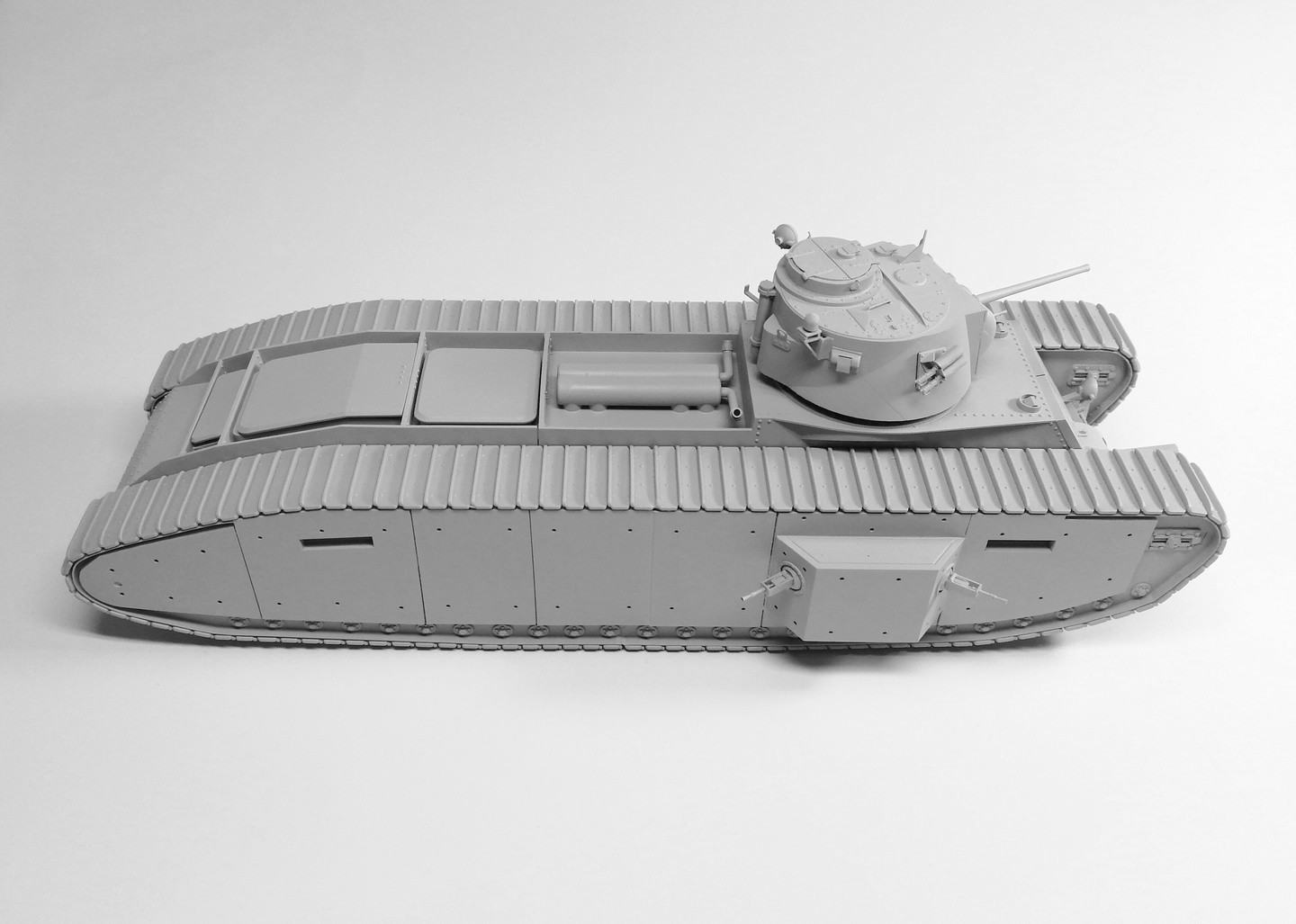
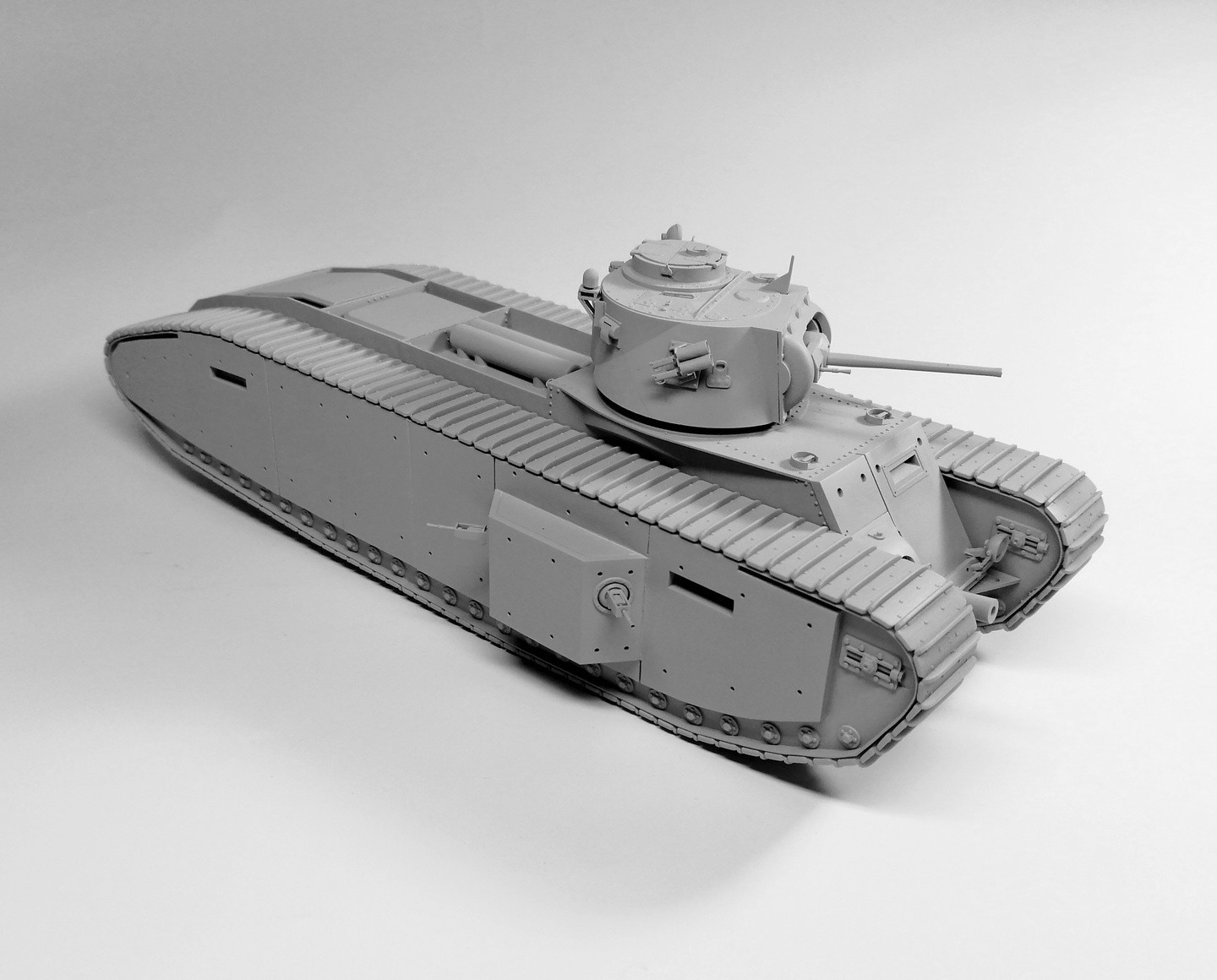
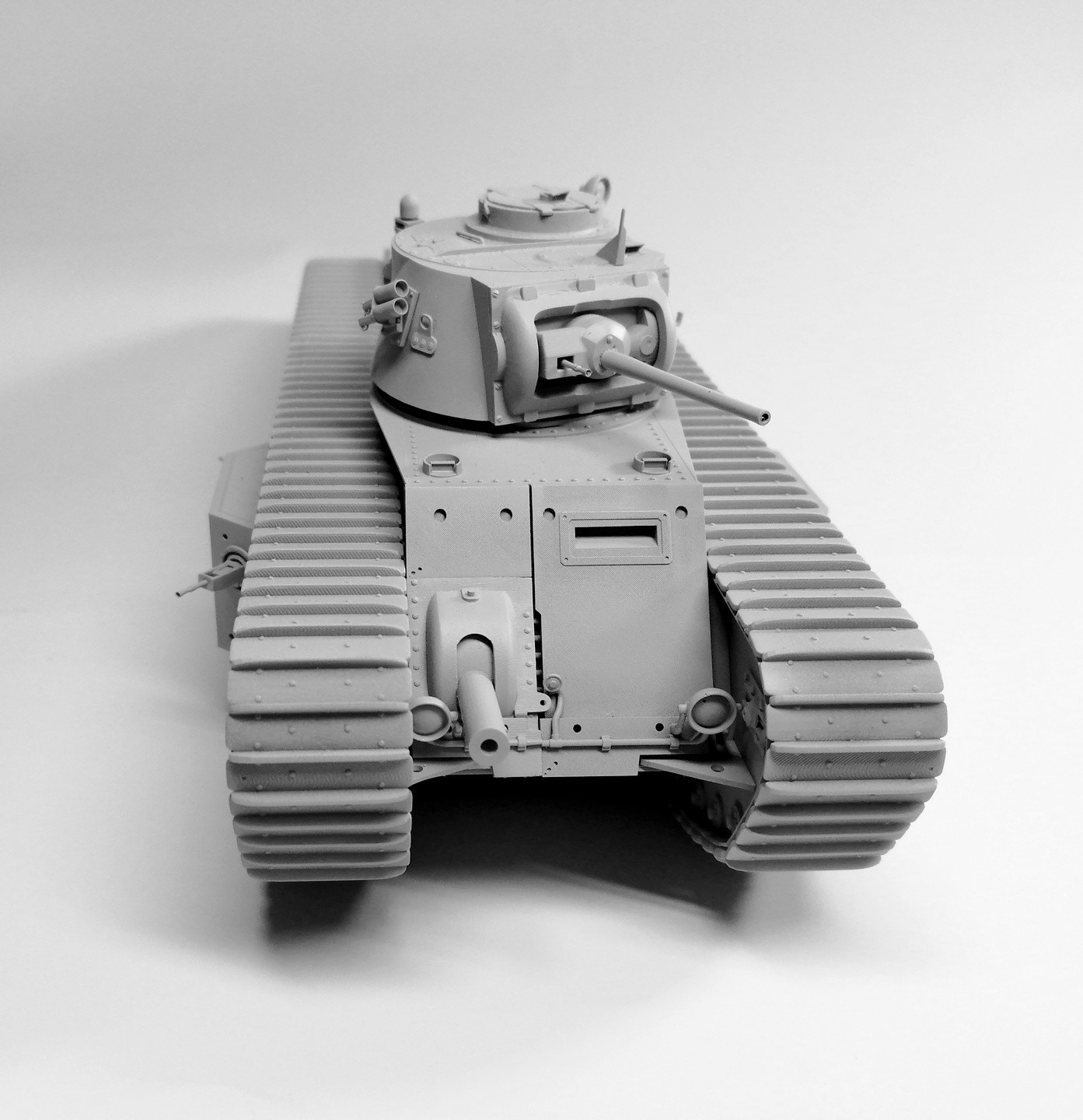
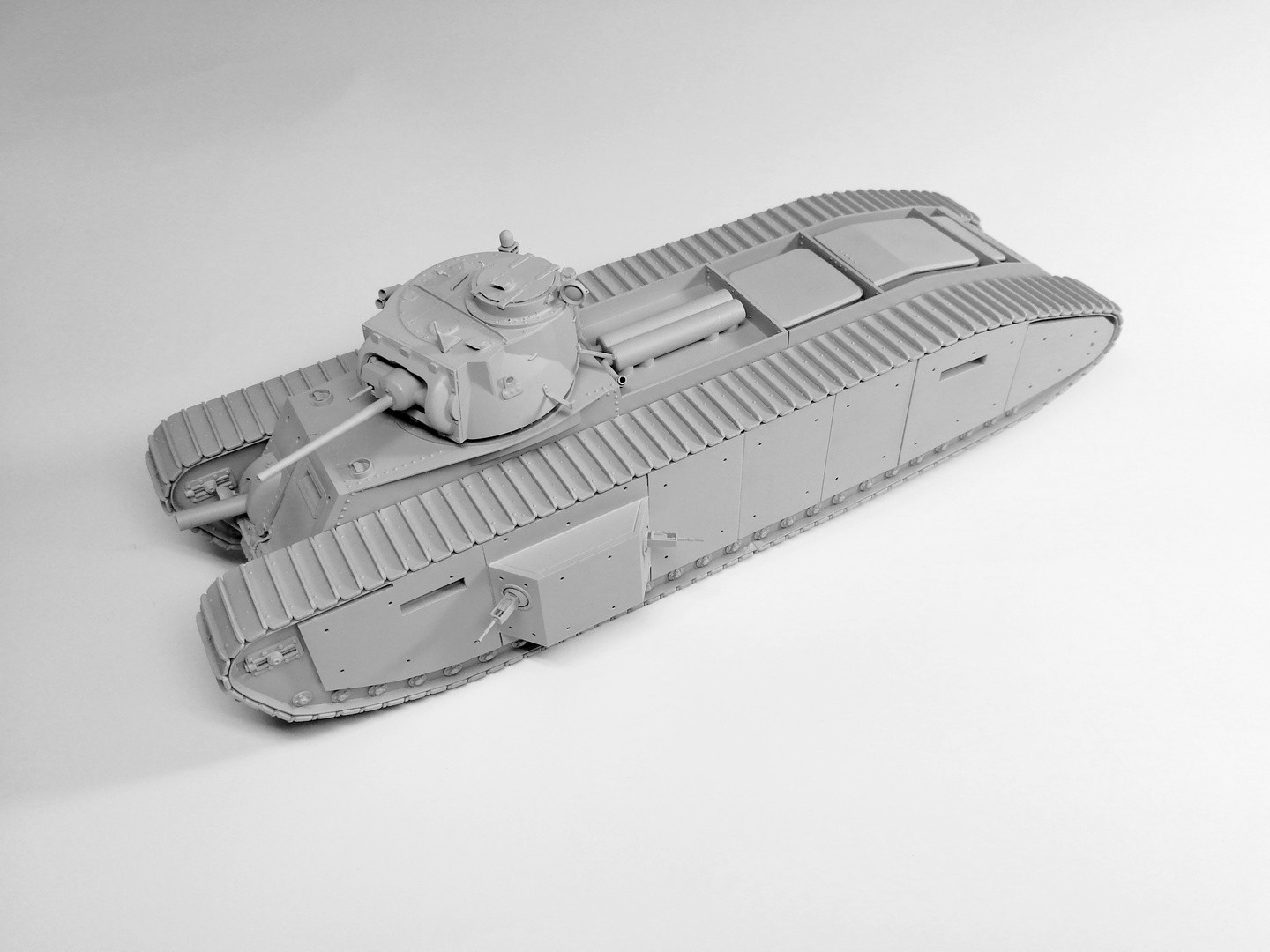
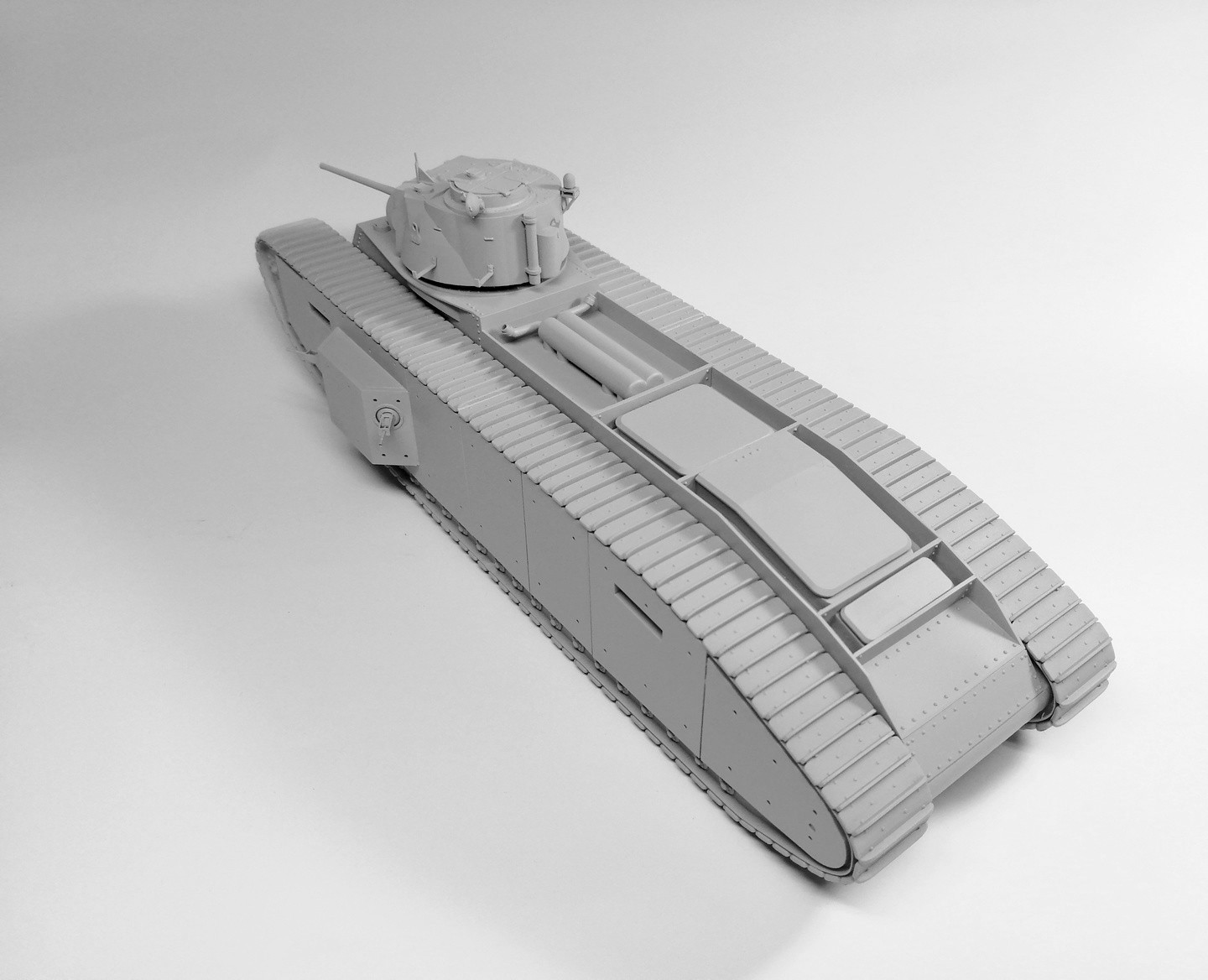
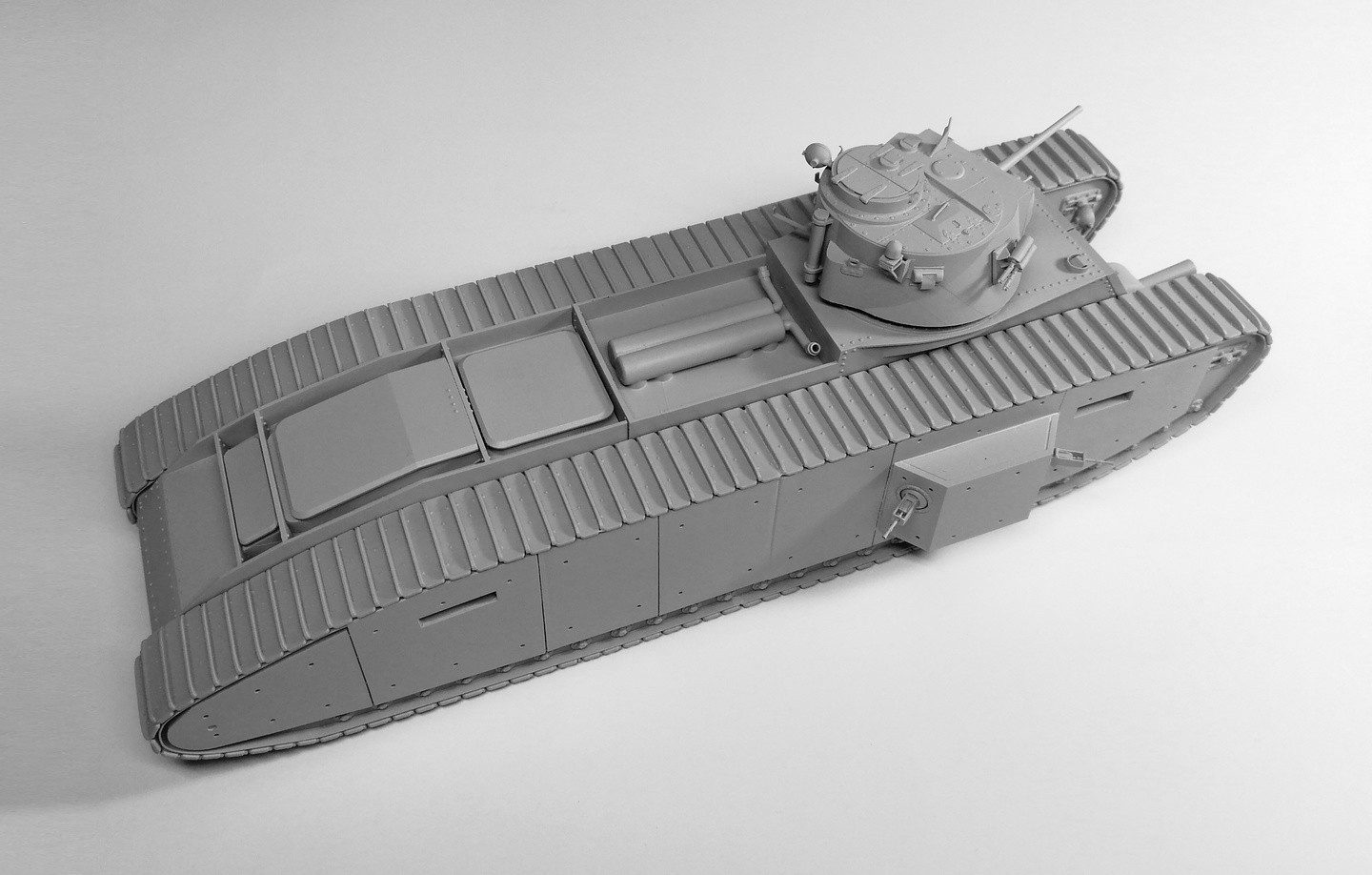
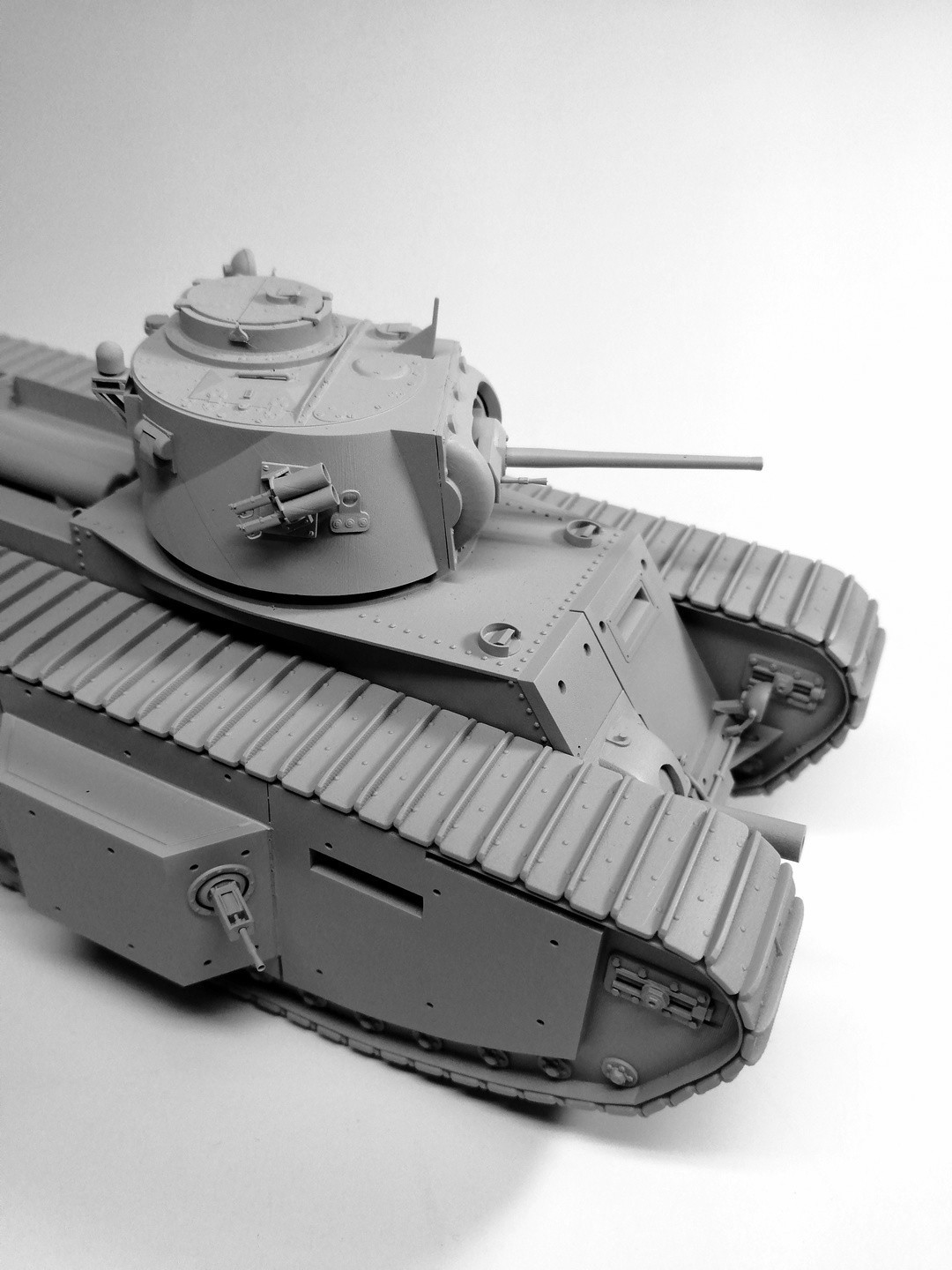
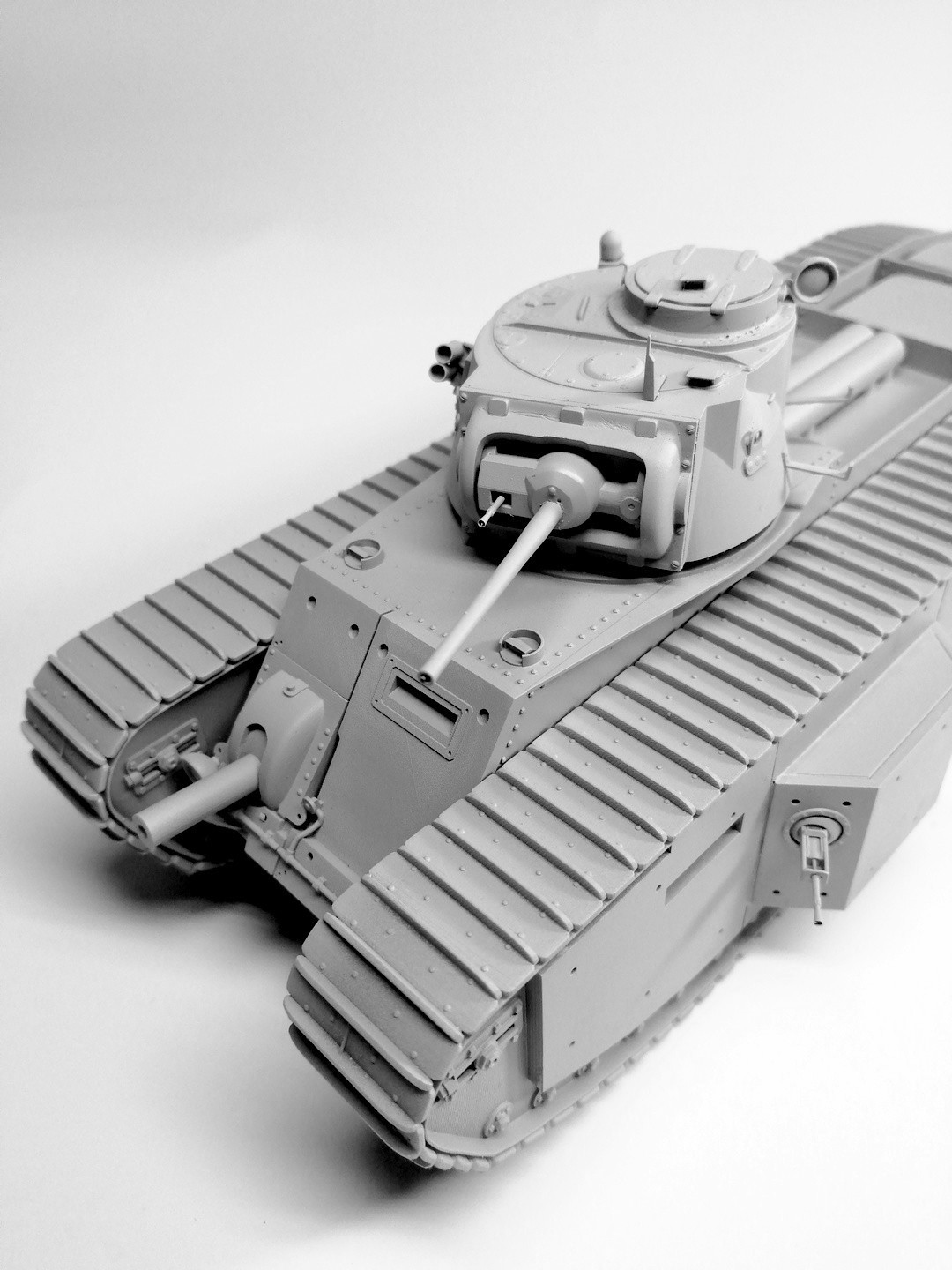
A photo with a 1/35 soldier as reference to appreciate the size of this beast. Completely anachronic, I know, but it was the only primed figure I had at hand...
Conclusion
A nice model of a large and unusual tank. With its good printing quality and small part count, the kit can be built in a very short time despite the size. Once painted it will surely catch the eye.