











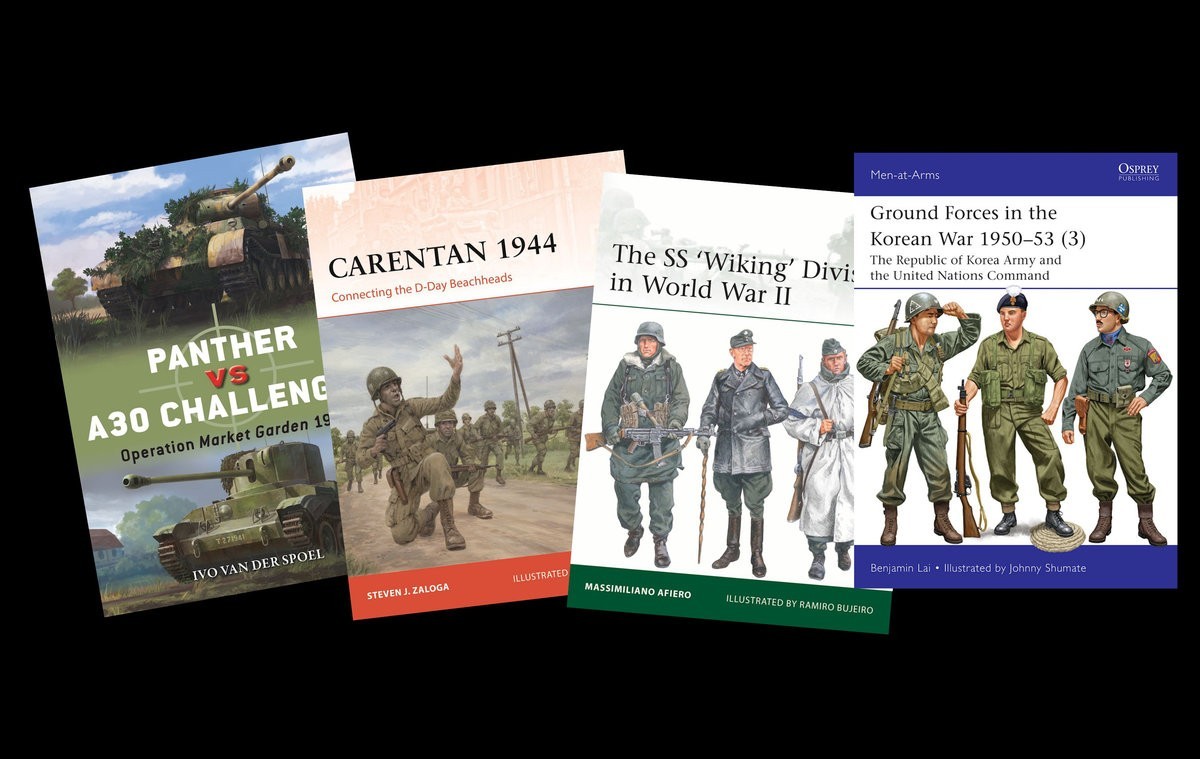
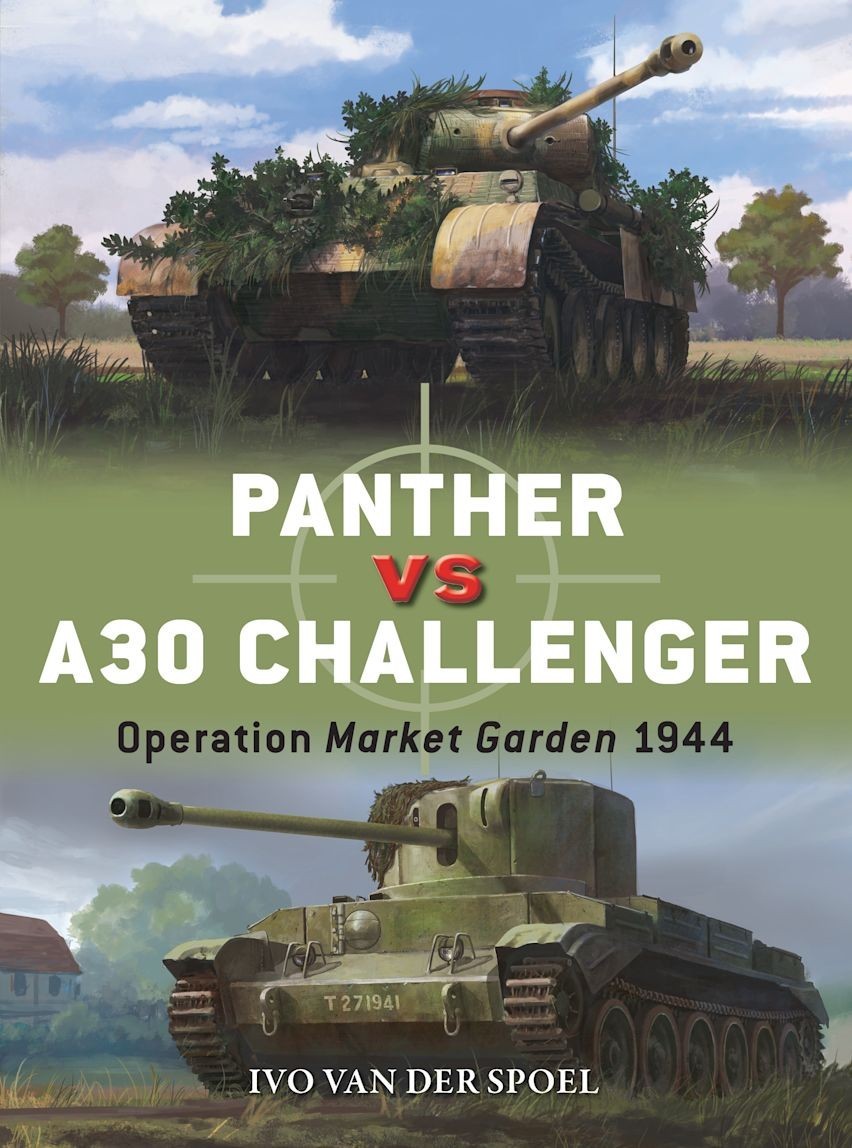
Panther vs A30 Challenger
This lively study investigates the clashes between two cutting-edge tank types in battle at a crucial moment in Operation Market Garden.
In 1944–45 Britain's A30 Challenger tank, a stopgap design armed with the lethally effective 17-pounder anti-tank gun used in the Sherman Firefly, provided essential armour-piercing firepower against Germany's latest fighting vehicles including the formidable Panther tank. This absorbing account casts new light on these innovative tank designs and their clash in September 1944 at a critical moment in Operation Market Garden, the Allied bid to cross the Rhine and end the war by Christmas.
In this book, Ivo van der Spoel reconstructs the pivotal tank battle outside the Dutch village of Son on 20 September 1944, in which Cromwells and Challengers of the 15/19 Hussars repulsed an attack by Panther tanks of Panzerbrigade 107. In an intense combined-arms battle that lasted all day the Hussars, backed up by American paratroopers, destroyed five Panther tanks and drove back one of the most dangerous German attacks on the Market Garden corridor. The authoritative text is complemented by rare photographs, full-colour mapping and specially commissioned artwork showing the two types in combat.
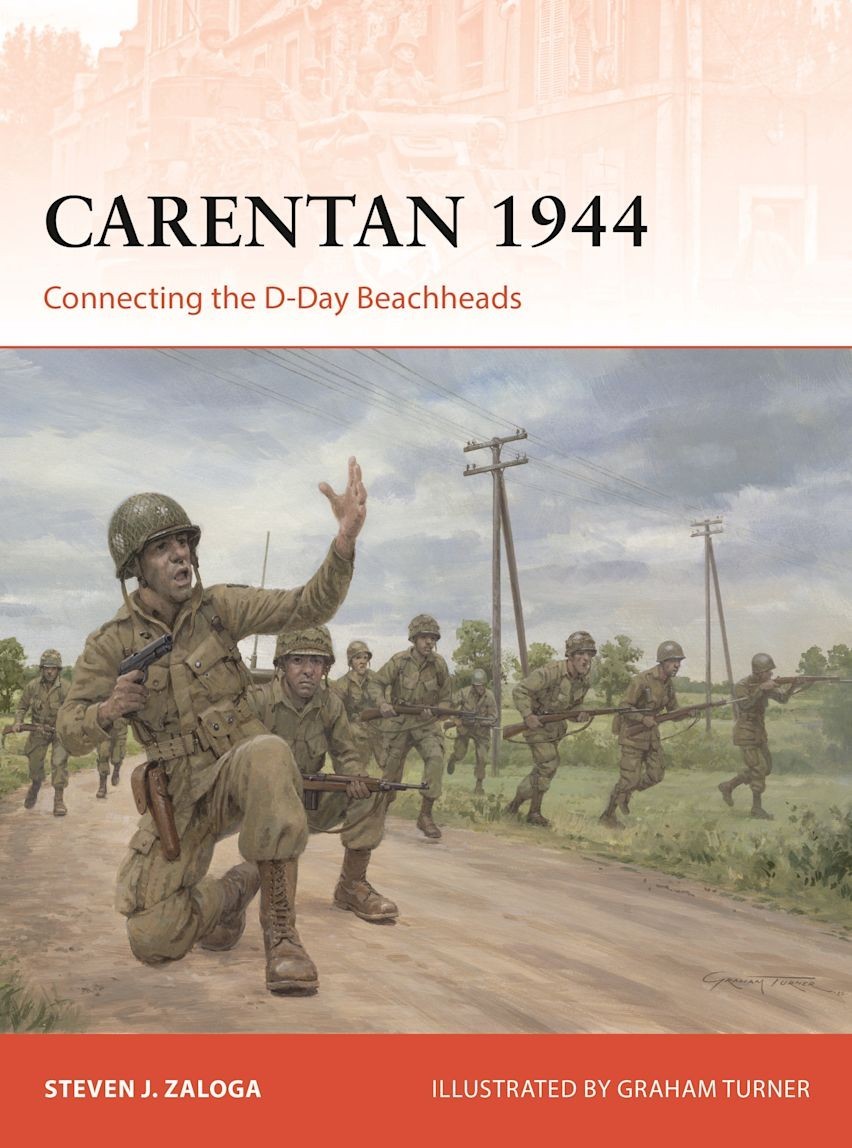
Carentan 1944 Connecting the D-Day Beachheads
An in-depth look at the US' desperate battle to secure Carentan and support the Normandy invasion and the elite German units that sought to repel them.
Although the US Army had successfully secured both Utah and Omaha Beach on D-Day, the next tactical problem was to connect the two beachheads. Utah and Omaha were separated by the Vire River estuary. Carentan was the first major town on the river, and as such was of vital tactical importance. However, this was not lost on the Germans, who dispatched their elite Fallschirmjäger-Regiment 6 to hold the town. On the US side, the task of capturing Carentan fell to the 101st Airborne Division, and in the week following D-Day, US and German troops waged a battle for Carentan.
Here, expert historian Steven J. Zaloga goes in depth into the initial battle on June 10–12 , 1944, the German counterattack and the final Allied victory. With stunning artwork, detailed maps and BEVs, firsthand accounts, and period images, this study brings to life the fierce fighting between paratrooper forces and highlights how this Allied success led onto the next phase of Operation Overlord.
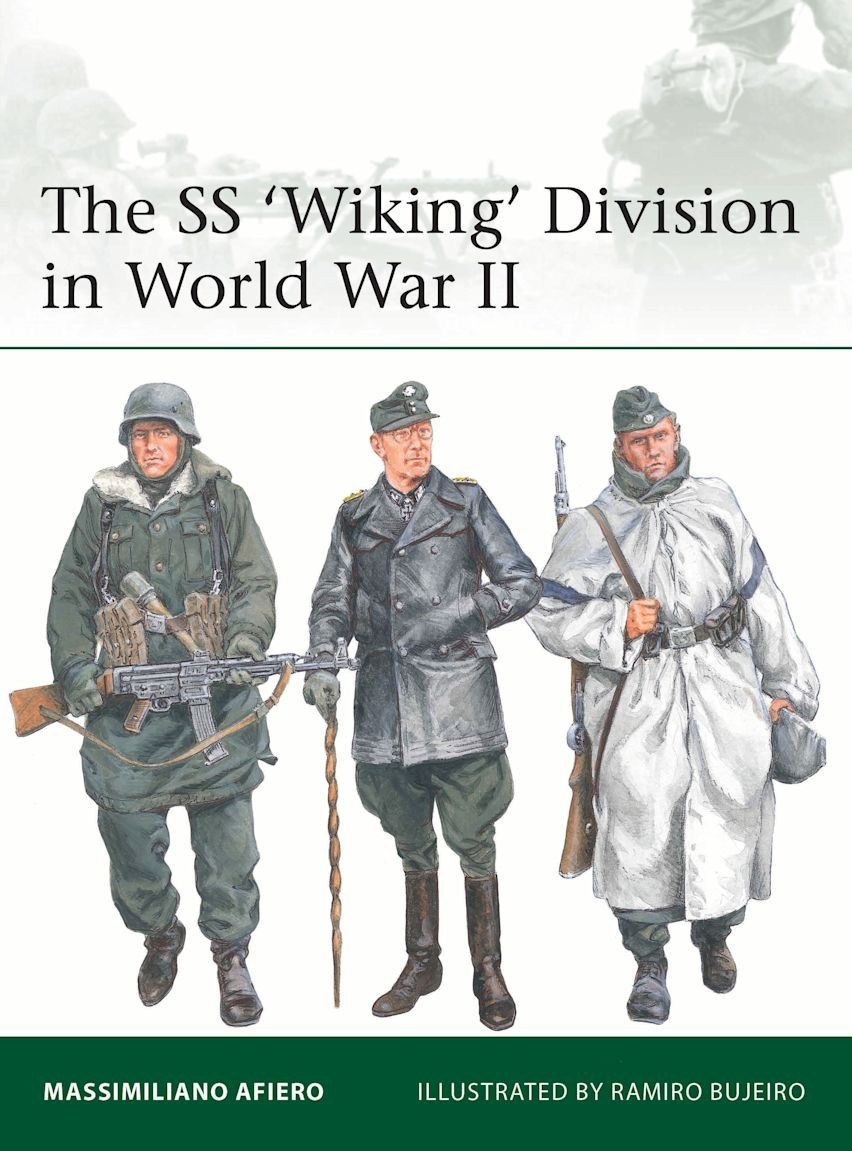
Sure to appeal to all those interested in Germany's armed forces in World War II, this book investigates the SS 'Wiking' Division, from its origins to its ultimate role as a Panzer division.
One of the most famous divisions in the Waffen-SS, 'Wiking' was the first officially to accept non-German volunteers in unit strength. 'Wiking' was committed to the June 1941 invasion of the Soviet Union, making rapid advances until the Wehrmacht was halted that November. In 1942 the division took part in Germany's advance in the south-east, before spending winter in the Caucasus mountains. The Red Army's victory at Stalingrad in February 1943 prompted a major German withdrawal into Ukraine.
January 1944 found 'Wiking' encircled in the Cherkassy (aka Korsun) 'Pocket', where the division led the breakout in the following month. By August, rebuilt as a Panzer division, 'Wiking' was back in action in Warsaw. In December, the division was sent towards encircled Budapest, but was driven back in early 1945. Defeated again in March, 'Wiking' retreated into Austria, the remnants surrendering in May.
All aspects of the division's combat service are described and illustrated in this absorbing study, drawing upon the latest scholarship. Eight plates of specially commissioned full-colour artwork depict uniforms, personal equipment, weapons, personalities and insignia relating to this formidable Waffen-SS division at war in World War II.
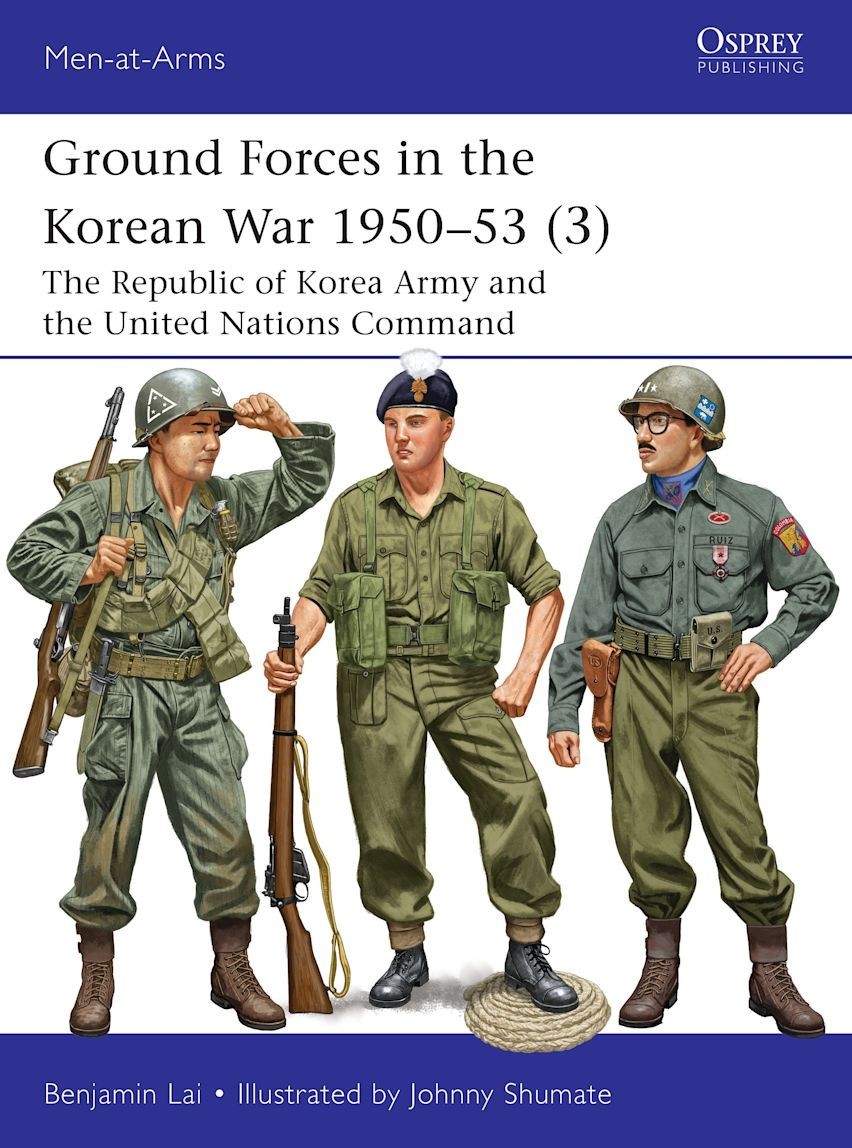
This book describes and illustrates the ground forces of the Republic of Korea and its United Nations allies during the Korean War, as well as the UN medical contingents in the conflict.
The North Korean invasion of the Republic of Korea (ROK) in June 1950 prompted an enormous international response, as first the United States and then a host of allied countries contributed combat troops or medical personnel to the United Nations effort to support the South Koreans. In this book, Benjamin Lai examines the ROK ground forces and their UN allies, briefly describing each contingent's organization, appearance, and service record in the Korean War. His incisive commentary is complemented by specially chosen photographs and specially commissioned full-color artwork depicting the various national contingents involved.
While the United Kingdom, Australia, Canada, New Zealand, South Africa, Ethiopia, Belgium, Luxembourg, the Netherlands, France, Greece, Turkey, Colombia, the Philippines, and Thailand provided combat troops, India, Italy, Denmark, Norway, and Sweden sent medical teams to support the UN effort. All of these national contingents are described and illustrated in this concise guide to a complex and important element of the UN forces involved in the Korean War, a conflict that shaped the course of international relations for decades.