












HISTORY:
** In the late 1930s, the U.S. Army began a significant overhaul of its vehicle fleet, which would ultimately shape the logistics backbone of World War II. However, the effort itself was not without conflict: some experts proposed the semitrailer, which separated the supplies or specialist equipment from the engine, while opponents encouraged compact, complete assemblies to save time in the field. Ultimately, both types of transport would be used during World War II with each playing to their unique strengths. The trucks went to the front lines, while communications and staging areas were the domain of tractors and semitrailers.
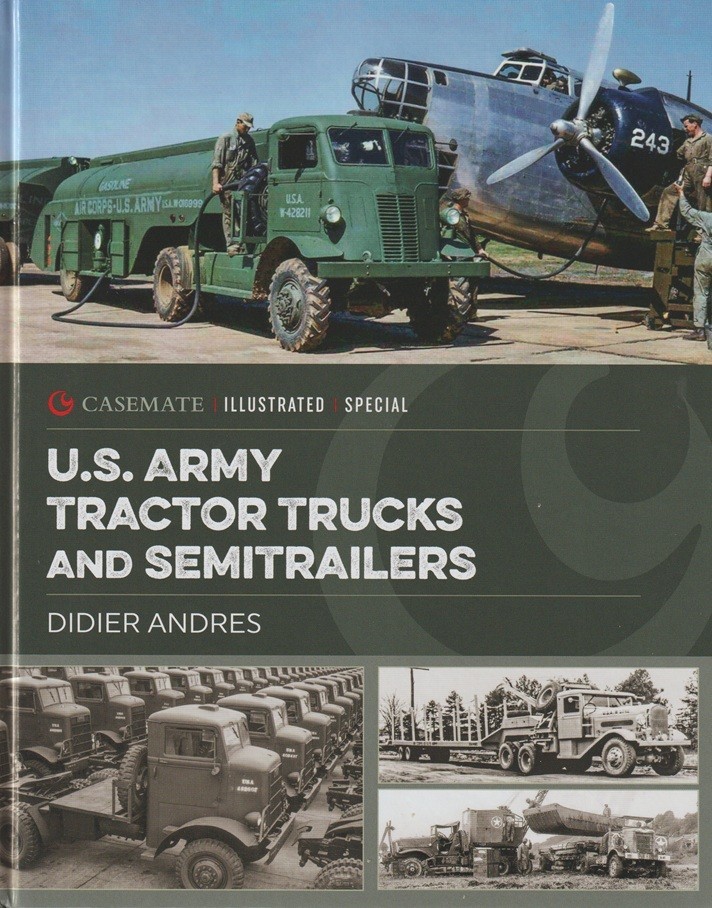
This book examines all the different weight categories of tractor trucks and semitrailers used by the U.S. Army during World War II. Illustrated with hundreds of period photographs, illustrations, and diagrams, the text discusses all variants including an array of specialized vehicles for Quartermaster, Engineer, Air Force, and Cavalry units. **
** Quoted from the back cover of the book.
THE BOOK:
Casemate Publishers has released U.S. Army Tractor Trucks and Semitrailers as part of the
Casemate Illustrated Special series of books. It is a 160-page hardcover book, 8 x 10 inches in size. Included with the text are black and white photographs, informational charts and detailed captions. The book has a 2025 copyright, and the ISBN is 978-1-63624-590-4.
CONTENTS:
Introduction: To Tow or Not to Tow?
1. 1 1/2-Ton Truck Tractor Category
2. 2 1/2-Ton Truck tractor Category
3. 4/5-Ton Truck Tractor Category
4. 5-Ton Truck Tractor Category
5. 5/6-Ton Truck Tractor Category
6. 7 ½-Ton Truck Tractor Category
7. 12-Ton Truck Tractor Category
8. 20-Ton Truck Tractor Category
9. Special Series
10. Special Semitrailers
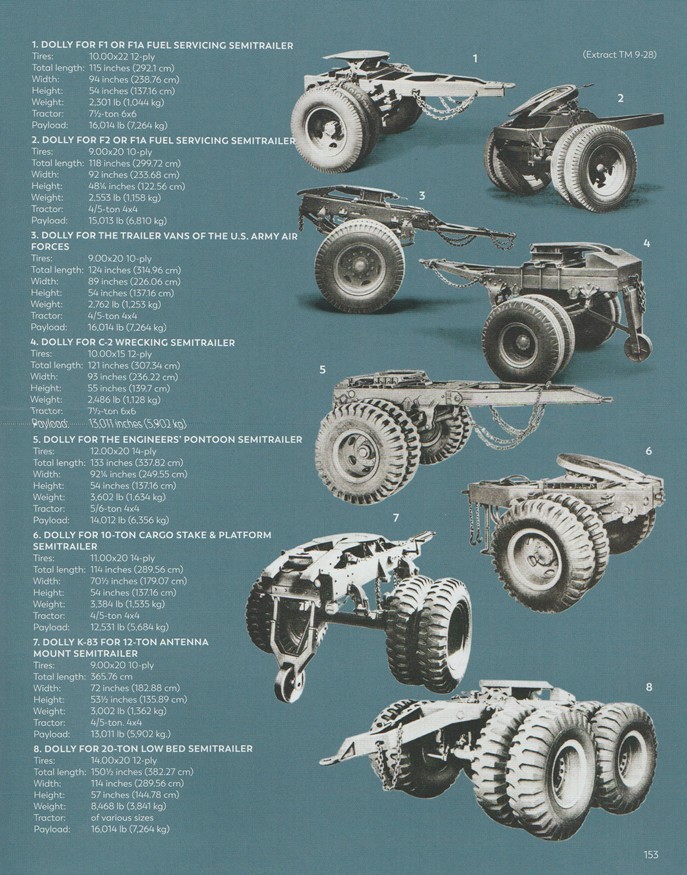
11. Dollies
12. Postwar
Appendix: Total Production
Bibliography
THE TEXT:
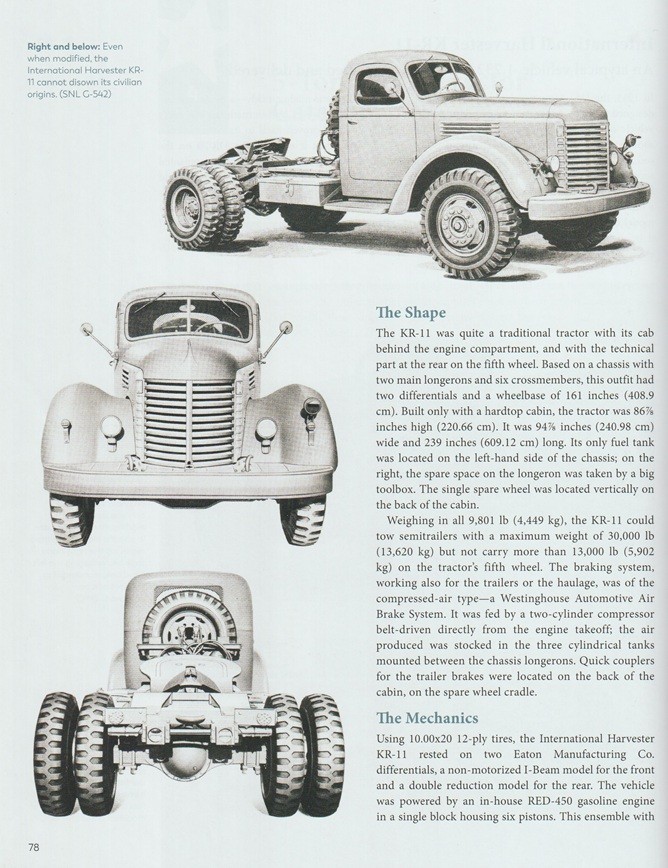
Author Didier Andres provides a well written and informative text detailing U.S. Army Tractor Trucks and Semitrailers used prior to and during World War II. Didier Andres goes into great detail with a no-nonsense type of writing that provides a wealth of information on several different categories of U.S. trucks and their purposes and types of trailers associated with them. Please refer to the contents listing that I have provided for the different categories of trucks that are discussed and shown. The author provides information such as who produced the trucks and trailers, the year(s) they were produced, the numbers produced, where they were sent, what became of them after the hostilities ended and other such details. Several of the trucks and trailers discussed have sections dedicated to them that discuss Shape and Mechanics. The Shape portion discusses the appearance and configuration of the various subjects such as whether the trucks were a cabover design or a traditional truck design, type of cab, types of axels, if they were set up in a fifth-wheel configuration and other such specifics. The Mechanics portion discusses things such as the type and size of engines installed, if they were gasoline or diesel, engine revolutions per minute, type of cooling system and other such technical information. I feel that Didier Andres has covered the subject well and has provided the information in an easy-to-read format which the detailed oriented reader will benefit from. Didier Andres doesn’t use what I refer to as fluff writing where a large amount of non-essential extra text is provided just to help fill the pages. As I read through the text, I didn’t notice any spelling or grammatical errors. Grammar and spelling might not be an important factor to everyone however it is something that I take notice of and pass on my findings. The information provided will be of great use and interest to the well-seasoned and knowledgeable U.S. truck and trailer enthusiast and historian as well as the individual that is new to this area of military history.
THE PHOTOGRAPHS:
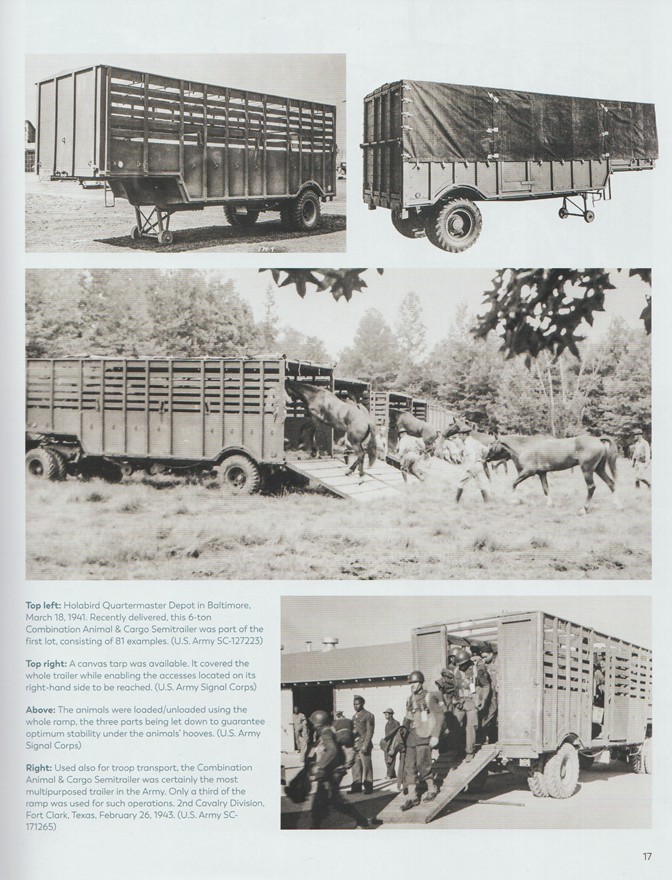
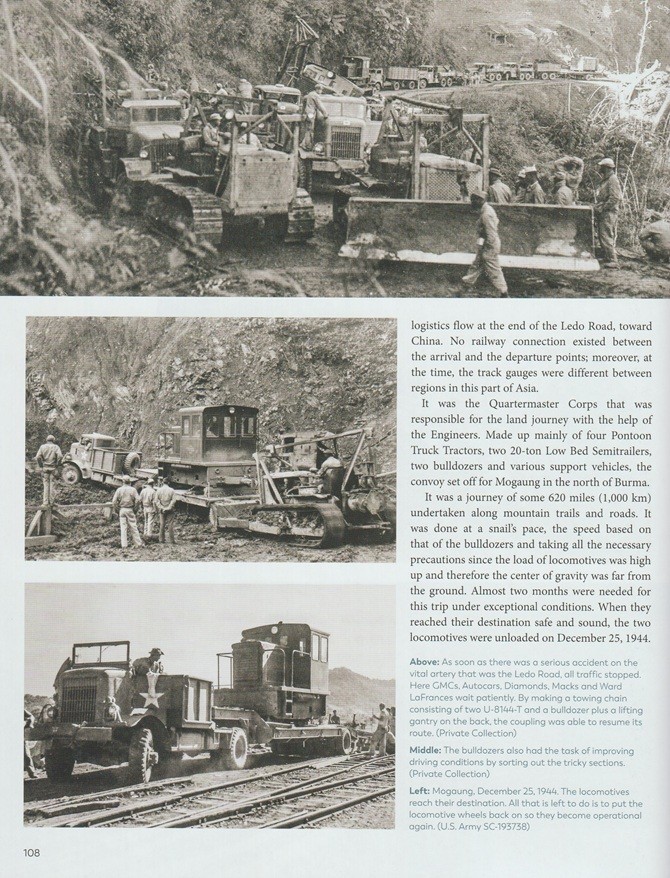
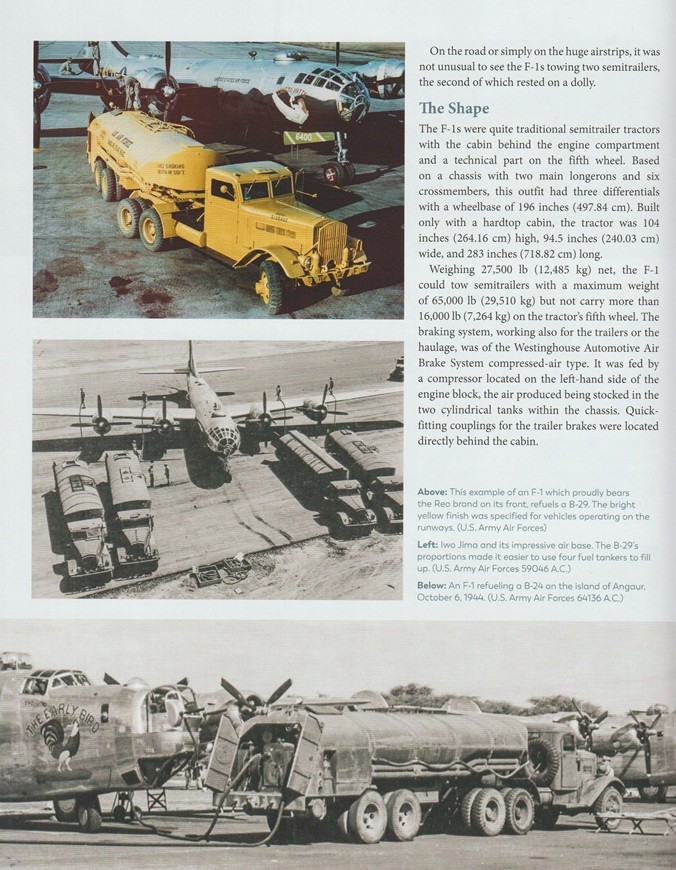
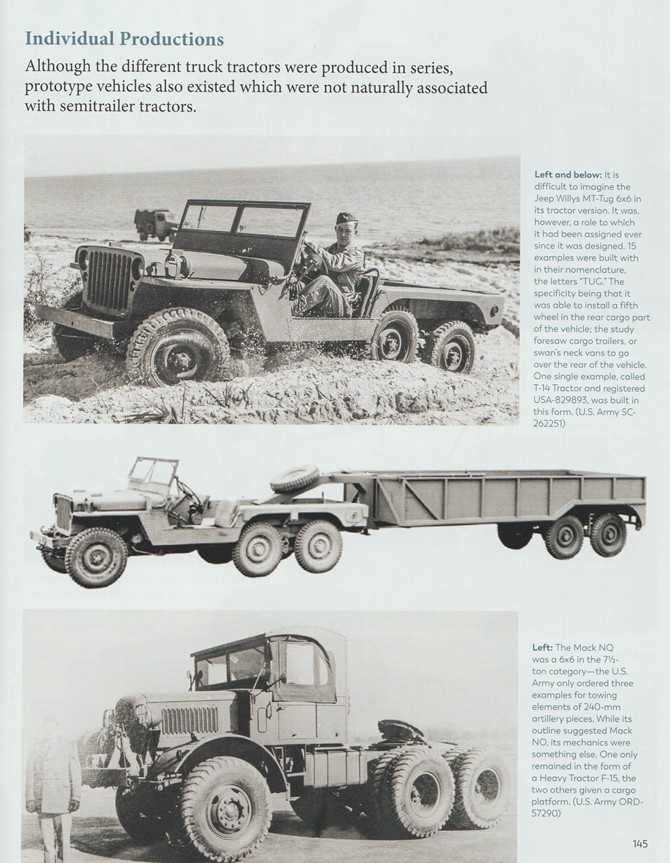
A total of 365 black and white photographs and 8 color photographs are included in this volume. Author Didier Andres chose subject specific photographs and did not include photographs that strayed from the main subject of the book. One thing that I was appreciative of with the photographs is that a good majority of them are not overused photographs that tend to turn up in other publications dealing with the same subject. Most of the photographs are clear and easily viewable; however, a few of them are somewhat blurry and a few of them appear to be too dark, while others appear to be too light. This can be typical for the discussed period of history, and the quality of the photographs is of no fault of the author, and they do not take anything away from the book. The photographs range from official military pictures such as those found in military manuals, press release type publicity photographs that had been made available to the public for information and morale purposes as well as photographs that appear to have been removed from motion pictures as well as photographs taken by the service members themselves. There are several photographs of the various trucks and trailers being used in their intended roles. There are several photographs of the trucks being used in roles that I hadn’t considered such as for administration work, decontamination and/or showers, laundry, clothing repair and one I found particularly interesting, shoe/boot repair. The photographs cover several of the various campaigns that the U.S. Forces were involved in and both the European and Pacific theaters and they are shown in all types of weather conditions. The majority, if not all, of the photographs will prove to be of great interest to anyone interested in U.S. Army Tractor Trucks and Semitrailers used prior to and during World War II due to the details they contain. Anyone interested in the 20th Century U.S. Army Cavalry will also appreciate several of the pictures. The pictures will also prove to be a great resource for the scale modeler as well as the detail-oriented scratch-builder. Several of the scenes shown will also prove to be great inspiration for the diorama builder.
THE CAPTIONS:
The captions are well written and detail the accompanying photographs nicely. The captions go into very specific detail as to the manufacturer and type of the truck or trailer shown along with its year, model number, weight, purpose and other such information. Also detailed are things such as explaining registration numbers shown, locations, dates, how existing civilian trucks were modified for military use, what was done to trucks sent out for lend-lease, as well as identifying subjects other than trucks and trailers such as Jeeps and various models of aircraft. As I read through the captions, I didn’t notice any spelling or grammatical errors. Didier Andres’ captions are very helpful to the reader due to their detailed content as opposed to other captions that I have seen that lack detail.
INFORMATIONAL CHARTS:
There are 17 informational charts included in this volume and they are of:
- Studebaker US6 6x4 U6 Production
- 7-Ton Cargo Semitrailer Manufacturers and Registration Numbers
- U-7144-T Truck Production
- Federal Motor Truck Company 94x43 Production
- White Model 444-T Truck Production
- Mobile Records Van Semitrailers Produced by Trailmobile
- F2 & F2A 2,000-Gallon 6-Ton Gas Tank Semitrailer Registration Numbers
- 6-Ton Van Semitrailer Registration Numbers
- USAAF 6-Ton Semitrailer Registration Numbers
- International Truck Tractor KR-11 Production
- M425 & M426 Truck Production
- 10-Ton Stake & Platform Semitrailer Production
- Mack Manufacturing Corporation NJU-1 & NJU-2 Truck Production
- U-8144-T & U-8144 Autocar Co. Truck Production
- Production of M26 & M26A1 Truck Tractors by the Pacific Car & Foundry Co., 1943-45
- Production of M15 Semitrailers by Fruehauf Trailer Co.
- 50-Passenger Semitrailer Production
CONCLUSION:
This is a very nice reference book that contains a well written informative text, many subject specific photographs, well detailed captions and more, all detailing various U.S. Army tractor trucks and semitrailers used prior to and during World War II. As with the other Casemate Publishers titles, I would have no hesitation in recommending this book to others as it will be a welcome addition to one’s personal military reference library.
Casemate Publishers’, U.S. Army Tractor Trucks and Semitrailers, is also available digitally from:
Barnes & Noble
Kobo
PRICE
US $39.95/ UK £34.95
https://www.casematepublishers.com/
This book was provided to me by Casemate Publishers. Please mention that you saw the book reviewed here on the KitMaker Network when making your purchase. Thank you.