












Introduction
Beginnings of the Signal Corps
The US Army Signal Corps began in 1860, with the appointment of Dr. Albert J. Myer, a physician, as Chief Signal Officer. Under his command, the unit transformed sign language used to communicate with deaf persons into a semaphore system incorporating red and white “wigwag” flags. During the Civil War, the Signal Corps operated air balloons and telegraph machines. By the time the United States entered World War I in 1917, the corps had integrated the aeroplane and more advanced technology into its communications systems.
During World War II
In World War II, the Signal Corps' size and role in military affairs increased dramatically. From a staff of 27,000 persons, it expanded to over 350,000 men and women by 1945. The need to coordinate swift and accurate communication for air, ground, and naval units required more sophisticated technology and services. The Signal Corps pioneered in the development of radar to detect approaching aircraft as well as mobile communications and deciphering machines.
In addition to its primary role in military transmissions, the unit also played a key role in producing training films for army and civilian personnel, and documenting combat missions. During World War II, noted Hollywood producers, directors, and photographers (such as Darryl Zanuck, Frank Capra, John Huston, and George Stevens) all served in the Signal Corps. They brought their talents in the motion picture studio to the field of battle, while dozens of others provided instruction to the personnel.
In the European theater of operations (ETO), Signal Corps photographers took part in the landings in North Africa, Italy, and later Normandy. On D-Day (June 6, 1944), members of the unit hit the Utah and Omaha beaches, forwarding the first film of the amphibious assaults to England via carrier pigeons. The Signal Corps subsequently documented every major military campaign in the ETO, producing millions of feet of combat film and hundreds of thousands of developed still images. From these sources, the Army supplied the news media in the United States and elsewhere with imagery of the war, using 24-hour air delivery service and later sophisticated telephoto electronic-transmission equipment.
The book
This is a hardback book from publishers Casemate Illustrated Special with pagination of 159 pages and hundreds of period photographs, some colourised
This book tells the story of the U.S. Army Signal Corps Vehicles during World War 2.
Contents
1. Introduction
2. Evolution of the Model K
3. Radar Trucks
4. Radio Trucks
5. Multi-purpose Vehicles
6. Specialised Vehicles
7. Specialised Trailers
8. Telephony
9. Special Cases
Sources
Author: Didier Andres, born in Verviers in Belgium, is passionate about military history and particularly about American vehicles of World War II. He has a large archive of documents and imagery and has contributed to books and magazines for twenty years. He is the author of US Army Chevrolet Trucks, US Army Ambulances & Medical Vehicles and US Army Signal Corps Vehicles.
The Review.
On first impressions, this book is already looking good and comprehensive.
As a vital part of the U.S. Army, the Signal Corps was at the forefront of the technological improvements of communications throughout World War 2. Created well before the 1940’s its roots went back to just before 1870, when Congress made its existence official.
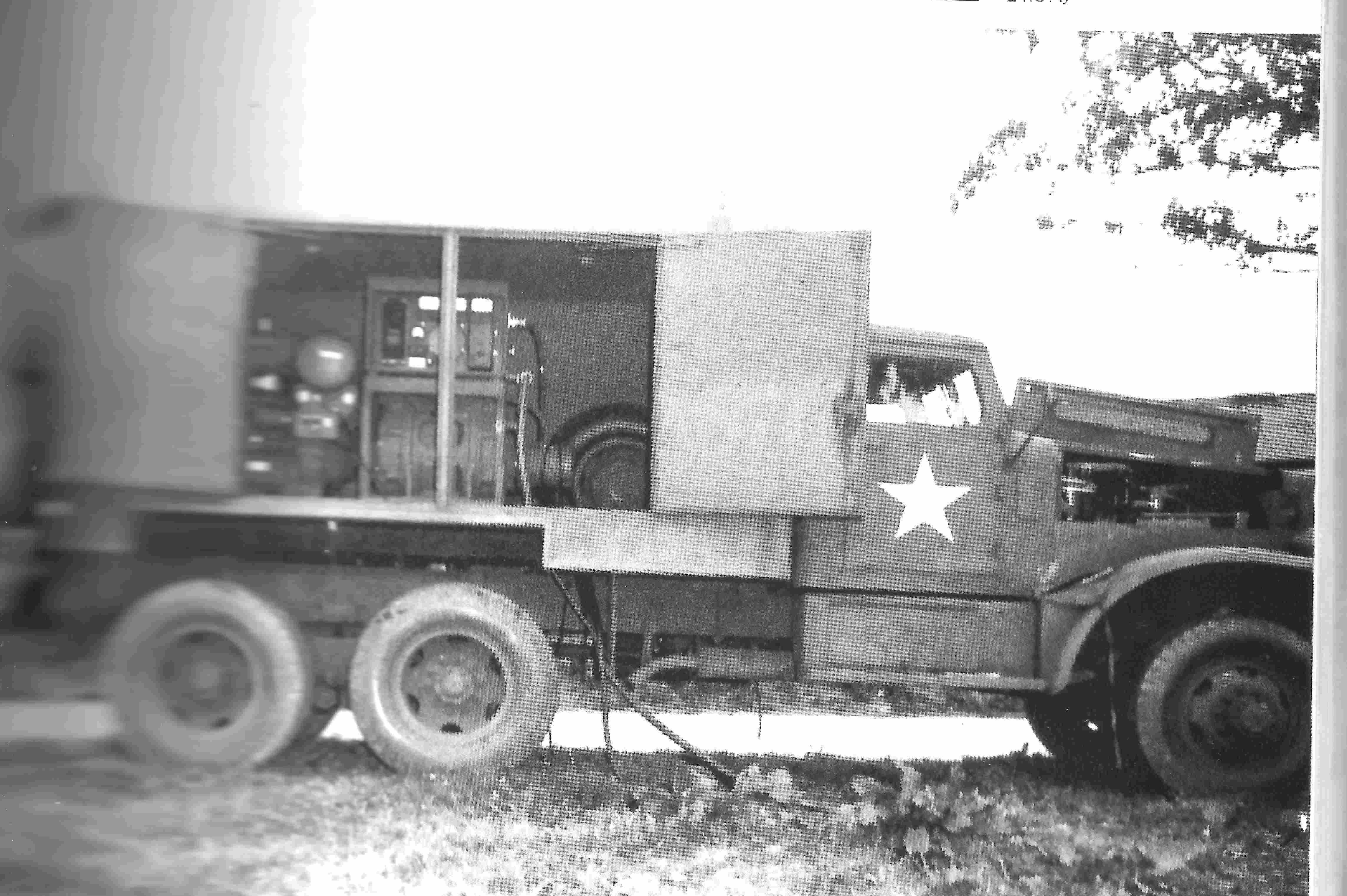
Evolution of the model K. The date when the category of material was created is not mentioned anywhere. It can, however, be placed at the end of the 19th and the beginning of the 20th centuries. It was in the 1930s that SCR-268, a Mobile Long-Wave Searchlight Control set this type of radar, was decided on, but it was several more years before a satisfactory resolution was achieved. A lot of tests resulted in the successive intermediate equipment being found. There were so many different vehicles that were used over a very long time, from the humble cart and horse to 6x6 trucks, from tracked vehicles to be able to get you to a place that a truck or horse would not be able to go. April 1942 K-73 Chevrolet Tractor Truck and K-55 Semi Trailer. The K-55 trailer was impressive and offered a large undercover area to be able to work in. A K53 GMC van truck and a K-35 van trailer
When it says hundreds of photos they are not kidding there is so many photos some in colour, there is a lot of different radars that I have not seen previously though some looked like the masts that towered over one of my favourite places to be when I was a kid RAF North Weald both of my grandfathers were stationed there at one time or another.
Pictures of different trailers in different parts of the world, like the AK-34 Trailer on Makin Island in the Gilbert Islands
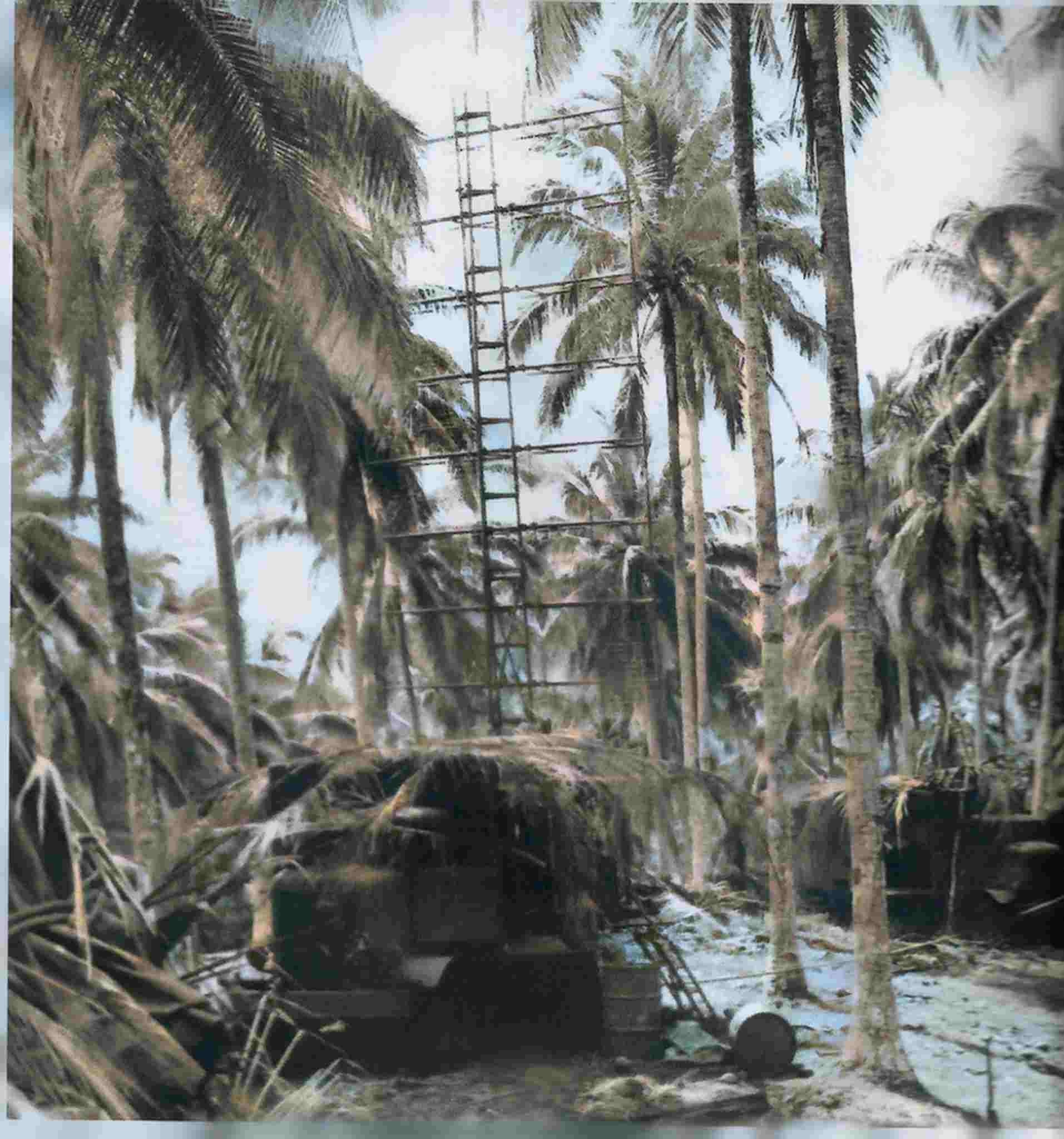
An impressive photo of the SCR-270 Early Warning Radar Rendova in the Solomon Islands of the South Pacific, taken on 16th July 1943, screams diorama material, having been set under palm trees. The technical support is an Autocar U-8144, a K-30B power van/truck, and a K-31B operating van truck. I can see it now, a lone Zero flying over the top of the Island and a couple of Japanese soldiers literally stumble across this radar emplacement? The mind boggles with different scenarios.
As for the special cases chapter, you have the Homing pigeons. Before the United States entered the subsequent War on December 7th, 1941, the Signal Corps reactivated and completely modernised its signal pigeon units.
Sigcircus and Sigcircus Junior managing the transmission of information for an entire continent, with so many troops in the field, needed a complex structure, especially if the amount of data to be transmitted across an ocean so vast. In the period immediately after the Normandy landings, the information to be transmitted to the White House was not centralised. To do that, a full-sized broadcasting station would be needed. Thinking that they would be able to count on the French Civilian radio stations, the U.S. Army was caught off guard by the condition in which the German occupying troops had left them.
Leaving the U.S. Army to have to rig up a line of sigcircus in Paris, 1945, has assembled power transformers and cabling of thousands of metres to create a massive Radio broadcasting station in a sports arena in central Paris.
The book is a resource and reference book. I also believe that anyone who had family members in the U.S. Signal Corps during World War 2 to have an idea of just what Type of job he or she did radar, radio, and telecoms, placing millions of miles of cable to get it all to work, or maybe they were in the photographic or maybe even filming crews. If like me, you are interested in military history and looking for accurate pictures of the U.S. Signal Corps at work or a picture of some of the vehicles used then look no further the book is full of inspiring pictures and shows just how much knowledge and skill the Signal Corps had to have to make all of this work but not just that but a great deal of courage grit and determination
.
Final Say
It is hard to quantify some of the materials that we are lucky to receive for revue on how good or bad they actually are, but of recent times I am seeing some incredible material that one hundred percent are up there with the best of the best, I whole heartedly recommend this particular book from Casemate Publishers an outstanding one I have to say has more pictures than I have seen, in a real long time Author Didier Andres not only knows his subjects but you can feel his passion in every page that he has written. 100% percent recommendation from me.
Finally, a huge thank you to Casemate Publishers for this review sample