












HISTORY:
** In September 1939, the Waffen-SS was effectively only three regiments plus several hodgepodge units. Poland would be its baptism of fire: during the campaign, SS combat units participated in operations attached to various formations of the Heer. Still considered more parade troops than frontline soldiers, they did not prove a decisive factor in the fighting, but the campaign was important for their transformation into real fighting units.
Engaged in combat from September 1, 1939, Waffen-SS units showed almost fanatical courage, but were criticized by senior army officers for their comparatively high number of losses, while Waffen-SS officers were judged poorly and inadequately trained. The SS officers in turn accused Heer commanders of misusing their units and sacrificing SS troops in suicidal missions. Himmler became convinced that if his units were used autonomously they could have better demonstrated their full potential, leading him to push for the SS to be considered a separate fighting force.
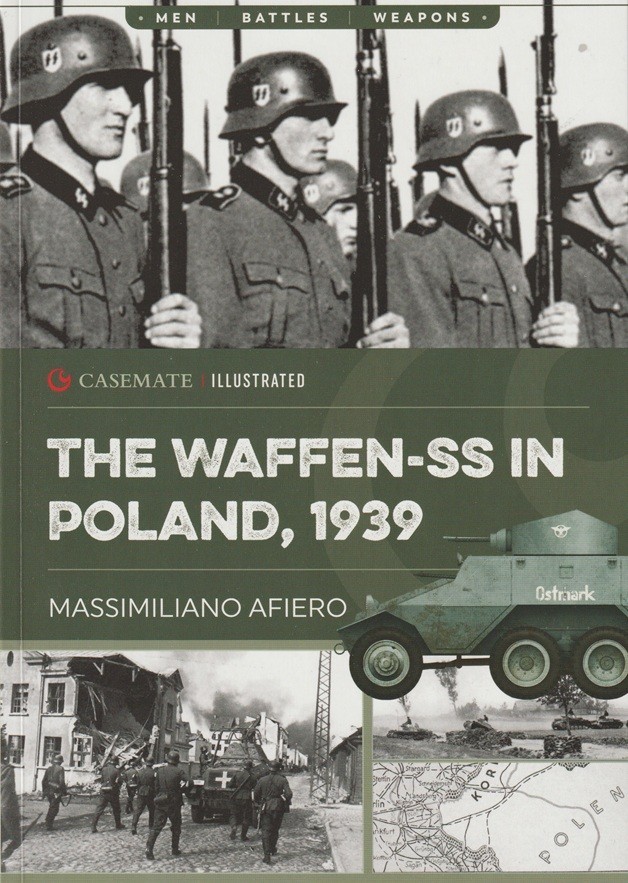
Fully illustrated, this Casemate Illustrated title describes the actions of the SS units that fought on the front line in Poland, primarily the Leibstandarte Adolf Hitler, the SS- Verfügungstruppen, and the SS Heimwehr Danzig. **
** Quoted from the inside front cover of the book.
THE BOOK:
Casemate Publishers has released The Waffen-SS in Poland, 1939 as part of their Casemate Illustrated series of books. It is a 128-page softcover book, 7 x 10 inches in size. Included with the text are black and white photographs, color illustrations, color maps and more. The book has a 2025 copyright, a publication date of July 31, 2025, and the ISBN is 978-1-6362-4465-5.
CONTENTS:
Timeline of Events
Glossary of German Military Terms
Introduction
The Danzig Question
Fall Weiß
Leibstandarte Adolf Hitler in Action
Panzerdivision Kempf in Action
Aftermath
Further Reading
Index
THE TEXT:
Author Massimiliano Afiero provides a well written and informative text detailing the Waffen-SS involvement in the invasion of Poland, Fall Weiß, in 1939. Massimiliano Afiero goes into great detail with a no-nonsense type of writing and provides a wealth of information on the organization and preparation that took place prior to the invasion of Poland on September 1, 1939, the start of the invasion and specific targets given to the Waffen SS and how the attacks went on those specific targets. The text continues with the various actions and encounters that the SS divisions were involved in and the actions taken during the conflicts as well as what was successful and what wasn’t successful, advances that were made and retreats that had to be taken, as well as detailed information such as the dates and the times of the attacks, which units were involved, the specific times of individual actions taken during the main attacks, which units had to be moved and placed into different roles due to the actions taking place and other such pertinent information that helps to easily discuss and detail what had taken place in a step by step format. In addition to his own words, Massimiliano Afiero has also provided personal quotes from individuals such as SS-Ostuf. Frey, platoon leader of 9. Kompanie, Hubert Meyer, platoon commander of 10. Kompanie LSSAH, Georg Prell, soldier in the 3. Kompanie Deutschland, Generalleutnant Georg-Hans Reinhardt, 4. Panzerdivision and others. In addition to the personal quotes there are also excerpts taken from official German reports provided as well. I feel that Massimiliano Afiero has covered the roll of the Waffen-SS and its involvement in the invasion of Poland in 1939 well and has provided the information in an easy-to-read format which the detailed oriented reader will benefit from. Massimiliano Afiero doesn’t use what I refer to as fluff writing where a large amount of non-essential extra text is used just to help fill the pages. As I read through the text, I didn’t notice any spelling or grammatical errors. Grammar and spelling might not be an important factor to everyone however it is something that I take notice of and pass on my findings. I feel that the reader will be well informed about the opening stages of World War II with Germany’s invasion of Poland in 1939 and the actions taken by the Waffen SS during the fighting that took place.
THE PHOTOGRAPHS:
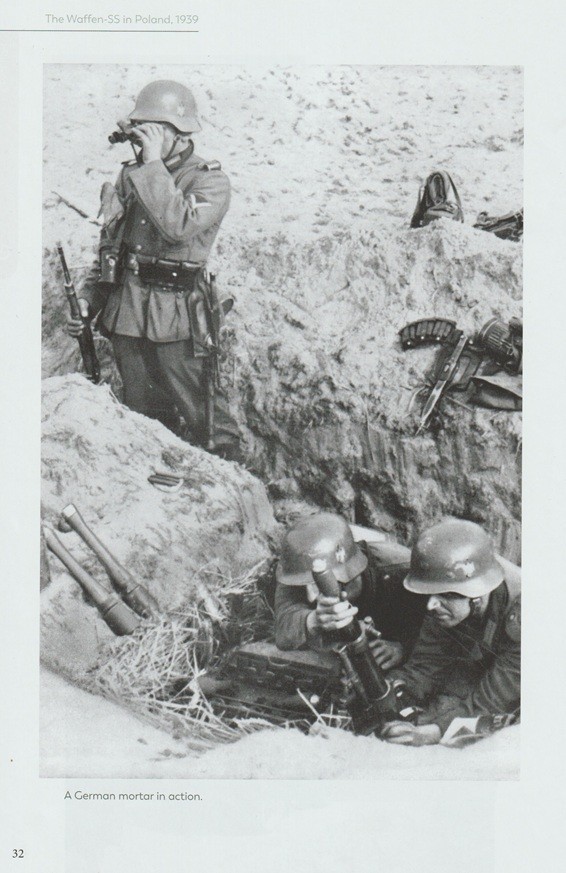
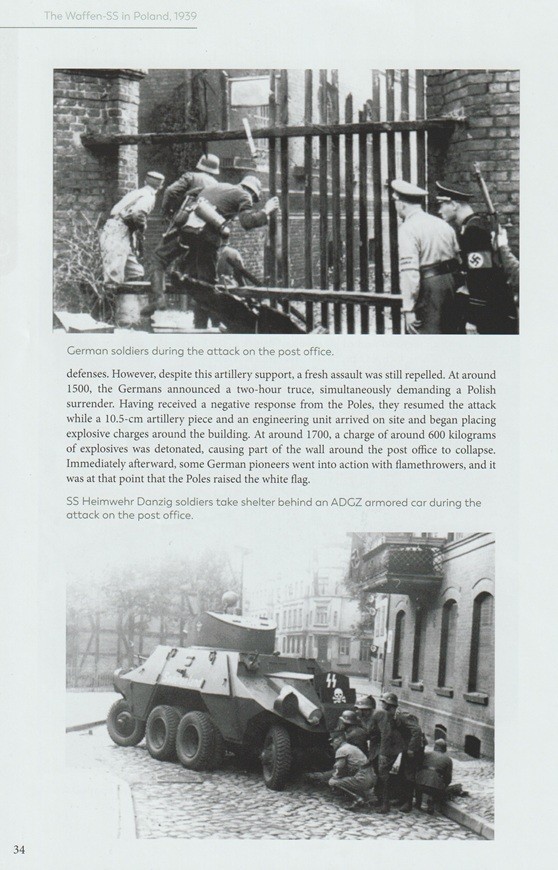
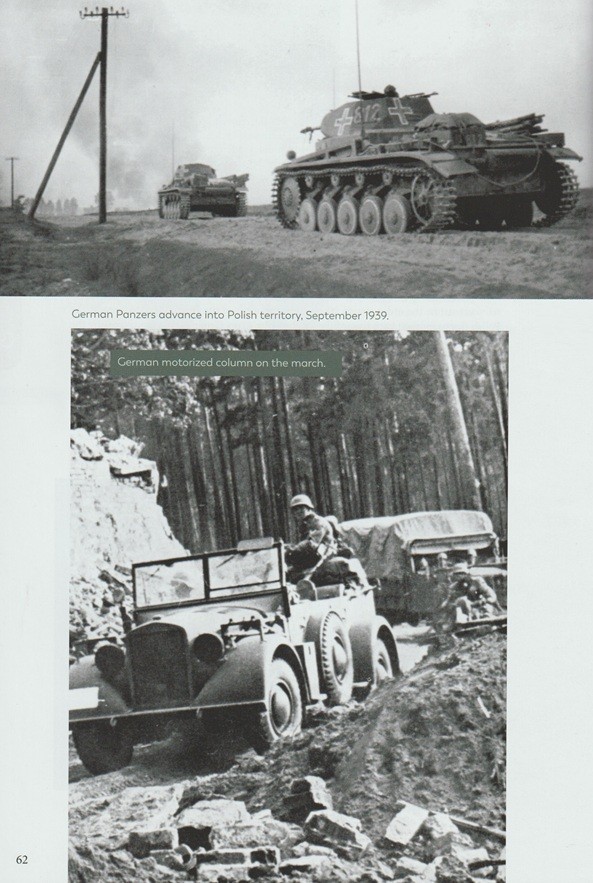
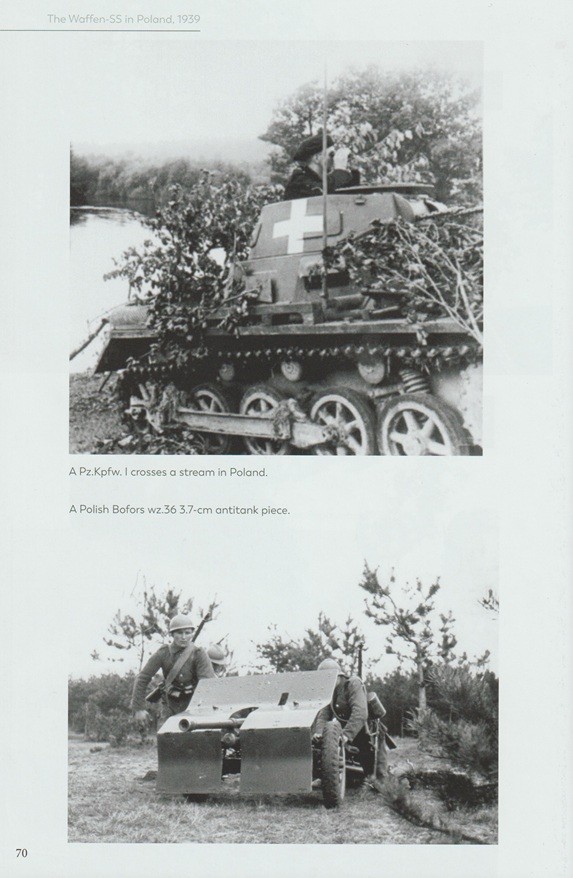
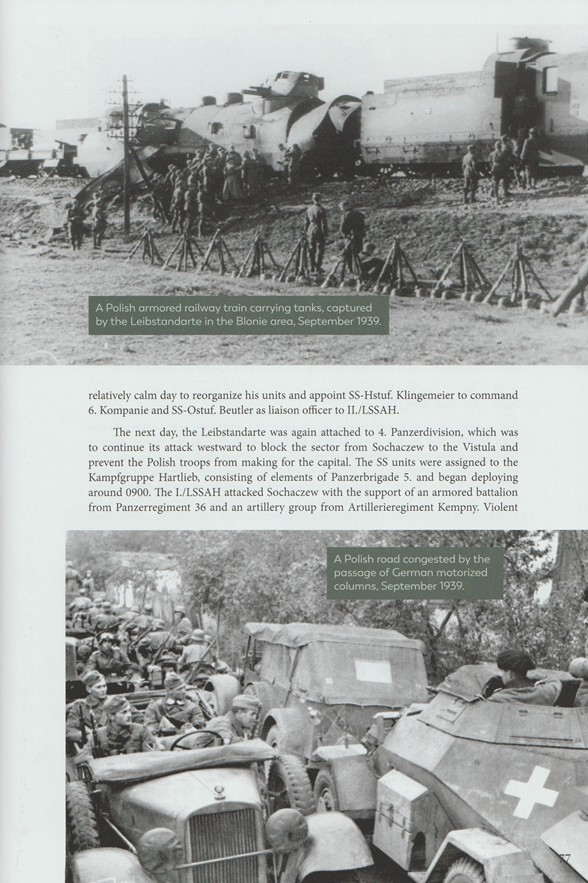
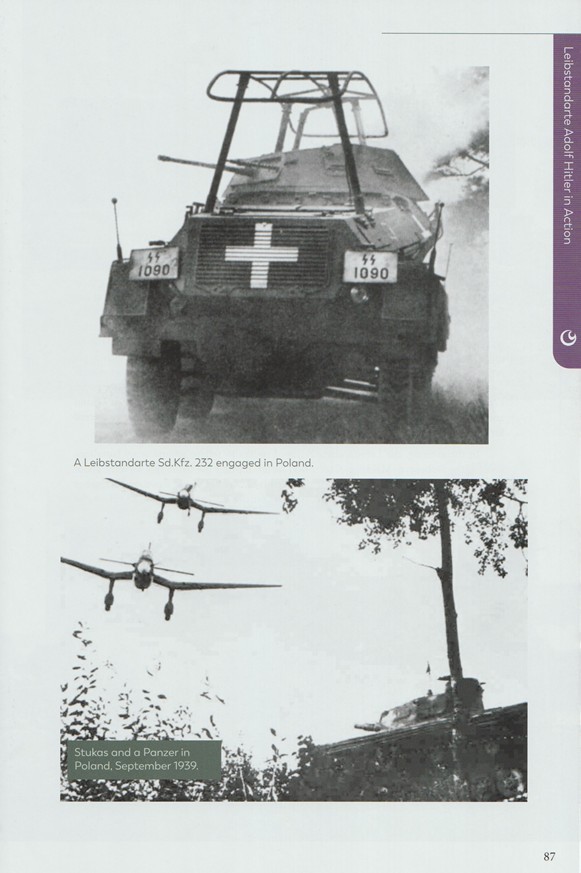
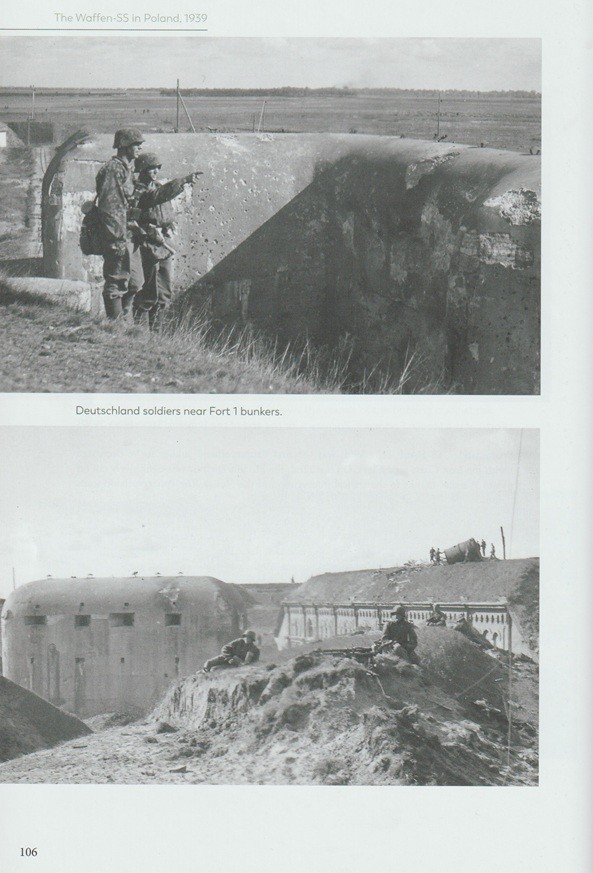
A total of 177 black and white photographs are included in this volume. There are no color photographs featured. Author Massimiliano Afiero chose subject specific photographs and did not include photographs that strayed from the main subject of the book. Included are excellent photographs of early war armor such as the German Panzerkampfwagen I (PzKpfW I) and the Austro-Daimler ADGZ (8X8) armored car. As well as the photographs of early war armor there are photographs of howitzers, anti-tank guns, a Polish armored train, German aircraft, soft-skinned vehicles and various small arms. In contrast to the mechanized war machines there are a number of photographs of Polish horse cavalry which show various items of horse tack such as saddles and bridles, the placement of the military gear on the saddles and calvary lances are also shown. The scale figure modeler and military uniform historian and enthusiast will benefit from the abundance of photographs that are of military personnel and show details of their uniforms, headgear, rank insignia, military medals and ribbons, weapons, backpacks, gear, etc. Most of the photographs are clear and easily viewable; however, a few of them are somewhat blurry and a few of them appear to be too dark, while others appear to be too light. This can be typical for the period of history shown, and the quality of the photographs is of no fault of the author, and they do not take anything away from the book. I have seen some of the photographs in other publications dealing with the same subject matter, however the majority of them were new to me. The majority, if not all, of the photographs will prove to be of great interest to anyone interested in the Waffen-SS and their role in the invasion of Poland in 1939 during the opening phases of World War II due to the details they contain.
THE ILLUSTRATIONS:
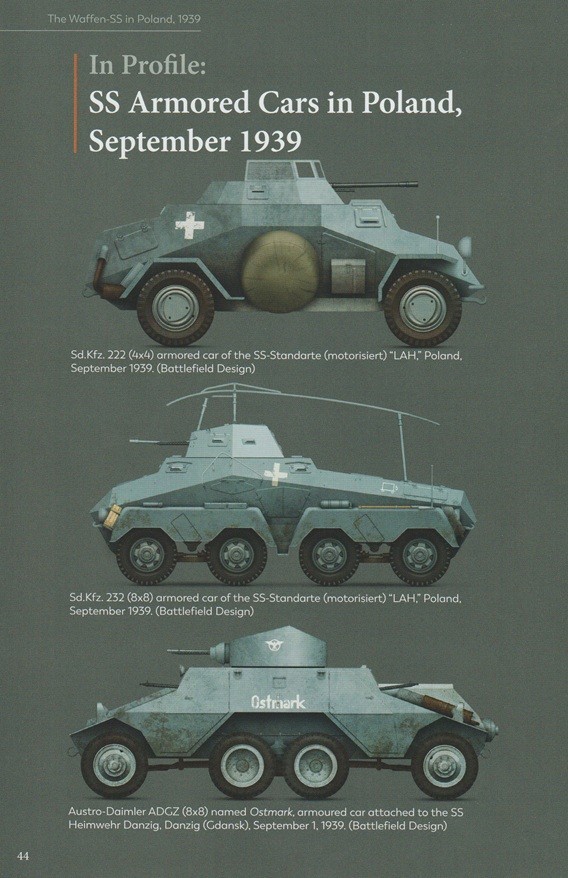
There are 3 color illustrations with detailed captions provided by Battlefield Design. The illustrations are very well done, nicely detailed and are of:
- Sd.Kfz. 222 (4X4) armored car of the SS-Standarte (motorisiert) “LAH,” Poland. September 1939.
- Sd.Kfz. 232 (8X8) armored car of the SS-Standarte (motorisiert) “LAH,” Poland. September 1939.
- Austro-Daimler ADGZ (8X8) named Ostmark, armored car attached to the SS Heimwehr Danzig, Danzig (Gdansk), September 1, 1939.
THE CAPTIONS:
The captions are well written and provide some basic information, however I felt that they are very brief and lack detailed information. Several of them don’t provide information such as military units, dates, locations, type of armor or weapons shown, and other information that I feel would be pertinent and would be beneficial to explain the accompanying photograph. As I read through the captions, I didn’t notice any spelling or grammatical errors. Massimiliano Afiero’s captions are helpful to a point, although they are very brief with minimal detail.
MAPS:
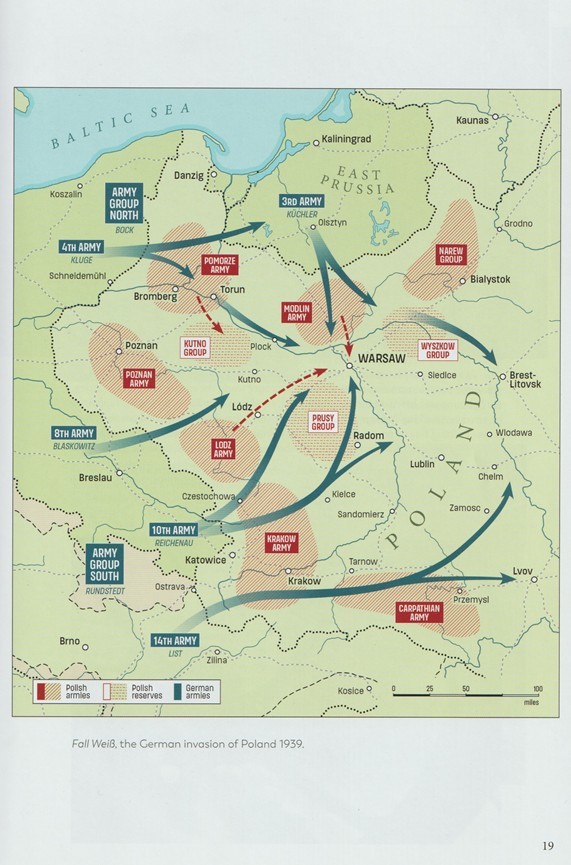
There are three full-color maps included in this volume by Battlefield Design that show:
- Central Europe, August 1939
- The Polish/Danzig Corridor, August 1939
- Fall Weiß, the German invasion of Poland 1939.
INDIVIDUAL PROFILES:
There are several individual profiles in this volume, and they provide information on individuals such as:
Hans-Friedemann Götze
- SS- Standartenführer – commander of the SS Heimler Danzig in 1939.
Hubert Meyer
- SS- Obersturmführer – platoon commander of the 10. Kompanie LSSAH in 1939.
Felix Steiner
- SS- Standartenführer – commander of the SS Deutschland Regiment in 1939.
Karl Ferdinand Reichsritter von Oberkamp
- SS-Sturmbannführer – tactics instructor at ss-Junkerschule.
CONCLUSION:
As with the other volumes of the Casemate Illustrated titles from Casemate Publishers, I was impressed with this book. This is a very nice reference book that contains a well written informative text, many subject specific photographs and illustrations, color maps and more, all detailing actions of the Waffen-SS in Poland during the early stages of World War II in 1939 Poland. As with the other Casemate Publishers titles, I would have no hesitation in recommending this book to others as it will be a welcome addition to one’s personal military reference library.
Casemate Publishers’, The Waffen-SS in Poland, 1939, is also available digitally from:
Barnes & Noble
Kobo
PRICE:
UK £24.95 / US $28.95
https://www.casematepublishers.com/
This book was provided to me by Casemate Publishers. Please mention that you saw the book reviewed here on the KitMaker Network when making your purchase. Thank you.