













HISTORY:
** This account of German’s ‘Westwall” comes in three distinct sections – the first is an in-depth analysis of the defensive system built between 1936 and 1944. This includes the three major build phases, the organisation of the workforce and the political background and includes lavish illustration of the bunker types. The second section looks at the Allied campaign to overcome the defences of the Siegfried Line through the winter of 1944/45, focussing on operations by the US, Army that first breeched the line around Aachen and the Hurtgen Forest. The third section deals with the perception of the Westwall in the eighty years since the war and then outlines a battlefield tour guide of those elements that still survive. Much of the text is based on articles from After the Battle magazine, though these have been augmented with a wealth of additional content. **
** Quoted from the book’s dustjacket.
THE BOOK:
Pen & Sword Books has released, The Siegfried Line – Then and Now, as part of their Then and Now series of books. It is a 312-page hardcover book, 7 x 10 inches in size. The text is comprised of approximately 63,000 words in the main account plus 31,000 words in the captions. Included with the text are black and white and color photographs, black and white line drawings, diagrams and sketches as well as detailed captions and information keys. The book has a 2023 copyright, a publication date of November 10, 2023, and the ISBN is 978-1-3990-4853-8.
CONTENTS:
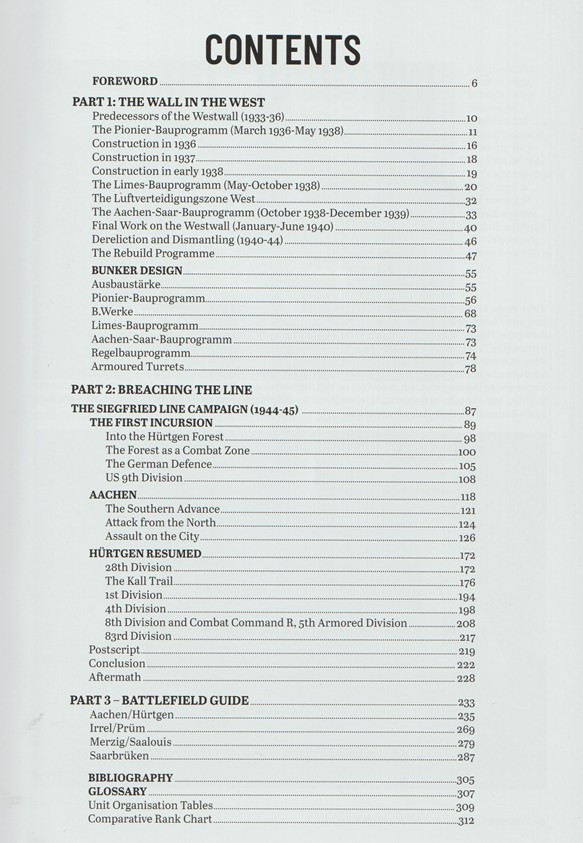
Please refer to the attached scan of the Contents page for a detailed listing of the contents of the book.
THE TEXT:
The authors provide a well written and informative text detailing the before, during and after history of The Siegfried Line during World War II. The text goes into great detail in all areas of the book as outlined on the contents page, please refer to the scan of the Contents page that I have provided. The authors have written a very informative text on The Siegfried Line starting with the initial planning and the beginning of the construction of the various components of the line. The time frame of the various phases of construction and locations is broken down by month and year. The section of the book dealing with the design of the various bunkers breaks down and discusses seven different specific bunker types and their purpose. The second section of the book discusses the fighting that took place at The Siegfried Line during the years of 1944-1945 and details actions taken by both the Allies and Axis and details the successes and failures of the various actions and the outcome of them. The final section of the book discusses the battlefields as they are today and the locations where remaining bunkers and other sections of The Siegfried Line can be located and observed. In addition to their own words, the authors have also provided several personal accounts and quotes from both Axis and Allied commanders such as Oberst Gerhard Wilck, German commanding officer of the Achen defenders and US Army Captain Charles B. MacDonald as well as excerpts from official military After Action Reports such as one from the US 90th Infantry Division. The authors didn’t use what I refer to as fluff writing where a large amount of non-essential extra text is provided just to help fill the pages. As I read through the book, I did notice some spelling and grammatical errors. The errors I found did not interfere with being able to understand what the authors were describing, and the errors didn’t take anything away from the book as far as being informative. Grammar and spelling might not be an important factor to everyone however it is something that I take notice of and pass on my findings. I feel that the authors have covered the history of The Siegfried Line well and have provided the information in an easy-to-read format which the detailed oriented reader will benefit from.
THE PHOTOGRAPHS:
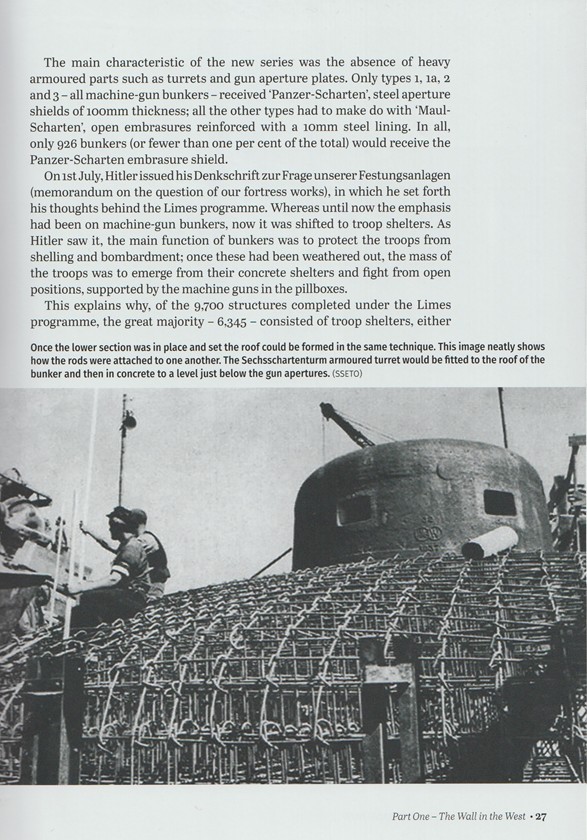
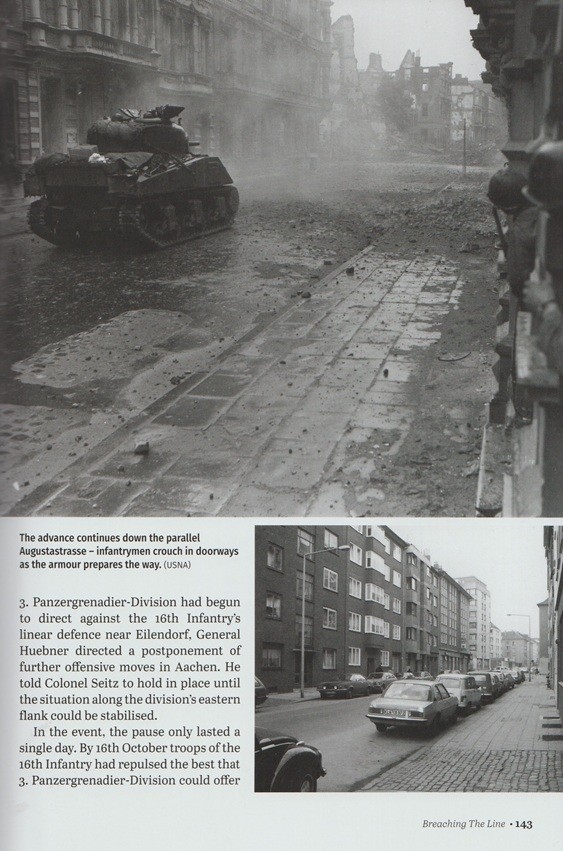
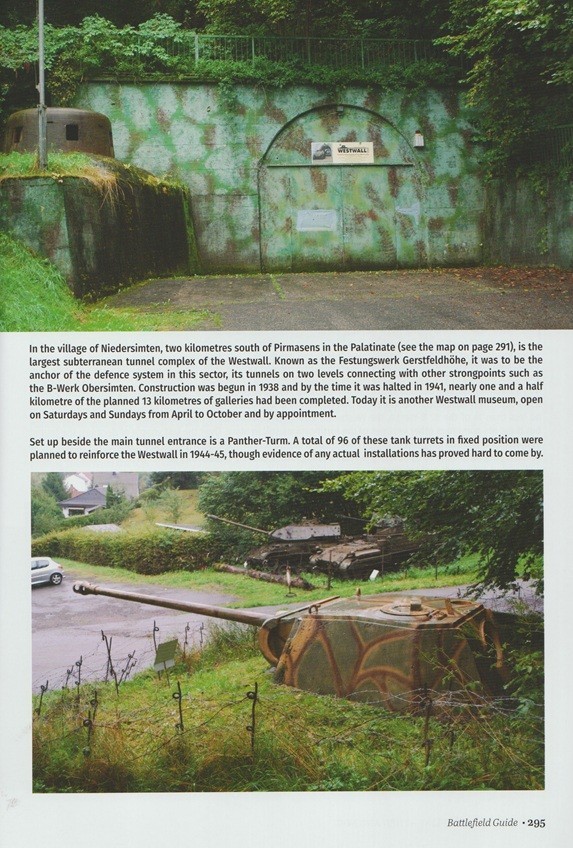
A total of 322 black and white photographs and 121 color photographs are included in this volume. The authors chose subject specific photographs and did not include photographs that strayed from the main subject of the book. The photographs contain a vast array of Siegfried Line subjects such as various types of bunkers, anti-tank and anti-personnel defenses, construction of various parts of the line such as bunkers, camouflage techniques, construction equipment, Allied and Axis uniforms and weapons as well as tanks, armored vehicles and soft-skinned vehicles and their markings, civilian workers, aerial photographs of sections of the line, period maps, railcars, battle damage, period photographs of various parts of the line such as bunkers, trenches, anti-tank and personnel barriers, civilian buildings, etc., and current photographs of the same subjects or what remains of them or the area where they were located. Most of the photographs are clear and easily viewable; however, a few of them are somewhat blurry and a few of them appear to be too dark, while others appear to be too light. This can be typical for the discussed period of history and the quality of the photographs is of no fault of the author and they do not take anything away from the book. I have seen some of the period photographs provided in other publications dealing with the same subject matter, however the majority of them were new to me. I would say that the majority of the photographs chosen for this book are for the most part lesser-known photographs as opposed to photographs that are featured in many other titles of the same subject. Several of the photographs will prove to be excellent reference material for the scale modeler due to the details they contain. The military historian, and the World War Two enthusiast will benefit from the excellent photographs as will anyone that is interested in the Allied and Axis fighting at and around The Siegfried Line during World War II.
THE SCALE LINE DRAWINGS, DIAGRAMS AND SKETCHES:
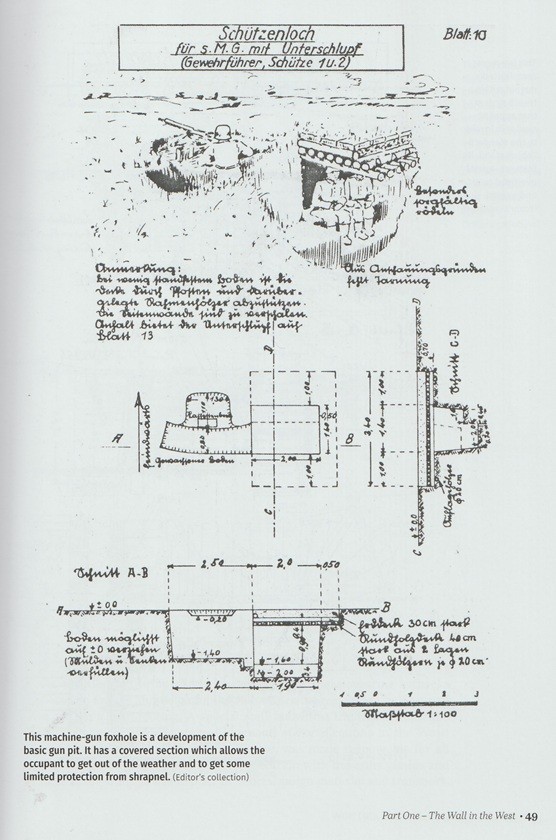
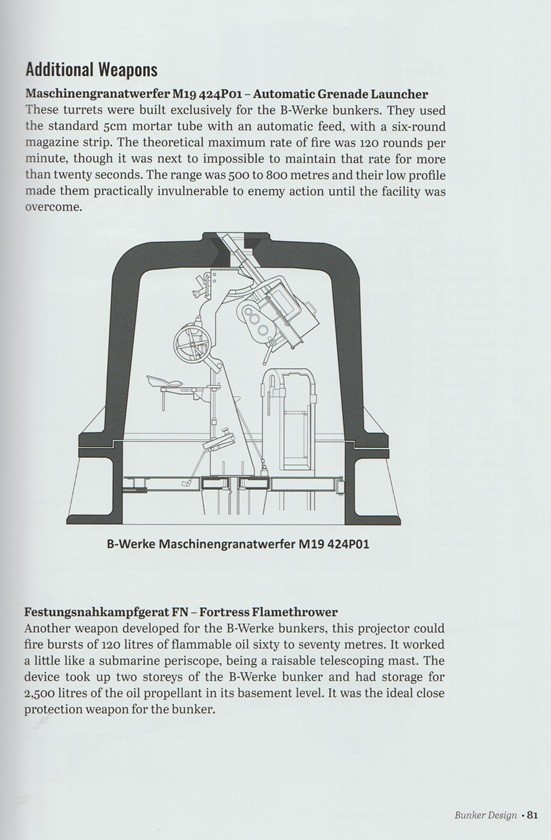
A total of 87 overhead line drawings, 6 cut-a-way views and 1 sketch of the various types of German bunkers, their floorplans, turrets and weapon systems are included in this volume. The line drawings are accompanied by a 21-item image key on page 56. The drawings all include a description of their type, location and type and purpose of weapons emplaced.
INFORMATION CHARTS:
There are three informational charts included in the volume and they provide detailed information on:
- US 9th Infantry Division, December 1944
- US 5th Armored Division, December 1944
- Volksgrenadier Division, October – December 1944
THE CAPTIONS:
The captions are well written and explain the accompanying photographs nicely. The captions go into very specific detail as to the type of bunker shown, type of weapon shown, dates and locations, individual’s names and military rank, military units, work being done, what the bunker had been camouflaged to represent, what is in the current location and what was there during the war, and other such information. As I read through the captions, I noticed some spelling and grammatical errors. I found the captions to be very helpful due to their detailed content as opposed to other captions that I have seen that are lacking in detail.
CONCLUSION:
As with the other volumes of the Then and Now titles from Pen & Sword Books I was impressed with this book. This is a very nice reference book that contains a well written informative text, many subject specific photographs, well detailed captions and more, all detailing clashes between the Allied and Axis forces at the Siegfried Line in Germany during World War II. As with the other Pen & Sword Books titles, I would have no hesitation in recommending this book to others as it will be a welcome addition to one’s personal military reference library.
Pen & Sword Books’, The Siegfried Line – Then and Now, is also available digitally from:
Amazon
Apple
Barnes & Noble
Kobo
Pen & Sword Books’, The Siegfried Line – Then and Now is also available as a Kindle version through Amazon.
PRICE
UK £30.00 / US $52.95
https://www.casematepublishers.com/
This book, from Pen & Sword Books, was provided to me by Casemate Publishers. Please mention that you saw the book reviewed here on the KitMaker Network when making your purchase. Thank you.