












HISTORY:
** Humour is a vital ingredient for the morale of a nation at war. From Britain’s John Bull mocking a diminutive Napoleon carving up the world, the caricatures of a bombastic Kaiser in the First World War, to an often demented looking Hitler, cartoons have not only portrayed the enemy in a satirical light but have raised a smile in the darkest of times.
Self-depreciating humour is also a facet of cartoons during wartime – making fun of incumbent politicians and incompetent generals – while at the same time challenging the decisions of those in powerful positions in a manner meant to embarrass. Indeed, cartoons often carry a serious message which exemplifies the subject far more impactfully than the written word.
It is also the case that cartoons can broach subjects too sensitive to be touched upon in editorials or by columnists. Such is the case with this absorbing, if light-hearted view of the Second World War portraying the seismic events of the conflict in a fashion which everyone at the time could understand and nod their appreciation to with a smile on their lips.
The Second World War in Cartoons begins in the aftermath of the First World War. It then covers the events that lead to a resurgent Germany and the slow march to war. This is followed by the inevitable references to the Phoney War and to Hitler’s ‘Sink-on-Sight Navy’ after the Graf Spee had been scuttled by her captain.
A more serious tone is undertaken during Britain’s darkest hour, the cartoons reflecting both Churchill’s stubborn determination to resist as well as encouraging the fighter boys to stop Goering’s Luftwaffe. Gradually, the mood changes as Britain’s strategic position improves. When the war ended with victory in Europe, a cartoon of Germany depicts a notice ‘Under New Management’.
Churchill’s defeat in the 1945 general election resulted in one cartoonist declaring that Britain had ‘dropped its pilot’ and, ever a cartoonist’s favourite character, among the final images is that of Churchill declaring an Iron Curtain had descended across the Continent, as the Cold War took its grip.
Each of these wonderful cartoons is provided with a full explanation of the historical background, and its relevance to the events of the day.
** Quoted from the book’s dust jacket.
THE BOOK:
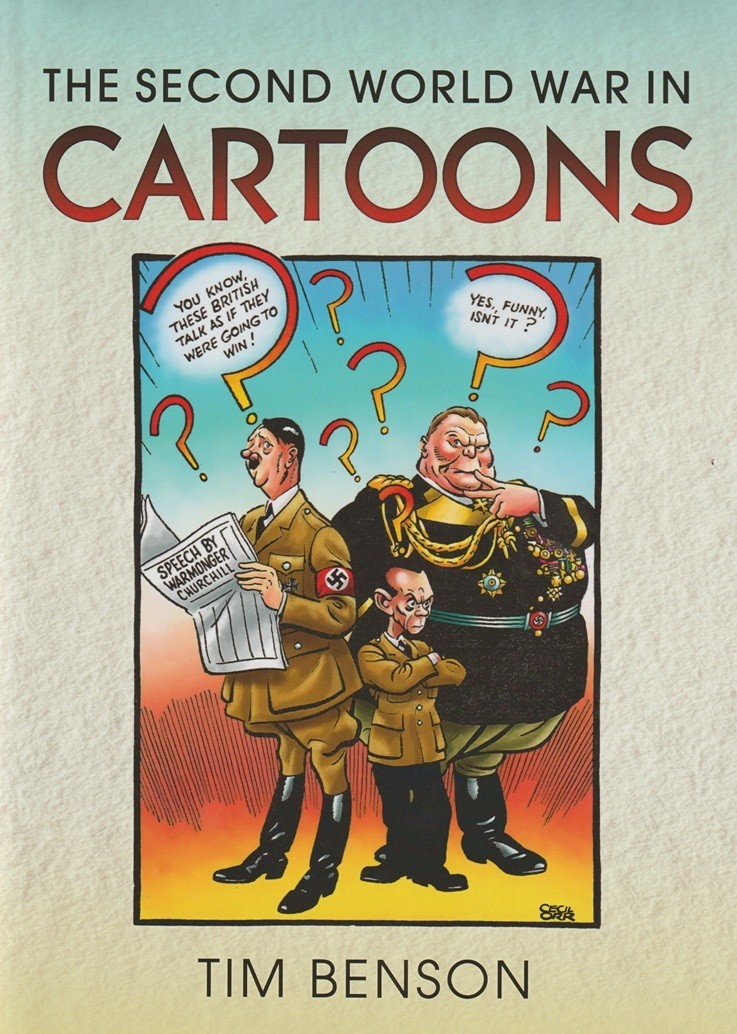
Frontline Books has released The Second World War in Cartoons as a 278-page hardcover book, 8.25 x 11.7 inches in size. Included with the text are black and white photographs. The book has a 2025 copyright, a publication date of October 23, 2025, and the ISBN is 978-1-0361-0597-6.
CONTENTS:
Introduction
1. The Road to War
2. The Phoney War
3. Britain's Finest Hour
4. The World at War
5. The Tide Turns
6. From the Normandy Beaches to Victory in Berlin
7. From Hot War to Cold War
THE TEXT:
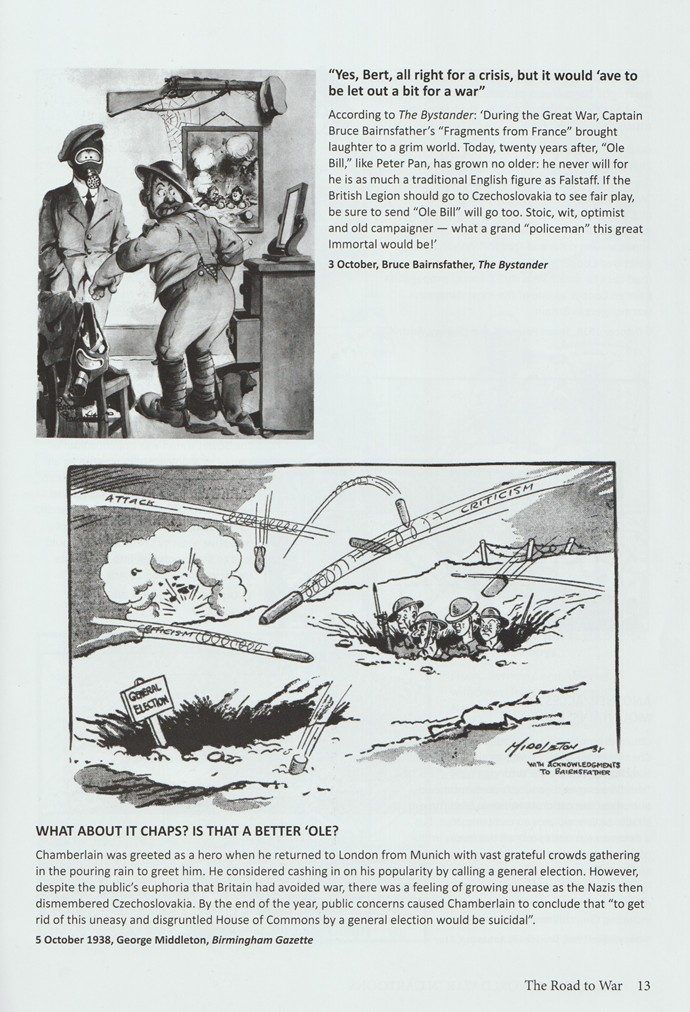
Author Timothy S Benson provides nicely written and informative text detailing political cartooning in Britain before, during and after World War II. There is a total of 12 pages of text in this volume. The remainder of the book is dedicated to the photographs and the captions associated with them. In addition to discussing the period political cartooning as a whole, the author also profiles various political cartoonists and discusses their careers as artists and also discusses whether they were kept from military service to continue their work or if they were placed into military service and their activities during that time. A portion of the text that I found interesting was where it discusses Adolph Hitler having instructed Joseph Goebbels and his psychiatrists to study a British World War I cartoon by cartoonist Bruce Bairnsfather as Hitler did not understand the cartoon nor British humor. In addition to his own words, Timothy S Benson has also provided quotes from author H G Wells, German Propaganda Minister Joseph Goebbels, Home Guard rifle instructor JC Walker, Lord Lloyd - Leader of the House of Lords, cartoonist Harry Heap of the Sheffield Star, cartoonist Thomas Challen, cartoonist Leslie Grimes, cartoonist Philip Zec, cartoonist Sidney Strube and others. As I read through the text, I didn’t notice any spelling or grammatical errors. Grammar and spelling might not be an important factor to everyone; however, it is something that I take notice of and pass on my findings. I found the text to be interesting and informative, and I feel that it will be beneficial to anyone who is interested in political cartoons of the period and what influenced them.
THE PHOTOGRAPHS:
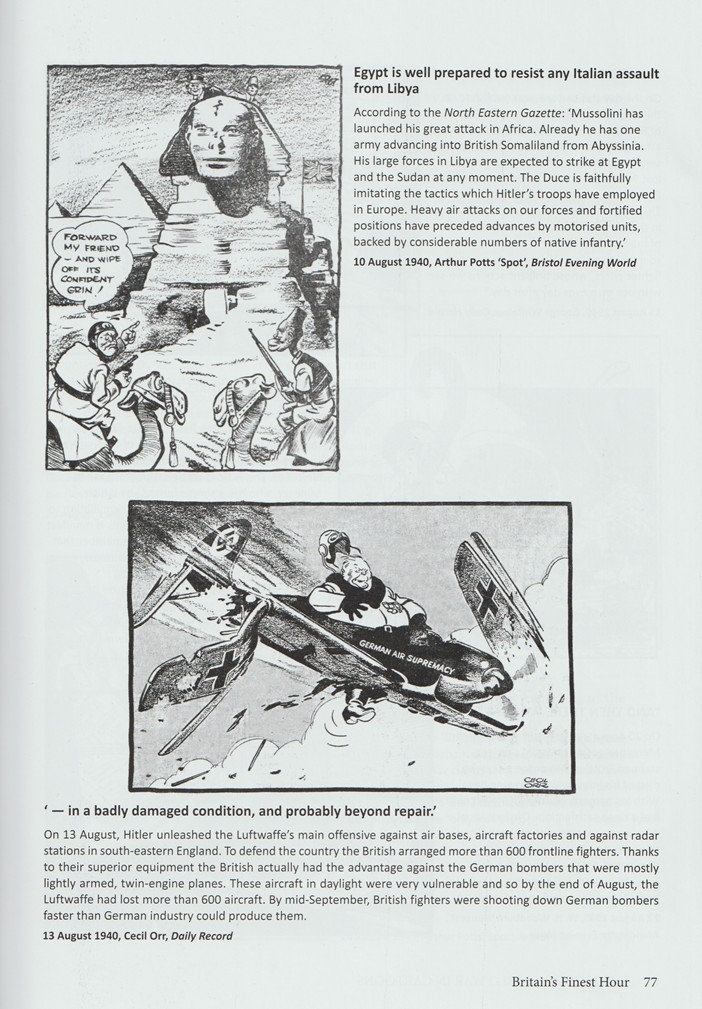
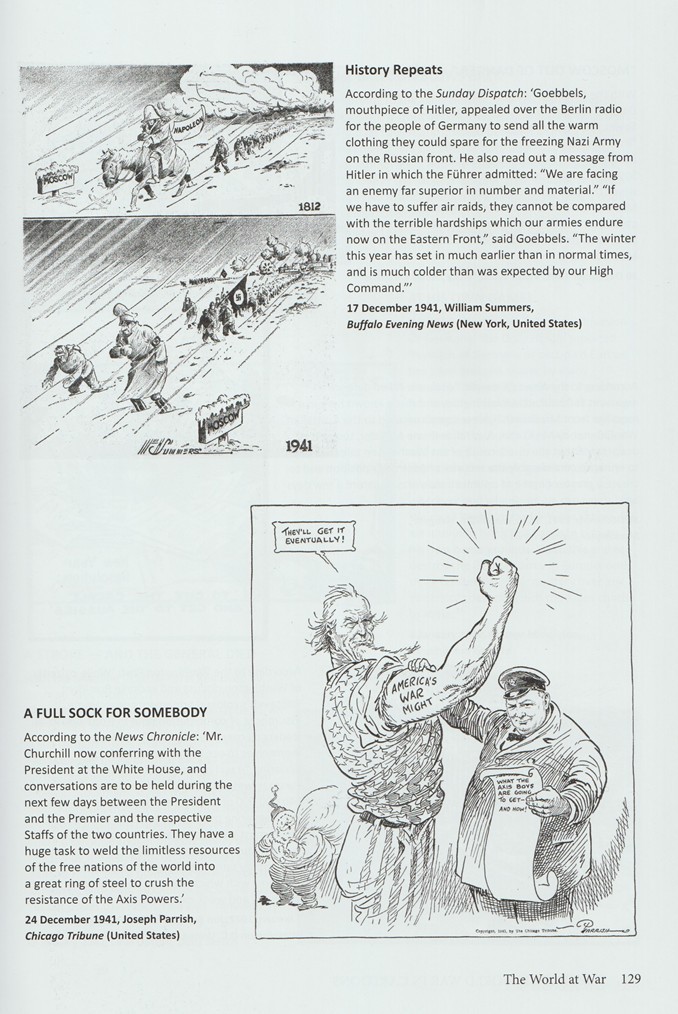
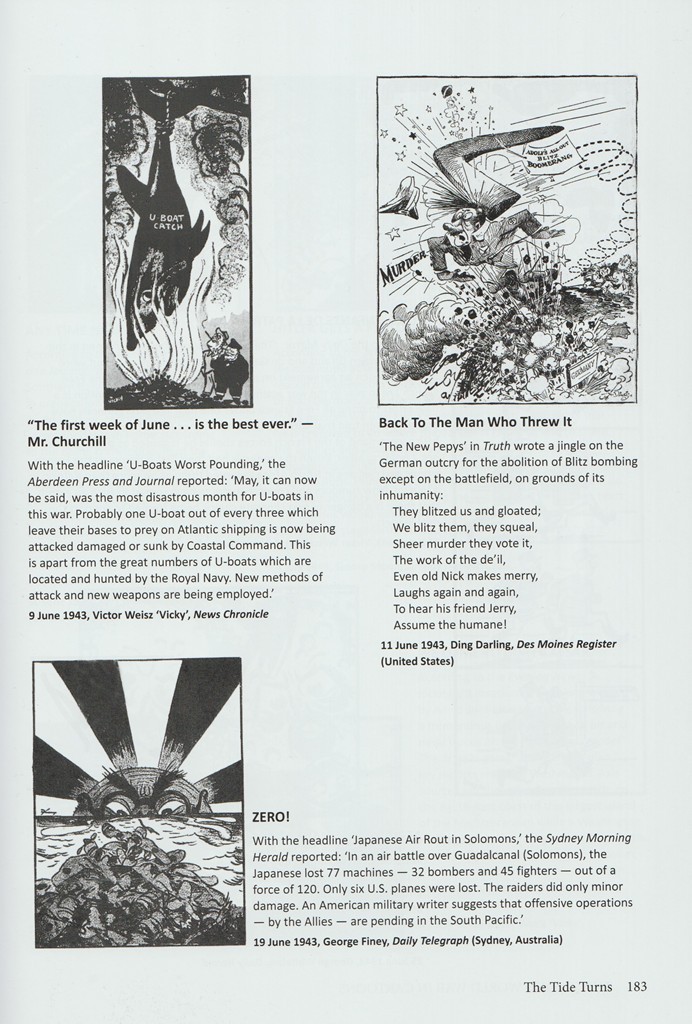
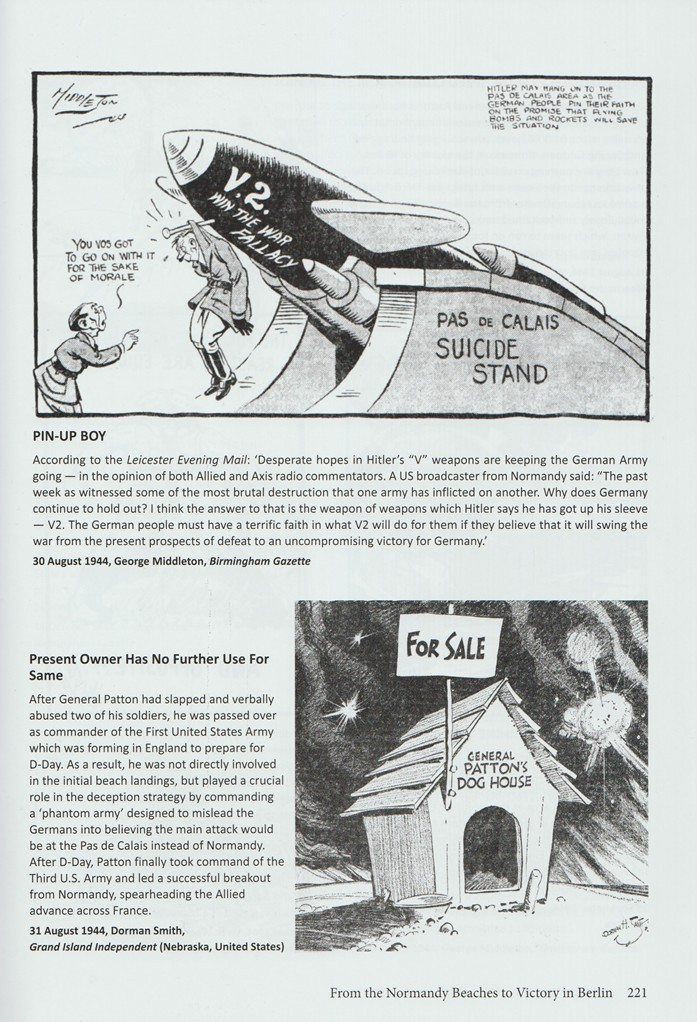
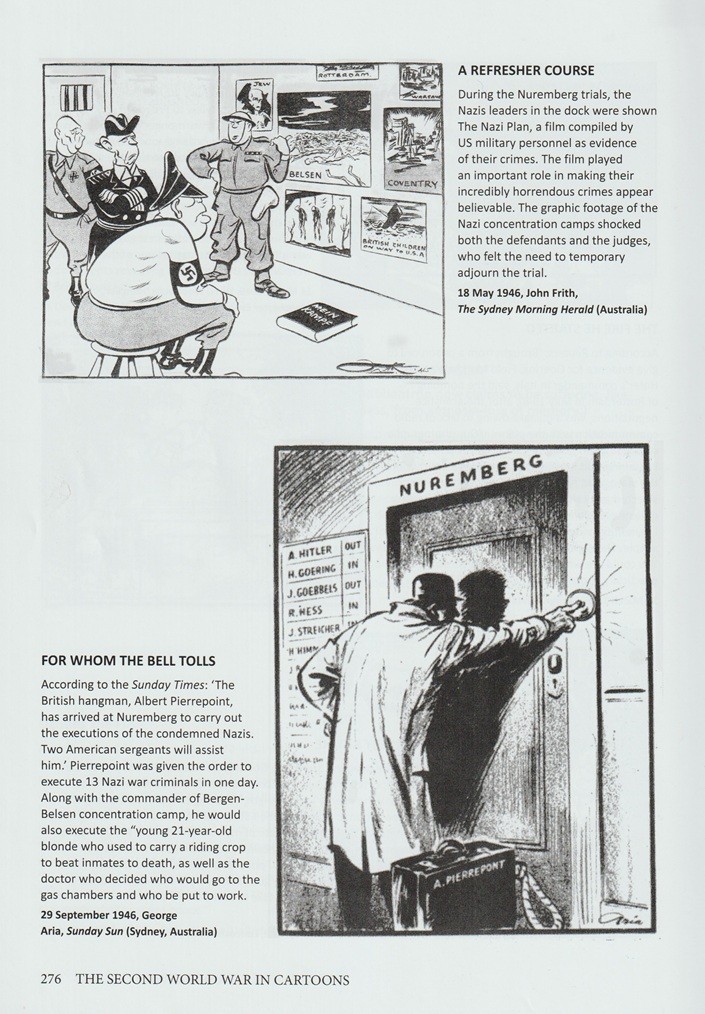
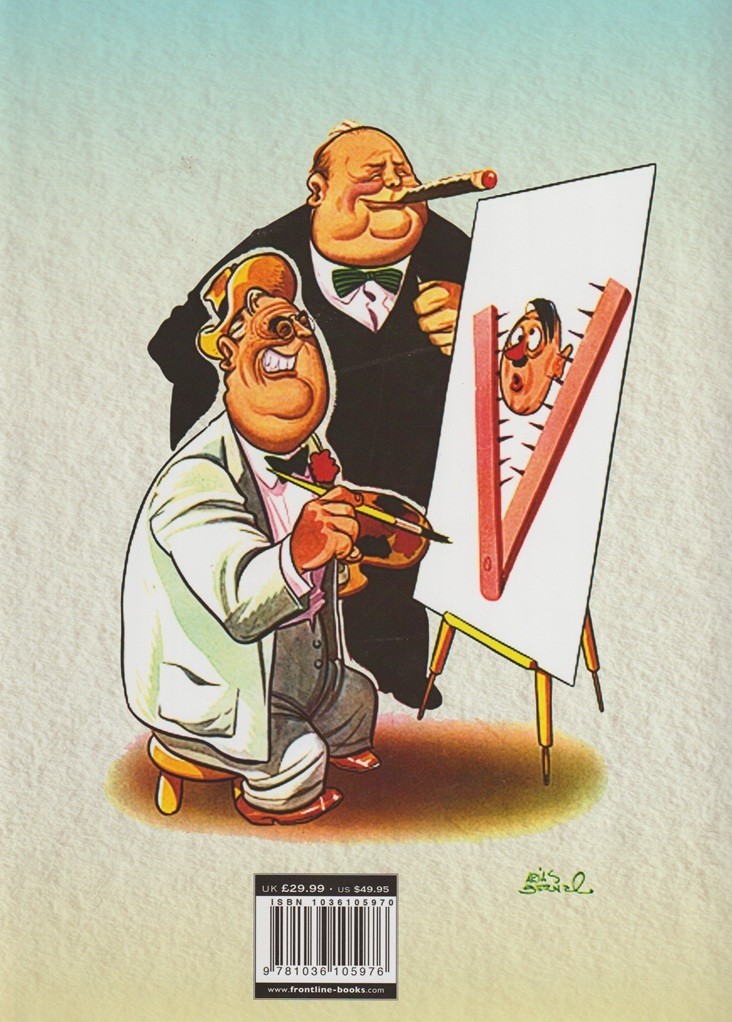
A total of 728 black and white photographs and 2 color photographs are featured in this volume. The color photographs are the images on the front and back covers of the book as well as the book’s dust jacket. The majority of the photographs are of cartoons, political in nature, from before, during and post-World War II. The cartoons shown are definitely not politically correct when judged by today’s standards. The cartoons show things such as swastikas and violence and some of the characterizations of people representing various countries, especially those of the Axis, are far from flattering. Be that as it may, the reader will need to remember that these cartoons are from the 1930s and 1940s and the depictions of the various people, comments and actions portrayed were acceptable at the time. Each cartoon comes with a very well written and informative caption. Please refer to the captions portion of my review for the caption details. The majority, if not all, of the photographs will prove to be of great interest to anyone interested in political cartoons pertaining to individuals and specific actions taken before, during and after World War II due to the details they contain.
THE CAPTIONS:
The captions make up the majority of the text in the book. The captions provide information such as the title of the cartoon, the date it was published, the name of the artist and the publication they worked for, the name of the publication that the cartoon was published in and the country where it was published. When needed, there are also English translations. The captions are well written and explain the accompanying cartoons nicely and describe what is shown and represented and the message the cartoonist was wanting to convey. As I read through the captions, I didn’t notice any spelling or grammatical errors. I was impressed by Timothy S Benson’s captions as they are very helpful to the reader due to their detailed content as opposed to other captions that I have seen that are very brief and lacking in detail.
CONCLUSION:
As with titles from Pen & Sword Books, I was impressed with this book. The book contains an excellent collection of political cartoons from the 1930s and 1940s pertaining to the Second World War. All of the cartoons, albeit not politically correct by today’s standards, definitely let the reader know the political mindset of the populace of the times. As with the other Pen & Sword Books titles, I would have no hesitation in recommending this book to others as it will be a welcome addition to one’s personal military reference library.
PRICE
UK £29.99 / US $49.95
https://www.frontline-books.com/
https://www.casematepublishers.com/
This book, from Frontline Books, an imprint of Pen & Sword Books Limited, was provided to me by Casemate Publishers. Please mention that you saw the book reviewed here on the KitMaker Network when making your purchase. Thank you.