












HISTORY:
** The development of artillery tractors in the 1930s was integral to the industrial development of the Soviet Union. The tracked tractor plants at Chelyabinsk, Kharkov and Stalingrad were built specifically to industrialize the Soviet Union as well as to mechanize the Red Army, particularly the artillery.
This new study by Russian armour expert James Kinnear tells the story of these artillery tractors. How they suffered horrendous losses in the opening months of the war but continued to be built and their numbers were bolstered by Lend-Lease tractors, primarily of American origin. At the end of the war, the same slow-moving and cumbersome artillery tractors that had served with the Red Army in the dark days of 1941 towed their heavy artillery pieces at a steady pace all the way to the streets of Berlin.
There has been a resurgence of interest in recent years in these military workhorses and wrecks have been exhumed and restored, while Soviet factory and operational records have also become available. This new research is used here for the first time in English, alongside unpublished images, to tell the remarkable story of the artillery tractors that delivered Red Army artillery into combat throughout World War II. **
** Quoted from the Osprey Publishing web site.
THE BOOK:
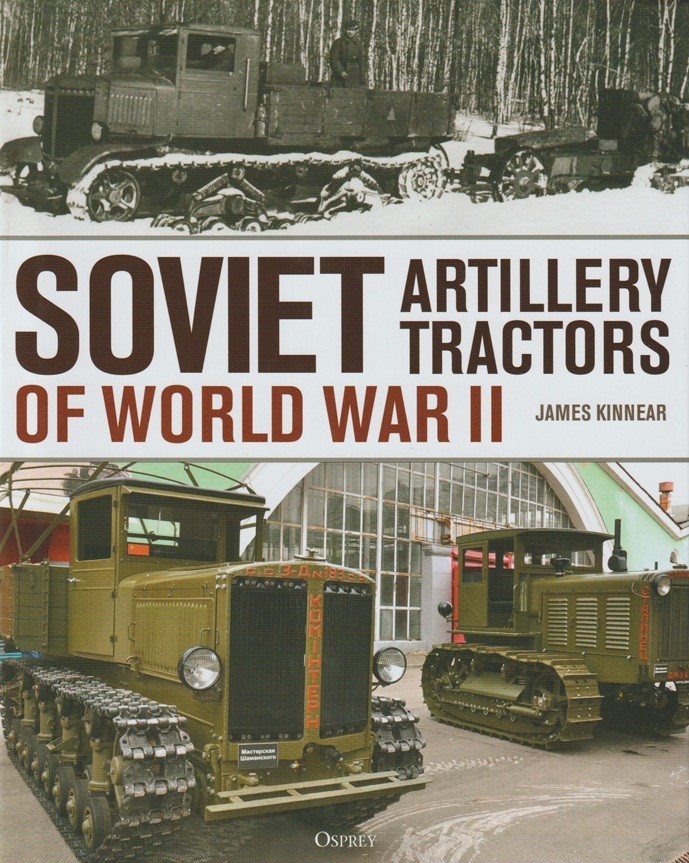
Osprey Publications has released Soviet Artillery Tractors of World War II as a hard cover book with 352 pages and is 9 3/4 inches by 7 5/8 inches in size. Included with the text are black and white photographs, color photographs, full color illustrations, detailed captions, data tables, scale line-drawings and more. It has a 2026 copyright, a publication date of June 18, 2026, and the ISBN is 978-1-4728-7200-5.
THE CONTENTS:
Author’s Notes
Introduction
Chapter 1: Industrialization and Early Soviet Tractor Development
Chapter 2: Mass Production, War and Evacuation
Chapter 3: Tracked Universal Tractors
Chapter 4: Tracked Transporter-Tractors
Chapter 5: Armoured Artillery tractors
Chapter 6: Half-track Artillery Tractors
Chapter 7: Wheeled Artillery Tractors
Chapter 8: Self-Propelled Artillery on Tractor Chassis
Chapter 9: Improvised Armoured Tractors
Chapter 10: Post-War Service
Chapter 11: Preserved World War II Artillery Tractors
Chapter 12: Walkarounds
Appendices
Data Tables
Artworks
Glossary
Bibliography
Index
THE TEXT:
Author James Kinnear has written an excellent history about Soviet artillery tractors and their use during World War II. The text goes into very specific detail in all areas of the book as outlined on the contents page, please refer to the contents listing that I have provided for the subjects that are covered throughout the book. The author goes into great detail for each specific make and model of tracked and wheeled vehicles used as artillery tractors by the Soviets. Technical details discussed are things such as the name and designation number given to them, the name of the plant where they were designed and built, the name of the design engineer, the date they went into production, numbers produced, if they were armored or unarmored, armor specifics, the measurements of the vehicle, the type and size of engine installed and the amount of horse power they produced, fuel type, fuel capacity, fuel consumption rates, vehicle speed and range, transmission type, track measurements, the amount of weight that they could tow and what specific type or piece of artillery they were designed to tow, improvements and changes made, dates of when production halted on certain models, which vehicles were designed and built but not adopted for military service, captured vehicles added to the Soviet inventory and used, which vehicles were retained in military service after the war ended and what became of the non-retained vehicles such as being turned over for agricultural use and other such important technical and historical information. The text in the book is professionally written and detailed. As I read through the text, I did not notice any spelling or grammatical errors. Grammar and spelling might not be an important factor to everyone however it is something that I take notice of and pass on my findings. As a reader that had just a basic knowledge of a few of the military tractors used by the Soviets during World War II, I found myself to be well informed on the subject upon finishing the book. Anyone wanting to add an excellent reference and history book on Soviet artillery tractors and their use during World War II to their personal library will be pleased with this highly informative and interesting book.
THE PHOTOGRAPHS:
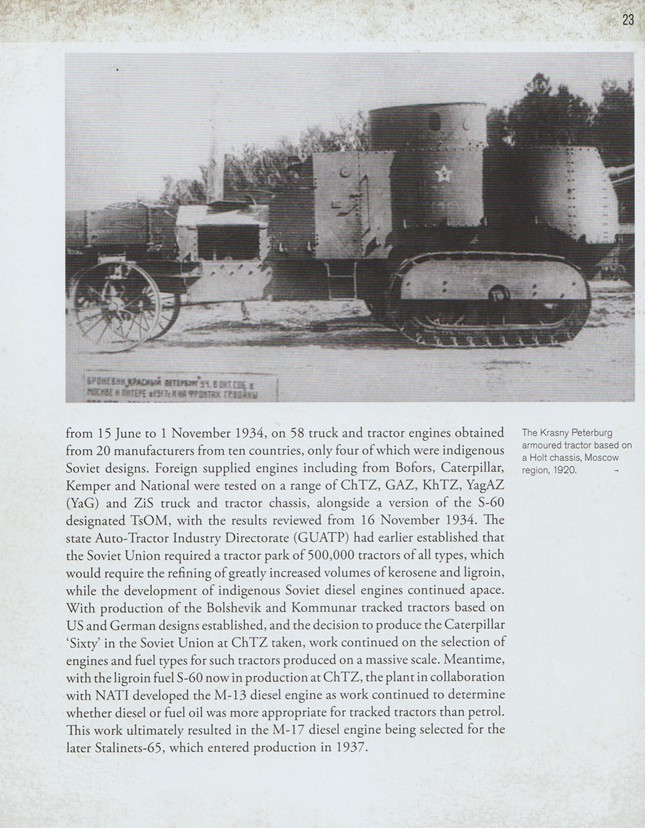
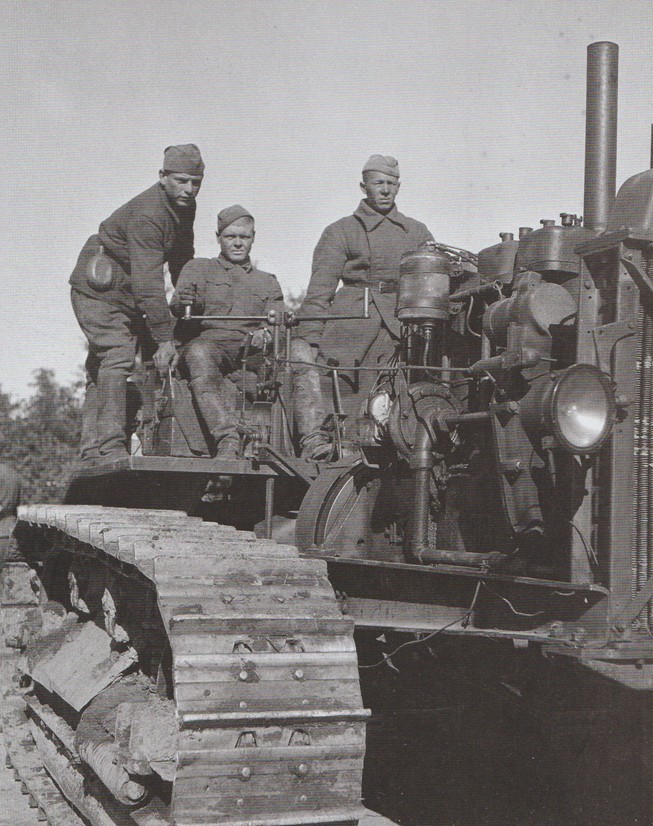
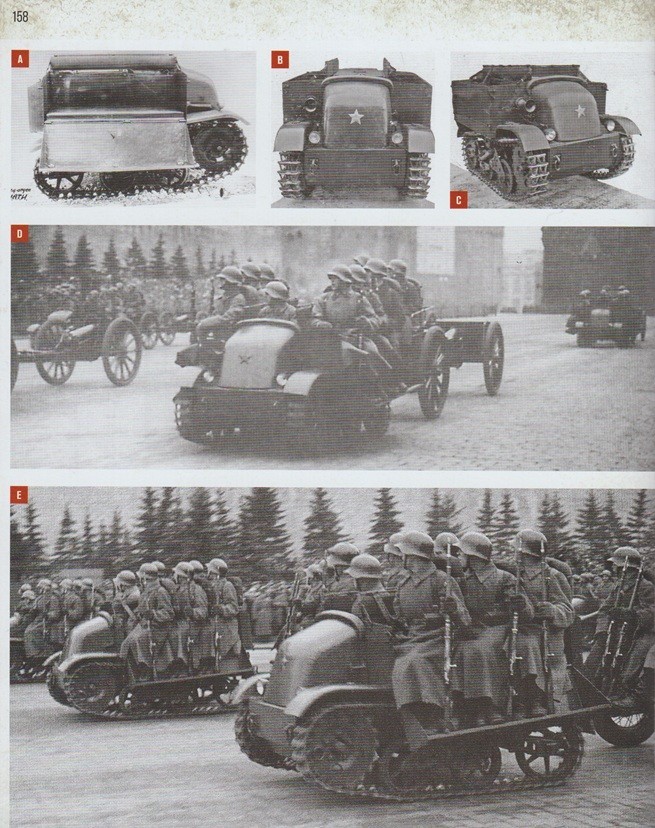
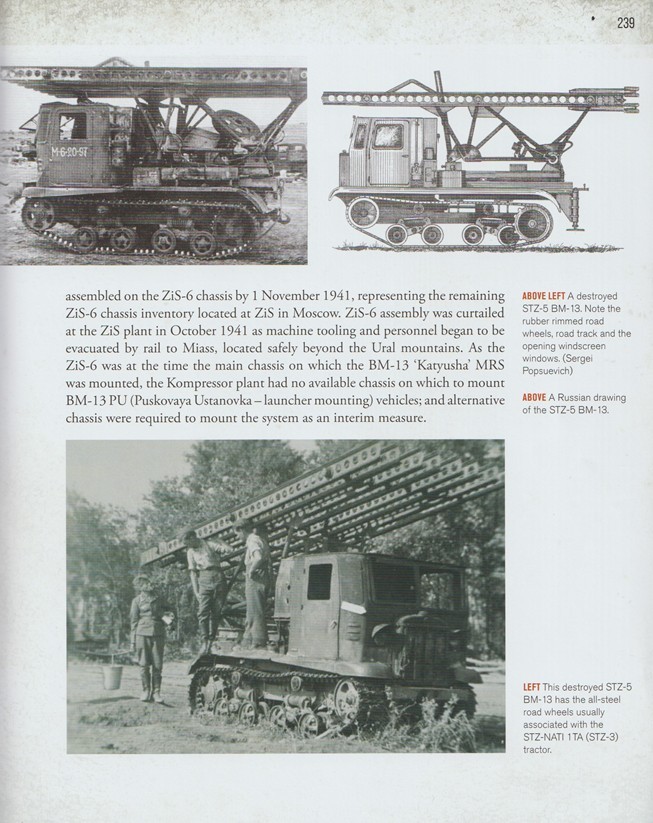
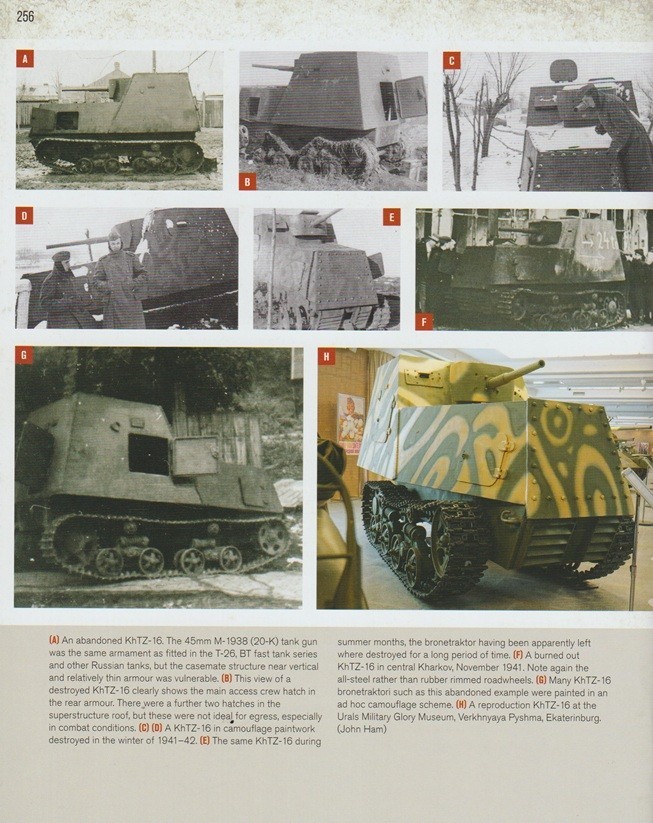
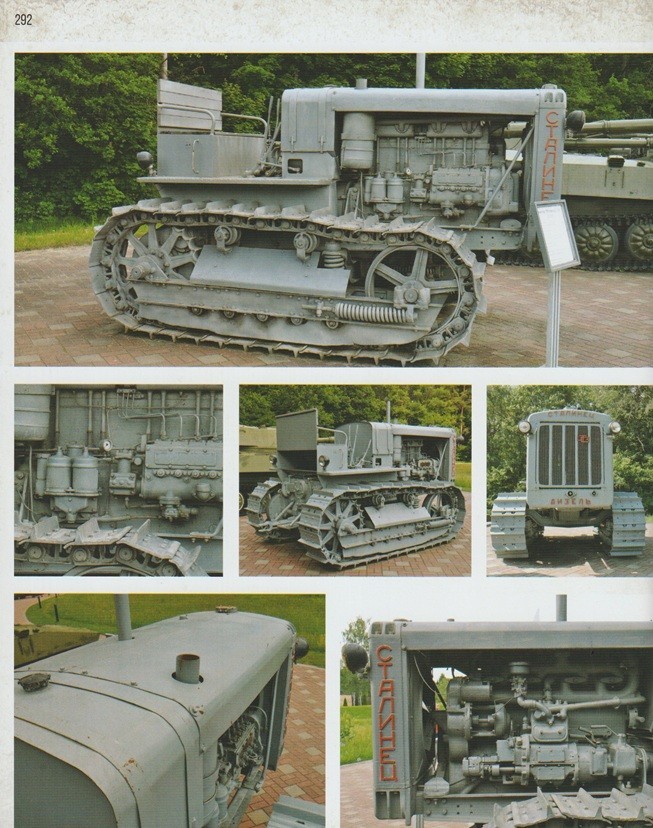
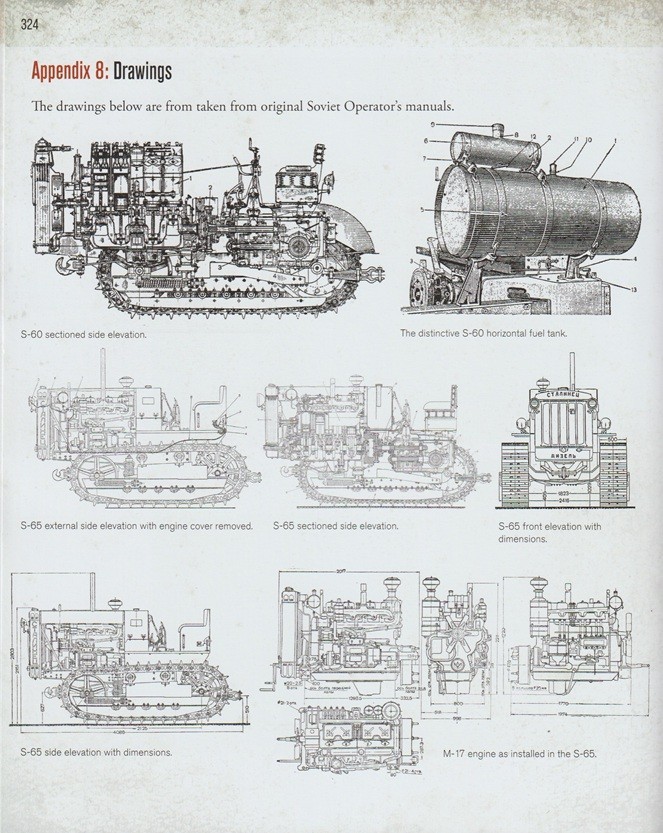
There are a total of 460 black and white photographs and 295 color photographs included in this volume. Author James Kinnear stuck to the title of the book and chose subject specific photographs and did not include photographs that strayed from the main subject. The photographs are a combination of in-action photographs, photographs removed from motion pictures. photographs that were staged for the photographer as well as photographs taken for propaganda purposes. The main subject of the photographs, as the title of the book states, are of multiple types of military artillery tractors in use by the Soviets during World War II. Fully tracked tractors and vehicles are shown as well as several pictures of half-tracked vehicles, four-wheeled vehicles, six-wheels vehicles and others such as cars, trucks and other vehicles such as the Russian GAZ-67 as well as armored vehicles and tanks. In addition to the tractors, vehicles and armor shown there are also multiple pictures featuring different types, calibers and sizes of artillery in use by the Russian military. Included with the period photographs, there are several full color walk-around photographs of various subjects such as the S-65 tractor, Komintern transport tractor, the T-20 Komsomolets armoured artillery tractor and others that have been restored and are on display in museums. Some of the pictures that I found to be particularly interesting to me are those taken from period Soviet military operators manuals, many of which are of scale line drawings which will benefit the scale modeler. Most of the photographs are clear and easily viewable; however, a few of them are somewhat blurry and a few of them appear to be too dark, while others appear to be too light. This can be typical for the period of history being discussed, and the quality of the photographs is of no fault of the author, and they do not take anything away from the book. The majority, if not all, of the photographs will prove to be excellent reference material due to the details they contain. The military historian and enthusiast will benefit from the excellent photographs as will anyone that is interested in Soviet artillery tractors, as well as Russian armor and vehicles, and their use during World War II.
THE ILLUSTRATIONS:
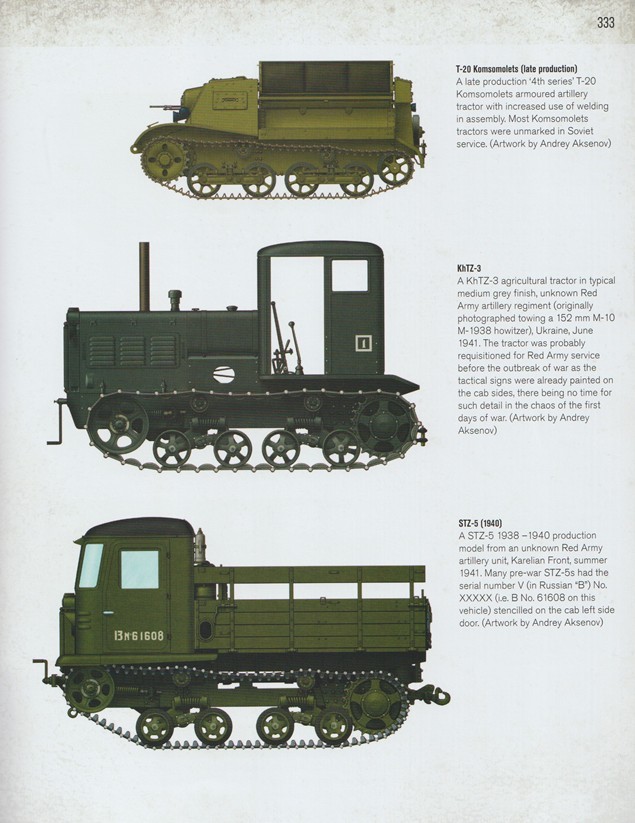
There are 10 color illustrations included in the volume. The illustrations are scale type illustrations and are all left side profile views and show details such as colors used, unit markings and camouflage. Detailed captions accompany each of the illustrations.
The illustrations are of:
- Pioner tractor
- Komintern tractor
- T-27 artillery tractor (converted from a T-27 tankette)
- T-20 Komsomolets (early production) tractor
- T-20 Komsomolets (late production) tractor
- KhTZ-3 agricultural tractor
- STZ-5 (1940) artillery tractor
- STZ-5 (1942) artillery tractor
- Ya-12 artillery tractor
- AT-45 artillery tractor
THE CAPTIONS:
The captions are well written and explain the accompanying photographs and illustrations in great detail, eliminating any doubt as to what is shown. The captions go into very specific detail as to the specific type of artillery tractor, or other military armor and vehicles shown, specific items of interest on various tractors, the types and caliber of artillery shown, specific military units, dates and locations and other such pertinent information. James Kinnear’s captions are very helpful to the reader due to their detailed content as opposed to other captions that I have seen that are very brief and lacking in detail.
INFORMATION CHARTS:
There are 13 information charts included in this volume, not including the 7 charts in the section titled Data Tables. The 13 charts provided a vast amount of information such as production numbers, technical information such as tractor weight, towing capacity, dimensions, engine size and power they provided, tractor speed and range of operation. Also detail are the types of military units that used the tractors and the purpose of the tractors, the number of tracked tractors in service, those needing minor repairs, those needing major repairs and those that were no longer in service Other areas that information is provided on is the disposition of artillery types requiring towing, the number of tracked tractors supplied through Leand-Lease as well as the number of tracked tractors that were returned to the Soviet Union at the end of the war that had been captured.
CONCLUSION:
As with the other Osprey Publishing titles I was impressed with this book. This is a very nice reference book that contains a well written informative text, many subject specific photographs and illustrations, well detailed captions and more, all detailing Soviet artillery tractors and their use during World War II. As with the other Osprey Publishing titles, I have no hesitation recommending this book to others as it will be a welcome addition to one’s personal reference library.
Osprey Publishing also offers Soviet Artillery Tractors of World War II as:
Ebook (Epub & Mobi) ISBN: 978-1-4728-7197-8
and
Ebook (PDF) ISBN: 978-1-4728-71985
Osprey Publishing’s, Soviet Artillery Tractors of World War II is also available as a Kindle version through Amazon.
PRICE:
UK £30.00 / US $40.00 / CAN $53.00
This book was provided to me by Osprey Publishing. Please mention that you saw the book reviewed here on the KitMaker Network when making your purchase. Thank you.