












HISTORY:
** This profusely illustrated account charts the development and use of German tanks during the First World War – a handful of German machines supplemented by dozens of captured British tanks. Other designs, both light and gargantuan, were halted by the November 1918 armistice. While the kaiser’s fledgling armoured force failed to significantly impact the course of the war, it nevertheless provided the foundation for Adolf Hitler’s vaunted Panzertruppen. Drawing on a host of fascinating sources, including previously unpublished intelligence reports, as well as hundreds of rare archival images, this is an essential source for scale modellers and military history enthusiasts. **
** Quoted from the back cover of the book
THE BOOK:
David Mitchelhill-Green has released The Kaiser's Panzers, German Tanks of The First World War as part of the Images of War series of books. It is a 259-page softcover book, 6.75 x 9.75 inches in size. Included with the text are black and white photographs including scale line drawings. The book has a 2025 copyright, a publication date of August 30, 2025, and the ISBN is 978-1-8050-0179-9.
CONTENTS:
Acknowledgements
Abbreviations, Conventions and Definitions
Chapter One
- An Armoured Fighting Vehicle
Chapter Two
- ‘This strange creature, with its steel hide…’
Chapter Three
- ‘The enemy succeeded in achieving a surprise attack’
Chapter Four
- ‘The finalising of a German model is highly urgent’
Chapter Five
- A7V Sturmpanzerwagen at War
Chapter Six
- ‘An armoured caterpillar carrying a 6-pounder gun…’
Chapter Seven
- Mark IV Beutepanzer
Chapter Eight
- Beutepanzerwagen at war
Chapter Nine
- Post War
Bibliography
THE TEXT:
Author David Mitchelhill-Green provides a well written and informative text detailing Germany’s use of various tanks and other vehicles such as tracked trucks and armored cars during World War One. There is a total of 60 pages of text, not including the pages titled Acknowledgements, Abbreviations or Bibliography. The remainder of the book is dedicated to the photographs and the captions associated with them. Even with the limited number of pages of text, some of which only contain a few sentences, David Mitchelhill-Green goes into great detail with a no-nonsense type of writing that provides a wealth of information on Germany’s development of its panzer program during World War One. Their development and use of their own tanks is well discussed as is their use of several captured British tanks that were added into the German armor inventory and then used against their former owners after evaluating and training with them. French tanks are also detailed and discussed. As well as discussing military tanks, the author also discusses several types of early armored cars that were used by Germany and other countries involved in the conflict as well as other vehicles such as early tracked trucks. The author discusses the introduction of tanks onto the battlefield and the successes and failures of them and how the enemy forces reacted to and changed military doctrine in response to the new armored threat. The author concludes the text with discussion of the use of tanks in the post-war years and the further development of panzer program. In addition to his own words, David Mitchelhill-Green has also provided quotes from individuals directly involved during World War One such as British Lieutenant Colonel Charles à Court Repington, British war correspondent Phillip Gibbs, journalist James Douglas, German General Erich Ludendorff, Prussia Minister of War Adolf Wild von Hohenborn, British Second Lieutenant Frank Mitchell, German Captain Friedrich Bornschlegel, Australian Lieutenant-Colonel J.A. Robinson and several others that shared their experiences and observations. David Mitchelhill-Green has covered well and has provided the information in an easy-to-read format which the detailed oriented reader will benefit from. David Mitchel hill-Green doesn’t use what I refer to as fluff writing where a large amount of non-essential extra text is provided just to help fill the pages. As I read through the text, I didn’t notice any spelling or grammatical errors. Grammar and spelling might not be an important factor to everyone however it is something that I take notice of and pass on my findings.
THE PHOTOGRAPHS:
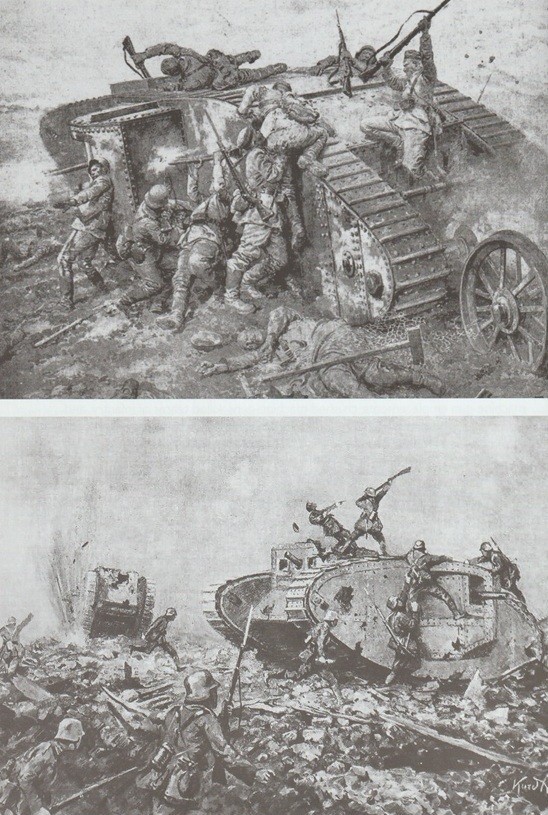
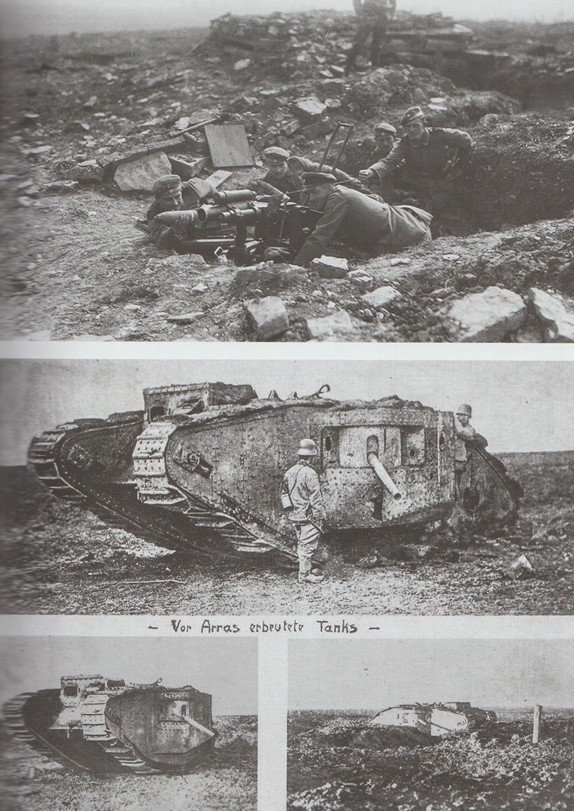
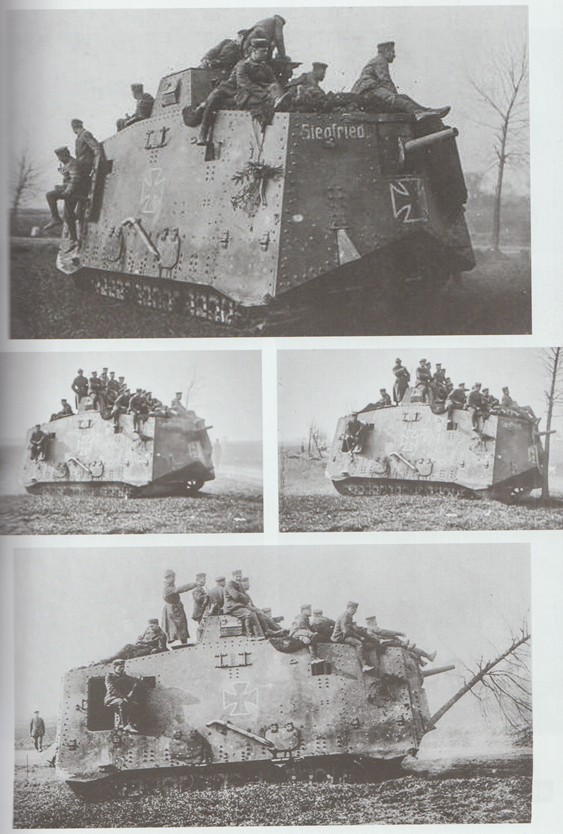
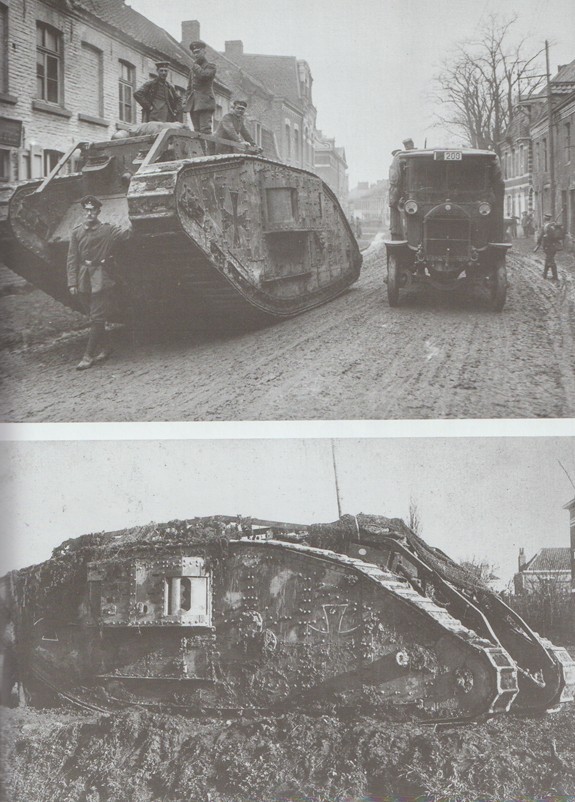
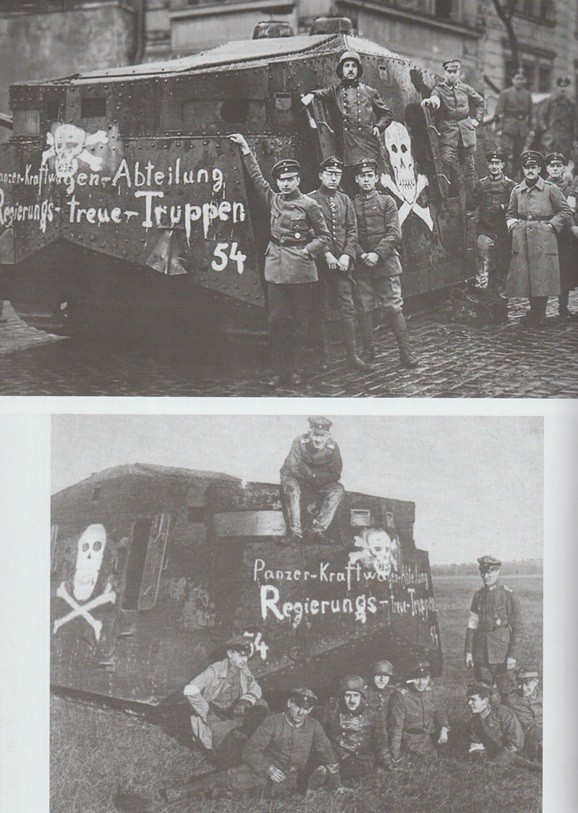
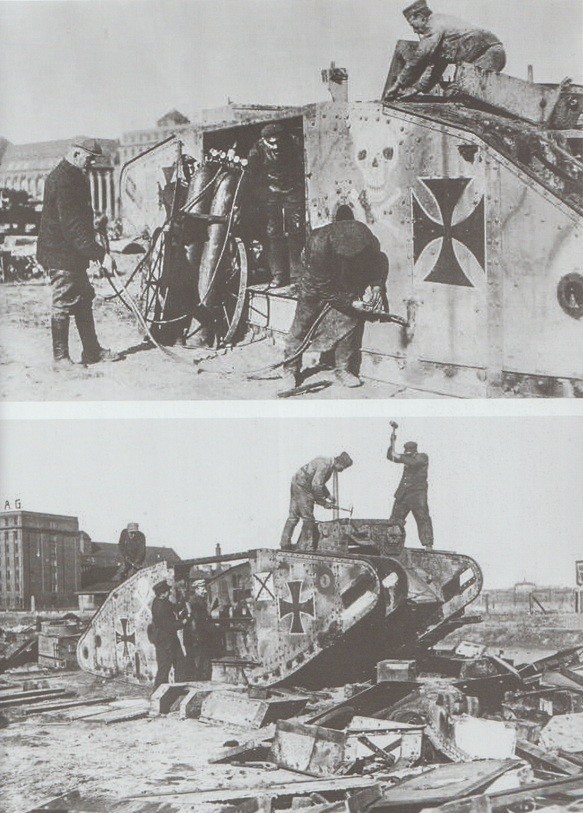
A total of 495 black and white photographs are included in this volume. There are no color photographs featured. Author David Mitchelhill-Green chose subject specific photographs and did not include photographs that strayed from the main subject of the book. The photographs range from wide angle photographs to close-up detailed photographs. Most of the photographs are clear and easily viewable; however, a few of them are somewhat blurry and a few of them appear to be too dark, while others appear to be too light. This can be typical for the discussed period of history, and the quality of the photographs is of no fault of the author, and they do not take anything away from the book and the fact that most of them are over one hundred years old. I have seen some of the featured photographs in other publications dealing with the same subject matter, however the vast majority of them were new to me. There are sections of the book that contain series of photographs that have been removed from motion pictures and made into stills and shown in order. There are numerous photographs of various tanks shown such as the German Orion-Wagen, German Hansa-Lloyd Treffas-Wagen, German A7V, German A7V-U, German Vollmer Leichter Kampfpanzer 1 (LK1), French Schneider CA1, French Saint-Chamond, British Mark I, British Mark II, British Mark IV, British Mark V and British Mark A Whippet. In addition to photographs of tanks there are photographs of various armored cars included such as the Belgian Minerva, German Bussing AG A5P, German Daimler Model 1915, German Ehrhardt E-V/4 Straßenpanzerwagen. In addition to the tank and armored car photographs there are also photographs of various tracked vehicles such as the German Bremer-Wagen (Marienwagen), German Marienwagen I mit Panzeraufbau, German Marienwagen II and German Uberlanwagen (Gelandewagen). One of my favorite military subjects is captured equipment and this book does not disappoint in that area. The two chapters of the book detailing the Beutepanzerwagen, provides numerous photographs of British Mark IV tanks and British Mark A Whippet tanks in German hands from when they were first captured, to repair work being done on them in German factories, to training and testing to their use in combat against their previous owners and some of the Mark IVs having been recaptured from the Germans. Other photographs that I found to be interesting were those showing battle damage to various tanks. The majority, if not all, of the photographs will prove to be of great interest, and excellent reference material, to the scale modeler as well as to anyone interested in Germany’s use of tanks during World War One due to the details they contain.
THE CAPTIONS:
The captions are well written and explain the accompanying photographs nicely eliminating any doubt the reader may have regarding what is taking place in the photographs provided. The captions go into very specific detail as to the model and country of origin of the tank or vehicle shown, types of weapons and military equipment shown, actions taking place, dates and locations, the names of individual’s shown and their military rank, military units, vehicle markings, and other such information. As I read through the captions, I didn’t notice any spelling or grammatical errors. I was impressed by David Mitchelhill-Green’s captions as they are very helpful to the reader due to their detailed content as opposed to other captions that I have seen that are very brief and lacking in detail.
INFORMATIONAL CHARTS:
There are two information charts provided in this volume and they provide information on:
A7V Technical Data
- Provides technical information such as the tank manufacturers, crew size, engine type, fuel capacity and consumption, operational range, speed, dimensions, capabilities, armament, manufacturing costs, communication systems and other such specific data.
Leading A7V Tank Actions
- Provides German A7V tank action information in the form of dates of action, the name of the battle, the number of divisions deployed, and the number of tanks used.
CONCLUSION:
As with the other volumes of the Images of War titles, I was impressed with this book. This is a very nice reference book that contains a well written informative text, many subject specific photographs, well detailed captions and more, all detailing military tanks in the Imperial German Army during World War I. I would have no hesitation in recommending this book to others as it will be a welcome addition to one’s personal military reference library.
Greenhill Books’, The Kaiser's Panzers, German Tanks of The First World War, is also available digitally from:
Casemate Publishers
Amazon
Barnes & Noble
Kobo
PRICE:
UK £18.99 / US $26.95
https://www.greenhillbooks.com/
https://www.casematepublishers.com/
This book, from Greenhill Books, was provided to me by Casemate Publishers. Please mention that you saw the book reviewed here on the KitMaker Network when making your purchase. Thank you.