












Introduction and History
10 HP light truck, Fiat 12 HP light truck, Fiat 24-32 HP light truck, Fiat 28-40 HP light truck, AMO Ф-15, AMO-2, AMO-3, ЗИC-5, ЗИC-5V, ЗИC-15, ЗИC-150, and ЗИЛ-164)-generation Soviet/Russian truck produced by ZIL in Moscow, Russia. The prototype (named Ukraina, which means Ukraine) was built in 1956. Production began in 1962, while mass production started in 1964. It was one of the most numerous cargo trucks in the USSR and Russia; in total, ZIL built 3,380,000 trucks up to 1994. In 1995, production was moved to the now-defunct Ural Motor Plant (UamZ, its trucks were known as UamZ-43140).
The ZIL plant started working on a replacement for the ZIL-164 right after De-Stalinization took place. The prototype was built some months later and had an all-new cabin, as well as a wider, wraparound windshield and a V-shaped emblem identical to 1956 Ford F-Series trucks (after-Ford Model TT (1917-1925), Ford Model TT (1925-1927), Ford Model AA (1927-1929), Ford Model AA (1930-1931), Ford Model BB (1932), Ford Model BB (1933-1934), Ford V8 1½-Ton (1935-1936), Ford V8 1½-Ton (1937), Ford V8 1½-Ton (1938-1939), Ford V8 1½-Ton (1940-1941), Ford V8 1½-Ton (1942-1947), Ford F-Series (1948—1950), Ford F-Series (1951), Ford F-Series (1952), Ford F-Series (1953), Ford F-Series (1954), and Ford F-Series (1955)) to compete with 1956 Chevrolet Task Force, 1956 Dodge C Series, and International Harvester S-Series (1956).
The new model retained little from its predecessor, with a new V8 engine (displacing 6.0 litres) and a more reinforced frame. The newer truck was slightly shorter than the ZIL-164. Mass production started in 1964 under the ZIL-130 name, and soon the ZIL-164 was discontinued in favour of its more modern successor.
The ZIL-130 received the latest features adopted by the global car industry of the 1950s, while not being based on any foreign model and having a unique chassis, cabin and other parts. In addition to the widely used two-axle version, there was also the three-axle ZIL-133, as well as a military version with three axles, a redesigned cab and all-wheel drive, the ZIL-131.
In addition to vehicles such as the lighter GAZ-53 or the slightly larger MAZ-500, it shaped the streetscape of the Soviet Union for several decades.
At the beginning of the 1980s, the ZIL-138 was launched on the market, a version that could be operated with gaseous fuels. In 1986, the models were renamed according to the standard that had been in force since 1966. The ZIL-130 became the ZIL-431410, and all other modifications were given new numbers.
In 1986, ZIL introduced the newer ZIL-4331, but production of the ZIL-431410 continued even after the dissolution of the Soviet Union, eventually ending in 1995, when the design tooling was sold to UamZ and production continued as the UamZ-43140.
At UAmZ and AMUR, the truck continued to be manufactured, most recently as AMUR-531350. Production ended only after the manufacturer was declared bankrupt in the summer of 2010 with debts of over three billion rubles.
Like the broadly similar 3.5-ton GAZ-53, the ZIL-130 was also available in a 4-door double cab configuration, but only in fire engine forms.
First Impressions
The artwork on the box depicts rural life working through a harvest with the Zil-130 truck in the centre of the box, following a combine harvester. It is a very nice picture that really does look like it was painted in the late 1960s - 1970s.
It is very clear when in comparison to the Ford T series truck of the same era, with both vehicles having some parts that were almost identical and some that were identical.
So, what do we get for our money? The box is a carton style which is strong and with a cardboard sleeve with the artwork to the front, and a nice touch is the actual built version showing some of the stunning details, such as the engine and cab chassis and another showing the frame of the underneath of the flat bed showing the excellently painted exhaust with openings at each end.
Review
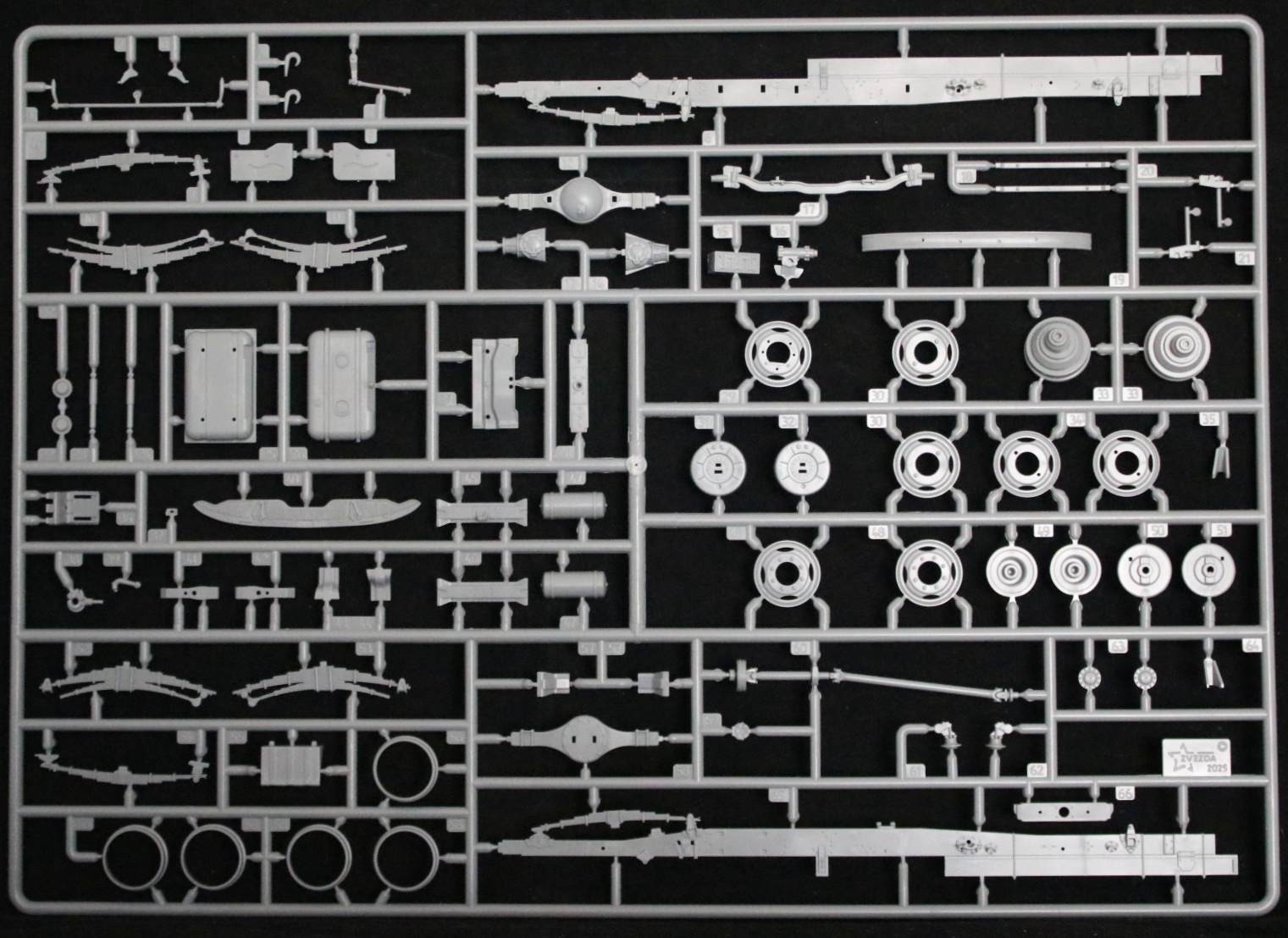
On opening the box, you are presented with four clear plastic bags. Three of these bags contain four mid grey sprues, three large and one slightly smaller, and the final bag has the seven realistic tyres, which actually have tyre size and make, though my Russian is not that good to give you the make.
One final small bag which contains a decal sheet, clear sprue with light window screen, side window indicators and lastly two silver stickers to represent the mirror.
One: a colourful sheet which shows you the painting options Zil-130, Perm region, first half of the 1980s.
Two: Zil-130 from the limited contingent of Soviet troops in the Democratic Republic of Afghanistan, MMG-7 base, Herat Province, first half of the 1980s
Three: Zil-130 of DOSAAF driving school, Tartu, Estonian SSR, first half of 1980s.
Four: Zil-130 of Tselinskiy APO Agropromtrans, Rostov Region, second half of the 1980s.
And of course, an instruction booklet.
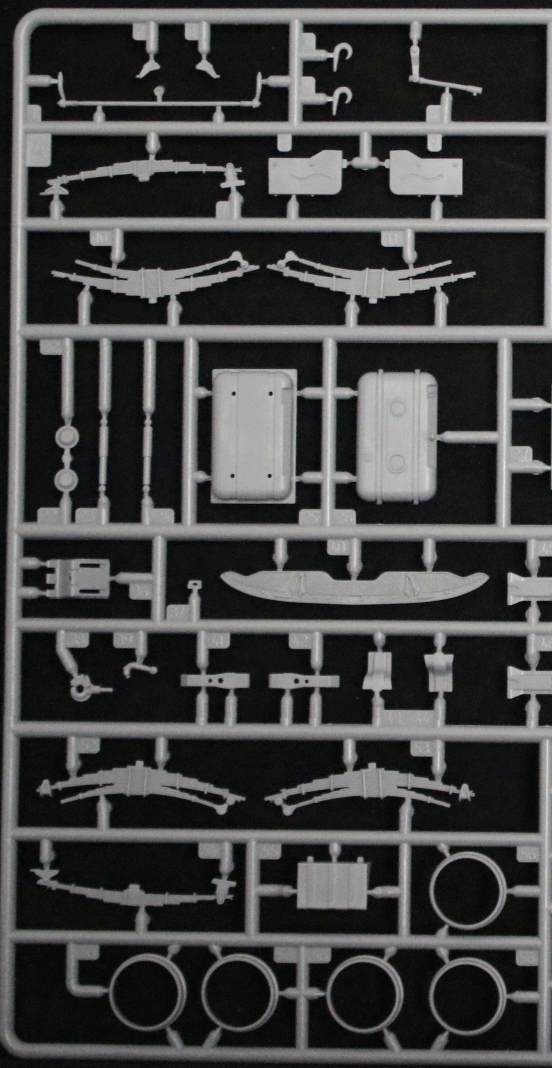
Starting with Sprue A, all parts look clear of any flash or potential issues; in fact, it is quite the opposite and looks clean, so the main part of the chassis is on the sprue and looks good with half leaf spring for the front wheels, with the other half with also being on the A sprue the leaf spring is good in detail. There are steel wheels to build in sections, enhancing the model. The fuel tank is realistic to the truck to this particular truck in its later model. Also, on the A sprue is the axle. Plus, various other smaller parts.
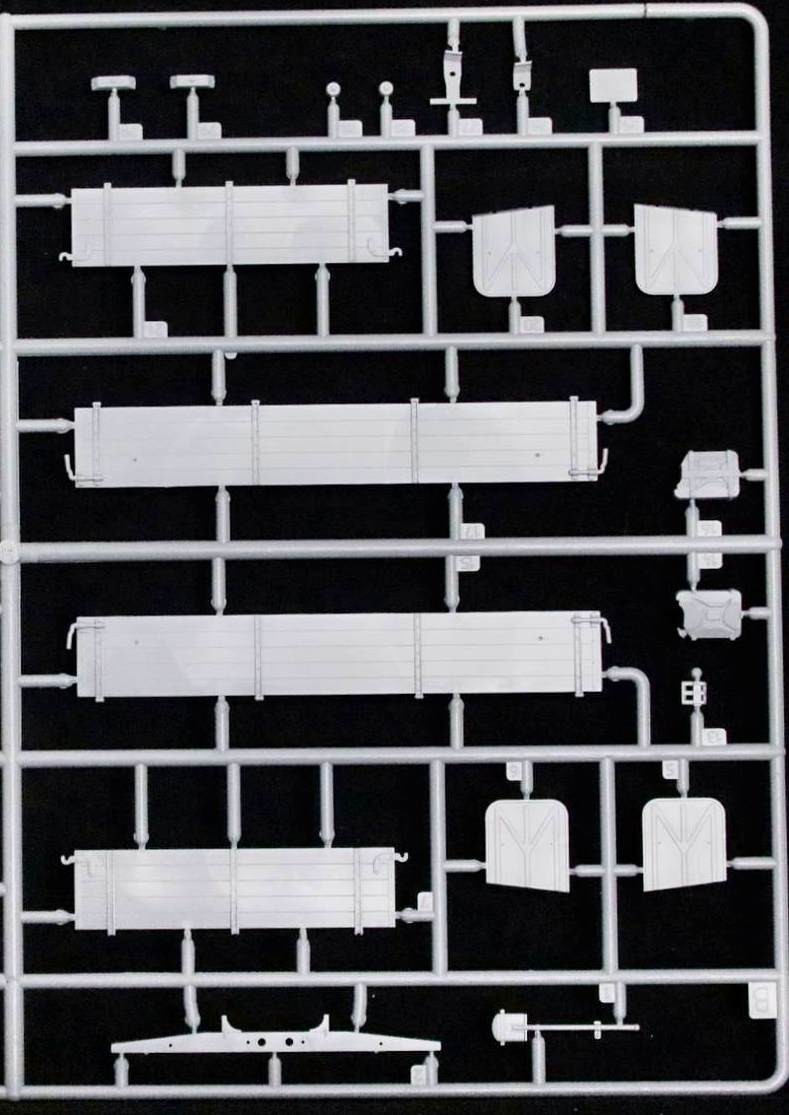
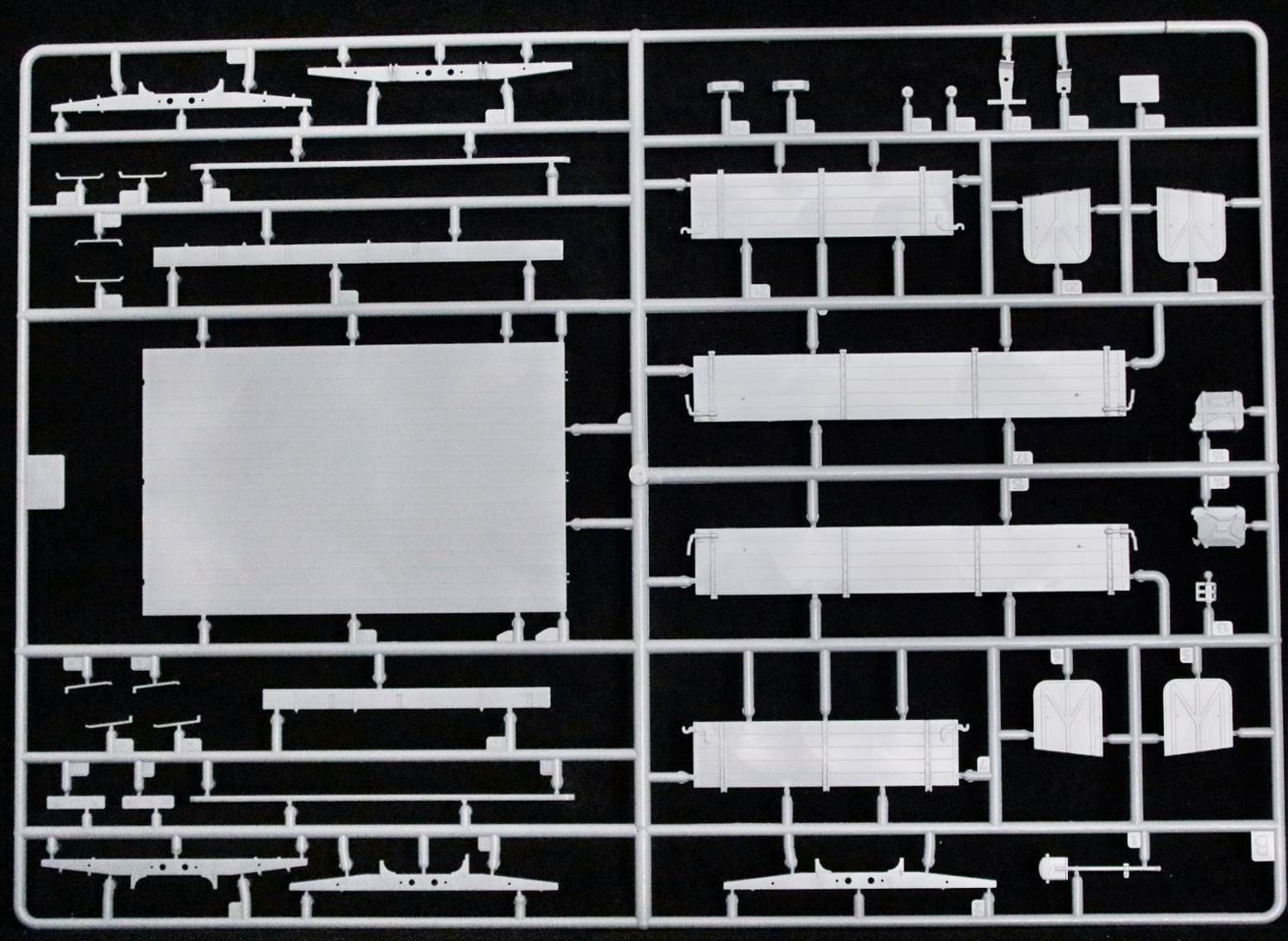
Sprue B is mainly the flatbed. When you run your finger along the flatbed, you can feel lines of fixing screws or possibly small bolts, nice touch of detail though. The side of the truck shows the wooden boards held in place by steel with a line of bolts or screws holding it all together, four of these steel fixings on each side and three on the smaller fixings on the front board and the rear tail board. A spade to be fixed onto the vehicle, a fuel can that fits underneath the flat bed, along with five chassis cross members.
Sprue C. The clear parts, of which are the wider wrap-around window screen, rear window in the cab, two side windows, head lights, and an array of smaller light lenses and rear brake, reversing and indicators.
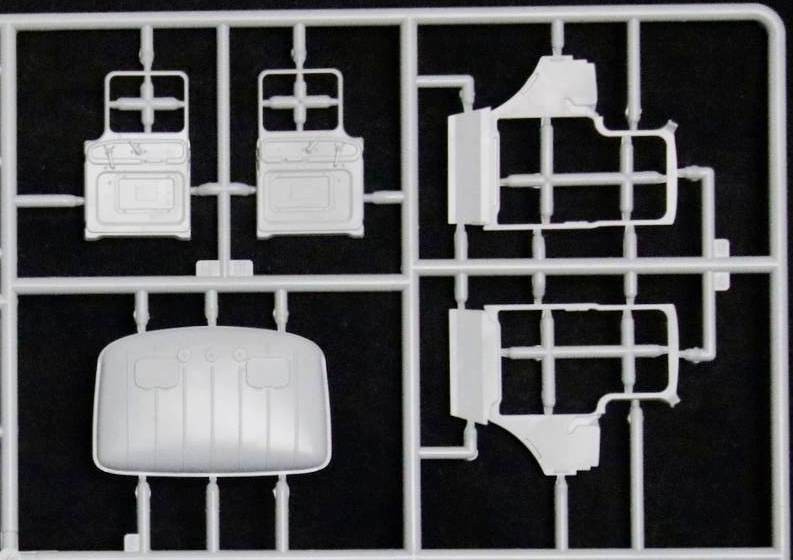
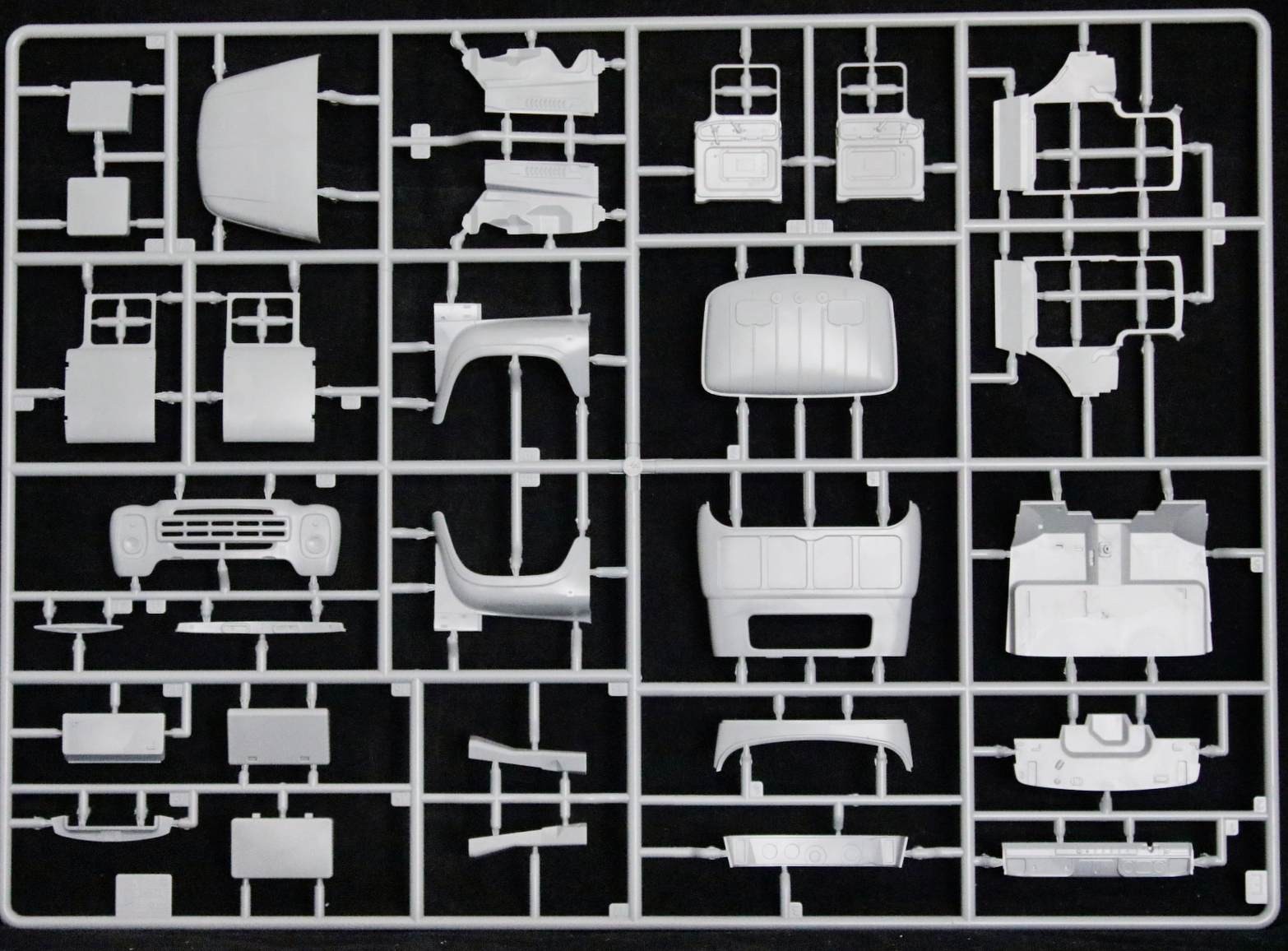
So, no sprue D, so onto Sprue F This is basically all the parts that make up the cab of the truck. I am impressed, the way they have engineered the interior of the doors of the cab. Now I was lucky enough to do a review of another Zvezda Kamaz, more modern than the Zil-130, but it was the first time I had seen the engineering where the interior of the doors was not one moulded piece. As with that one, the interior of this door is separate from the door itself, so visually it then looks like the real door but with a window winder and door release handle, so when building the actual kit, you build in the interior frame itself, then the interior to the inside of the main door. This presents a more realistic look and feel to the model.
The roof is all there in one piece, including the raised ribs on the top of the roof and even the guttering around the roof. The interior of the cab is good in detail, from what I could find on the internet.
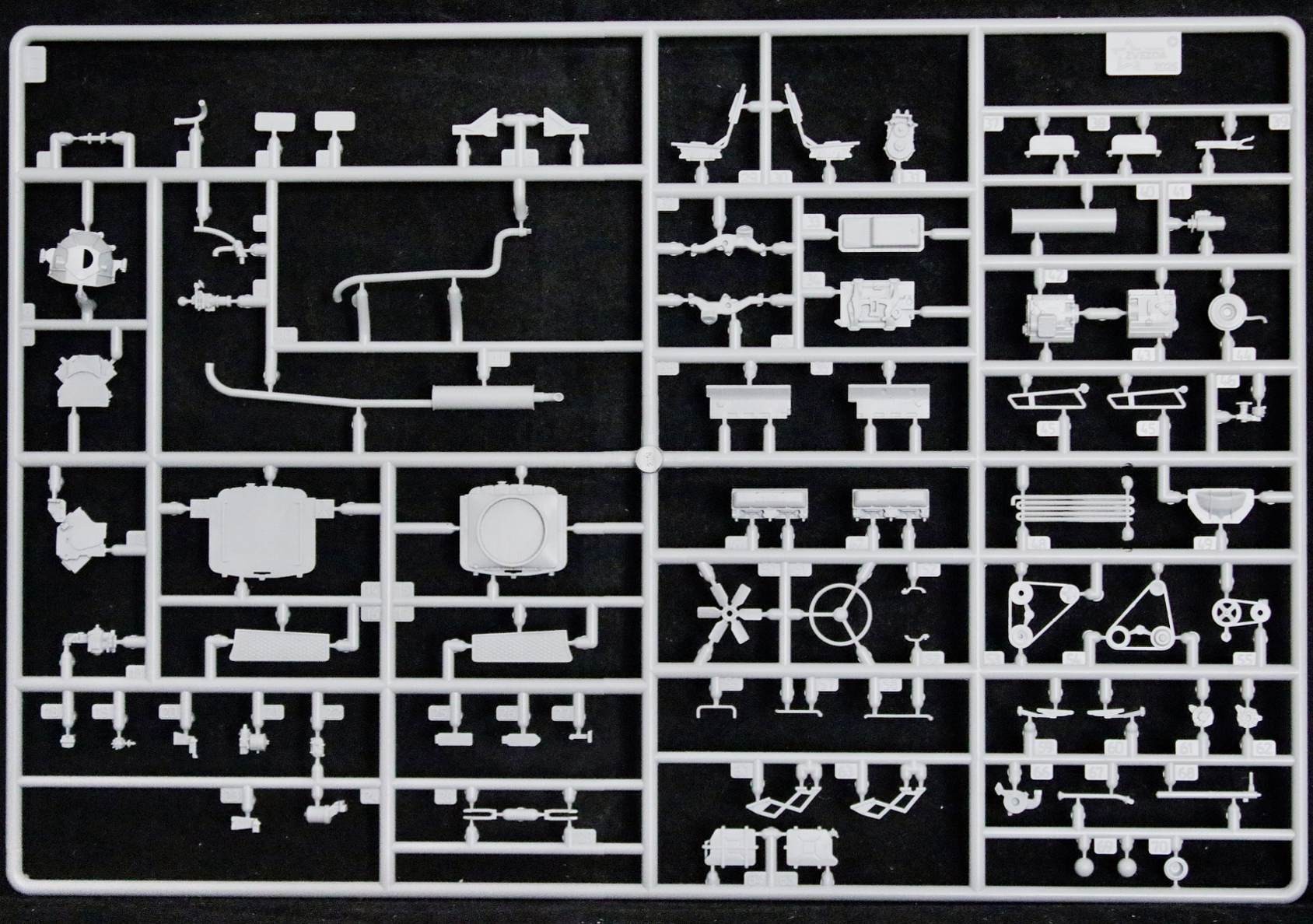
Sprue F, is a full engine and this is certainly that there are 70 different parts on this sprue, and a good lot of the parts are just engine parts possibly 50 –55 it looks an incredible build as far as the engine goes and result is going to be a wonderful spectacle and the bonnet can be left open so you can admire your own work.
Final thoughts and conclusion
The kit itself is a modern, brand-new, tooled (2025), and you can see this in the crisp moulding of this new kit. The detailing on most of these sprues is spot on. Of course, there will be some issues, as that is what happens when you're a modeller, but I don’t see too many issues, just some snags rather than issues. The engine is stunning in detail, and I would love to build it and leave the bonnet open to show off the entire under-the-bonnet build.
On a further note, I do like the decal options, which include options for two military versions me I love the whole military history and the thought of a diorama from that time of the invasion of Afghanistan, with the truck aimlessly driving on one of the provinces, with the Taliban firing an RPG at the truck. You could then have the engine displayed differently.
All in all, it is an interesting kit, new tooled with crisp mouldings with some really good detail, a few minor issues (snags), really, I think you will be impressed with this one.