












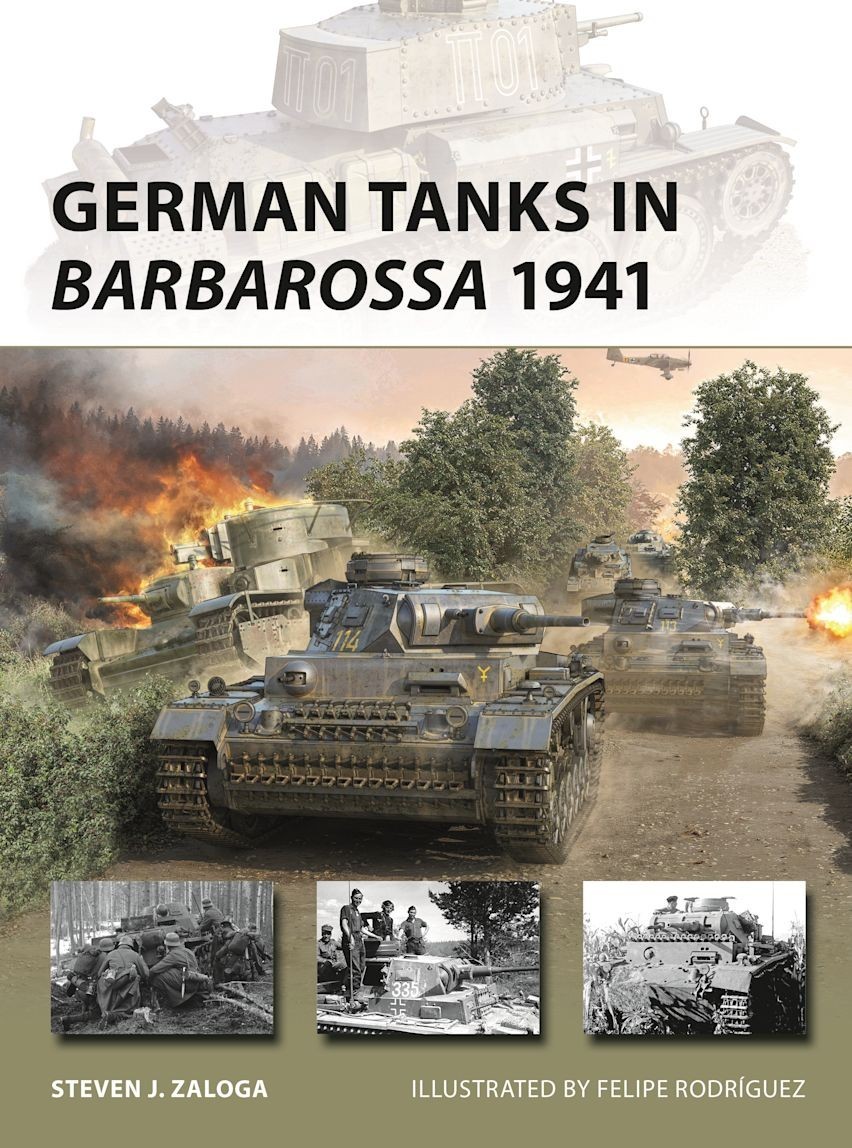
A detailed, illustrated study of Germany's Panzer forces that invaded the Soviet Union, explaining how and why they performed as they did.
Operation Barbarossa, Nazi Germany's huge and fateful invasion of the Soviet Union, was the culmination of nearly two years of European conquests. By the time of Barbarossa, Germany's Panzer forces had honed their Blitzkrieg methods of fast-moving warfare, but fighting across the wide expanses of eastern Europe would present them with their greatest challenge yet. While the Germans overran the Red Army at the start of the campaign, Barbarossa would end in failure.
Written by one of the world's experts on armoured warfare, and presenting newly uncovered data on the forces involved, this book explains the doctrine, organization, and technical capabilities of the Panzer forces, with a short overview on the armour of other Axis forces including Hungary, Romania, Slovakia, Finland, and Italy.
The speed and shock value of the Panzer divisions was essential for the Wehrmacht to prevail over the Red Army in a brief campaign of annihilation. Packed with archive photos and superb original tank illustrations, this book explains how problems with the Panzers were a significant reason for the eventual failure of Barbarossa.
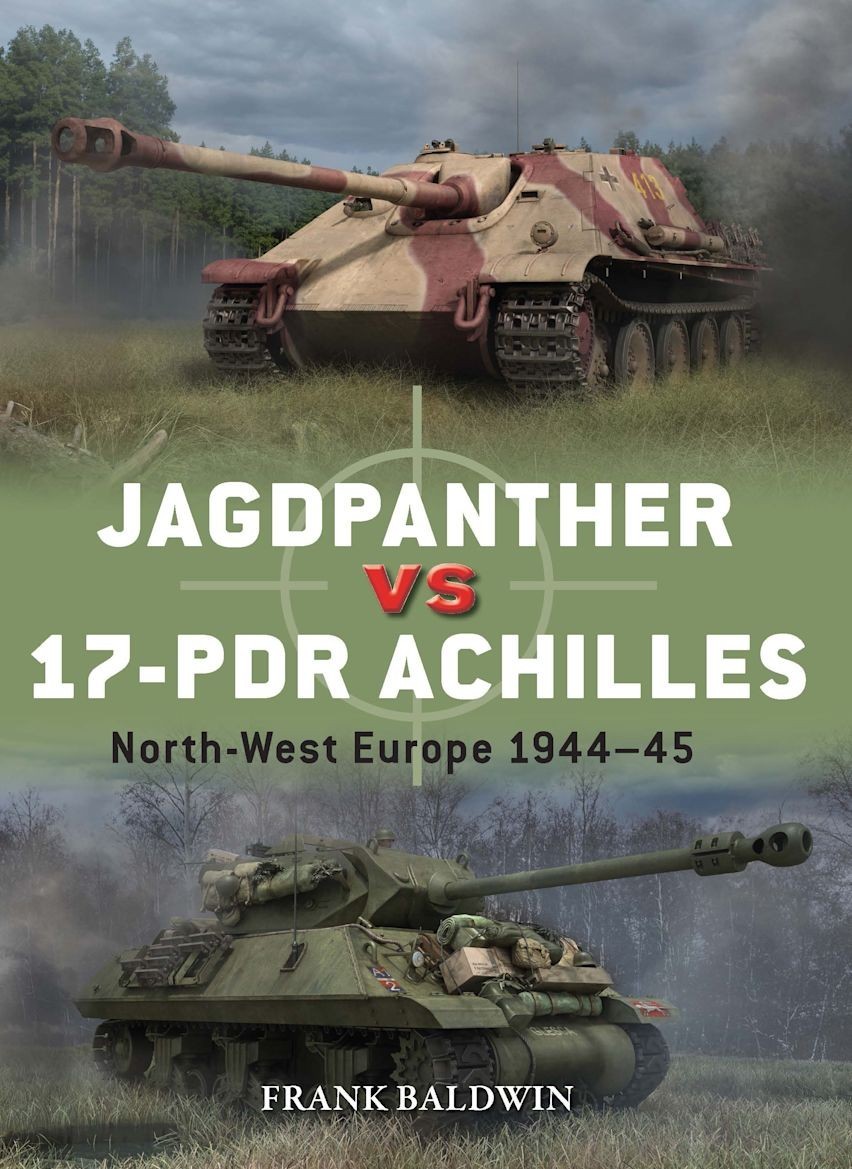
This is the story of the 17-pdr Achilles and the Jagdpanther, two formidable tracked anti-tank guns that clashed in North-West Europe during 1944–45.
Both mounting their country's most effective anti-tank ordnance on a tracked chassis, the 17-pdr Achilles and the Jagdpanther were arguably the best self-propelled anti-tank guns used by the British, Canadian and German forces that fought in North-West Europe during 1944–45. Featuring specially commissioned artwork and carefully chosen photographs, this is the story of the two types' development, combat use and legacy in the closing stages of World War II in North-West Europe.
Based upon the mobile, lightly armoured M10 design originally developed for the US Army, the Achilles had its main armament, the 17-pounder QF anti-tank gun, mounted in a fully revolving turret. Conversely, the low-profile, heavily armoured Jagdpanther had its formidable 8.8cm PaK 43 cannon mounted in a fixed casemate.
Both crewed by artillerymen rather than tankers, the Achilles and the Jagdpanther were anti-tank guns, not tanks or assault guns; their main purpose was to knock out enemy tanks, not to engage infantry or lead an assault or pursuit. Sometimes they faced each other, notably in the Reichswald fighting of February 1945. Fully illustrated, this work tells the story of their development and tactical use as well as what happened when these two very different designs met in combat.