












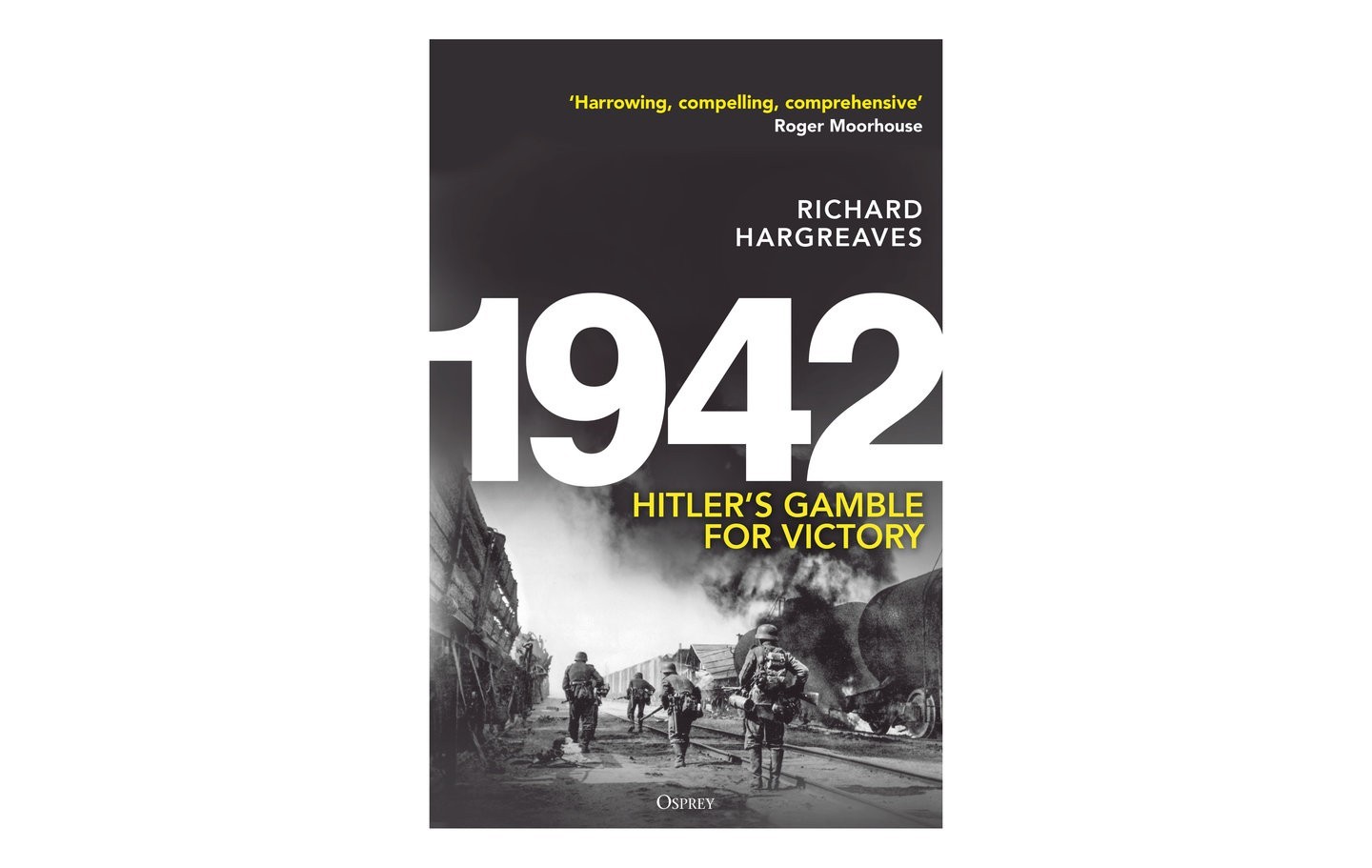
Drawing on German, Russian, Italian, Hungarian and Romanian sources, 1942: Hitler’s Gamble for Victory follows the Axis war effort from the unfinished business of the previous year’s campaigns to the dramatic reversals that concluded 1942. The story opens with the brutal battles for Kharkov and the Crimean peninsula, culminating in the fall of Sevastopol, before shifting to North Africa, where Rommel’s triumph at Gazala and the fall of Tobruk seemed to herald a decisive breakthrough.
The narrative then moves to the great summer offensive in the East – driving towards the Volga and the Caucasus, scaling the slopes of Elbrus and stretching the Axis coalition to its limits. It explores Rommel’s thrust into Egypt and the hardening British line at Alamein, as well as the frequently overlooked ordeal of the Italian, Hungarian and Romanian armies holding the Don flank. As the year turns, the book charts Rommel’s final attempt to break the Alamein position, the tightening noose around Stalingrad and the grinding combat in the Caucasus mountains. By mid-November, the Axis high tide had reached its limit. The opening Allied counter-offensives at Alamein and Stalingrad were blows that shattered both fronts and erased the gains of 1942.
Based on 15 years of research, this is the first major study to treat the Eastern Front and North Africa as interconnected theatres. Richard Hargreaves challenges long-standing assumptions, illuminates neglected episodes such as the aftermath of Tobruk and the multinational struggle on the Don, and balances strategic analysis with the human stories of the soldiers who lived and died during this pivotal year.