












HISTORY:
** The First World War marked the dawn of mechanised warfare, and while Germany entered the conflict with limited experience in armoured vehicles, by 1918 it had fielded some of the most ambitious innovations of the age. Imperial German Motorised Troops 1914–18 Volume 2 continues Jacek Zabielski’s authoritative study, focusing on the combat arms that pushed the boundaries of technology: anti-aircraft artillery, armoured cars, and tanks.
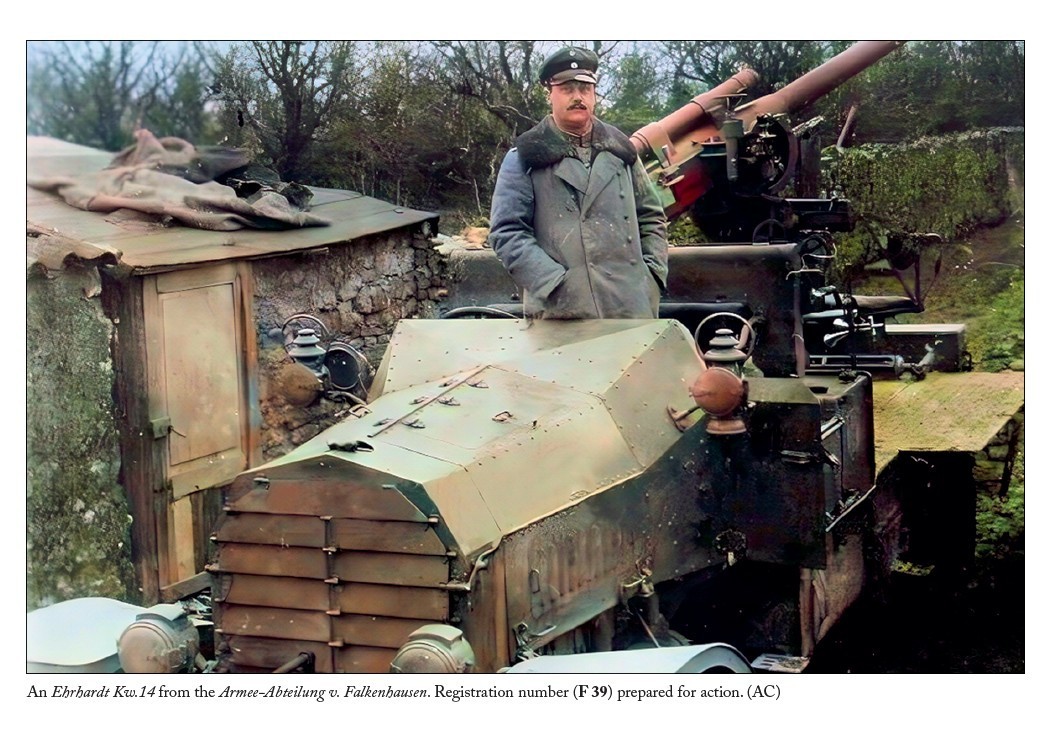
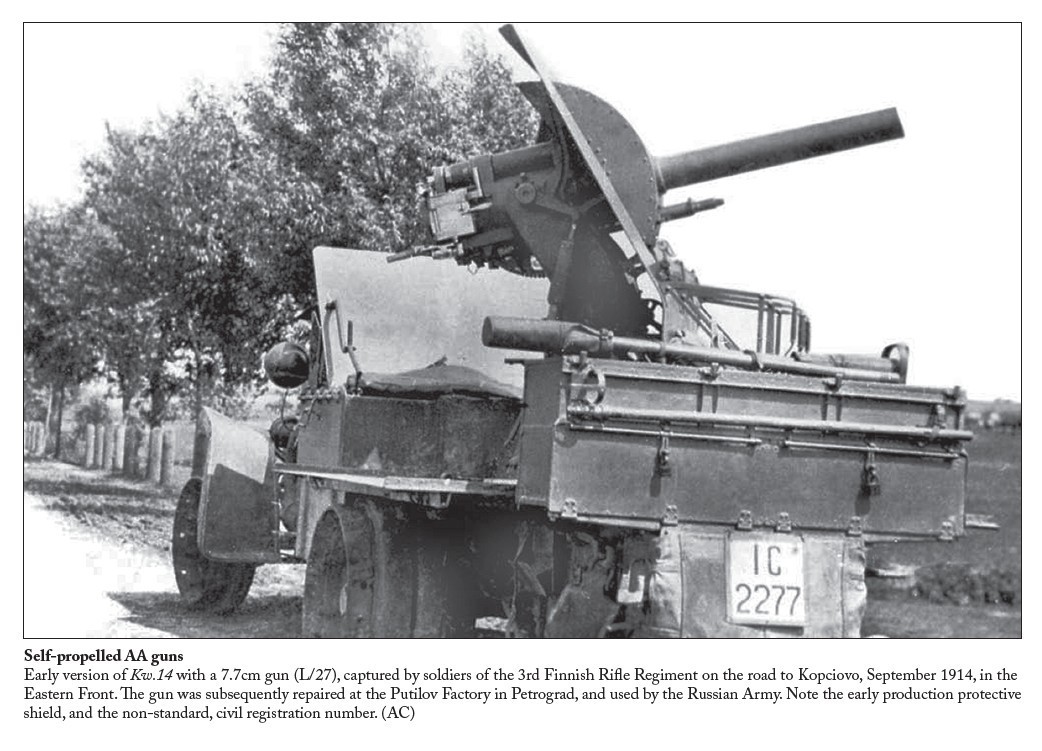
Drawing on German-language sources, wartime records and rare photographic archives, the book traces the emergence of self-propelled anti-aircraft batteries, beginning with experimental truck-mounted guns and culminating in the pioneering tracked Flakpanzer conversions. It charts the establishment of Germany’s armoured car platoons, from improvised vehicles in 1914 to the purpose-built Daimler, Ehrhardt and Büssing machines that fought on the Western, Eastern and Romanian fronts. The evolution of tactics, organisation and technical design is covered in detail, alongside the combat record of these early mechanised formations.
Central to the volume is the story of the Sturm-Panzerkraftwagen-Abteilungen—the assault tank detachments that operated both Germany’s own A7Vs and a range of captured Allied tanks. Although the A7V was produced in only small numbers, these machines, together with the repurposed British and French vehicles pressed into service, symbolised Germany’s late-war attempt to rival and adapt to Allied armoured innovation. The book examines their development, training and battlefield employment during 1918, as well as the formidable challenges of maintaining and integrating such diverse machines within an army still largely reliant on horse-drawn transport and traditional artillery.
Beyond the machines, Zabielski explores the human dimension: the uniforms, equipment and personal weapons of the motorised and armoured troops, illustrated with unique photographs that capture both the technical details and the daily realities of service. Appendices provide valuable reference material, including technical specifications of key vehicles and a development timeline of German mechanised projects from 1914–18.
Richly illustrated with hundreds of rare and previously unpublished images, Volume 2 offers the most complete portrait yet of Germany’s motorised and armoured forces in the Great War. Together with Volume 1, it forms a definitive two-part history of a formative but neglected branch of the Imperial Army. Essential for military historians, researchers, and enthusiasts of early armoured warfare, it reveals how Germany’s mechanised troops helped shape the future of twentieth-century combat. **
** Quoted from the back cover of the book and the Helion and Company web site.
THE BOOK:
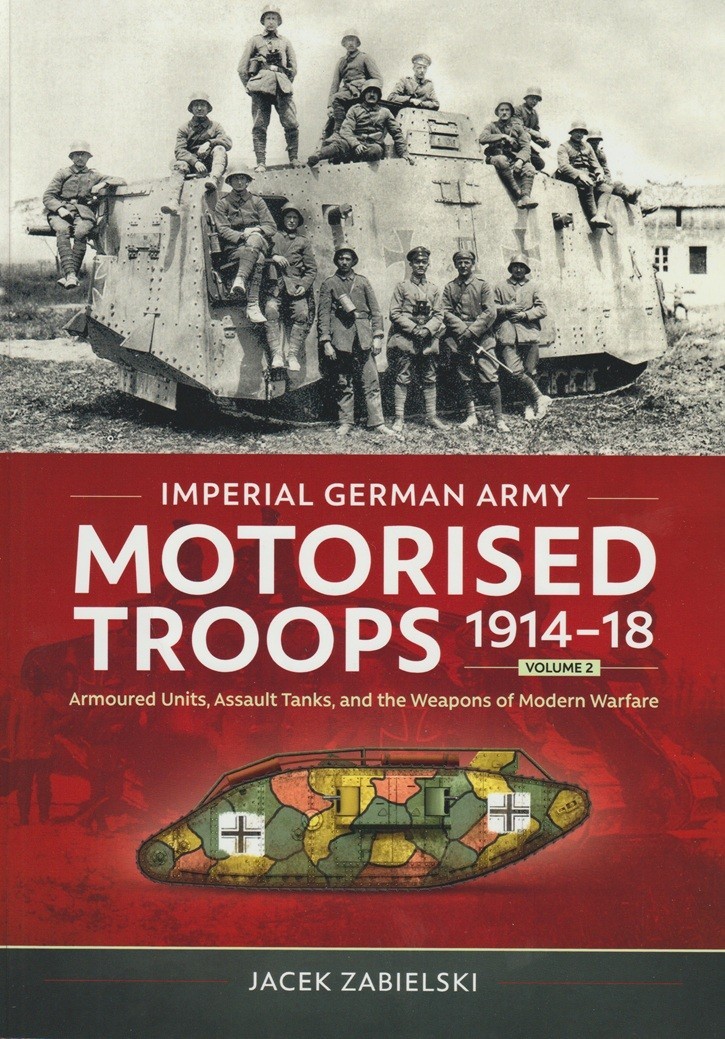
Helion and Company has released Imperial German Army Motorised Troops 1914-18 Volume 2
Armoured Units, Assault Tanks, and the Weapons of Modern Warfare as a 126-page softcover book, 8.3 x 11.7 inches in size. Included with the text are black and white and color photographs, color illustrations, informational diagrams and more. The book has a 2025 copyright, a publication date of October 14, 2025, and the ISBN is 978-1-804517-65-9.
CONTENTS:
Glossary
Abbreviations used in text
Introduction
1. Motorized Anti-Aircraft Artillery
1.1 Self-propelled guns
1.2 Motor-towed guns
1.3 Tracked self-propelled guns
1.4 Searchlight platoons
1.5 Motor vehicles vs horses
2. Armoured Car Units
2.1 Organization and equipment
2.2 First blood in the West
2.3 The Romanian front
2.4 Lessons learnt
2.5 The first expansion
2.6 Captured armored cars
2.7 The second expansion
2.8 Germans drive to the East
3. Assault Tank Detachments
3.1 Development of armored fighting vehicles
3.2 Organization, training and tactical approach
3.3 Tanks in action
4. Uniforms, Personal Equipment and Weapons
Pre-war (parade) uniforms
Straps and emblems
The Kraftfahrtruppen (Motorized Transport Troops) uniform specific elements (1914)
Field uniform
Headdress
Black leather suit
Work overalls
Armored fighting vehicle crew dress
Personal weapons and equipment
Afterword
Appendices:
I Technical specifications of selected fighting vehicles
II Development Timeline of Selected German Motorized Vehicles (1914-1918)
Bibliography
THE TEXT:
Author Jacek Zabielski provides a well written and informative text detailing the armored units, tanks and weapons used by the Imperial German Army’s motorized troops during World War I. The text goes into very specific detail in all areas of the book as outlined on the contents page, please refer to the contents listing that I have provided for the subjects that are covered throughout the book. I did notice that the individual sections in Chapter 4 are not individually numbered as the subjects in Chapters 1 through 3 are. I do not know if that was an error or was intentional. The author did not do an overall history and use of vehicles lumped into generalized basic information type of writing. The author has separated each of the vehicles and gives a history of each vehicle individually such as who produced it, numbers produced, which military component received the vehicle and what the vehicle’s intended role was to be and what they were used for, vehicle successes and failures and any design faults found and what was needed to correct them. Also discussed are vehicles that were taken from civilian service and placed into military service and what changes needed to be made to them as well as the use of captured equipment from militaries such as the British and French. Other information provided includes subjects such as manufacturing number shortages, weapon rates of fire, locations where the various vehicles were delivered, vehicles crew sizes and their individual roles and other such information. Author Jacek Zabielski doesn’t use what I refer to as fluff writing where a large amount of non-essential extra text is provided just to help fill the pages. As I read through the text, I didn’t notice any spelling or grammatical errors. Grammar and spelling might not be an important factor to everyone however it is something that I take notice of and pass on my findings. I feel that author Jacek Zabielski has covered the armored units, tanks and weapons used by the Imperial German Army’s motorized troops during World War One very well and has provided the information in an easy-to-read format which the detailed oriented reader will benefit from.
THE PHOTOGRAPHS:
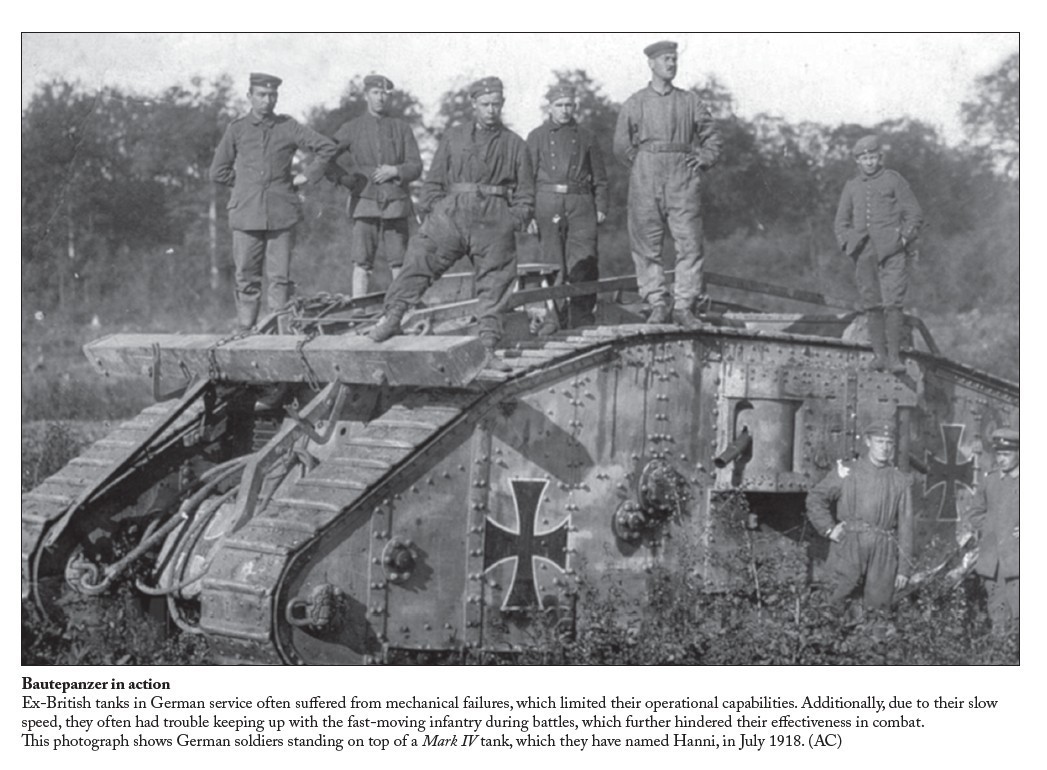
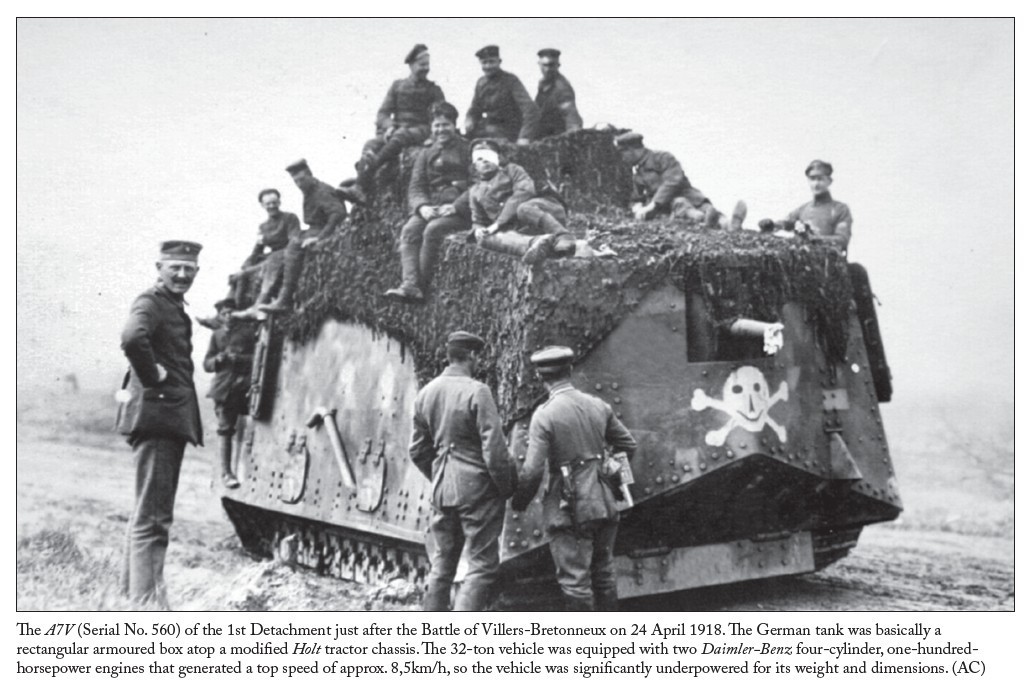
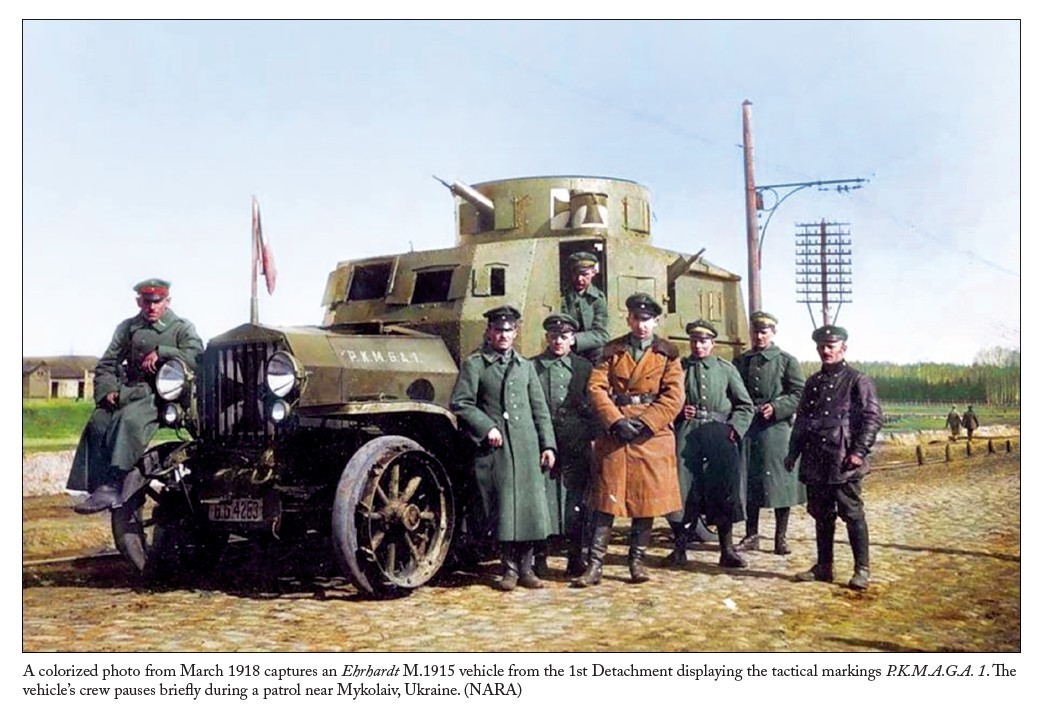
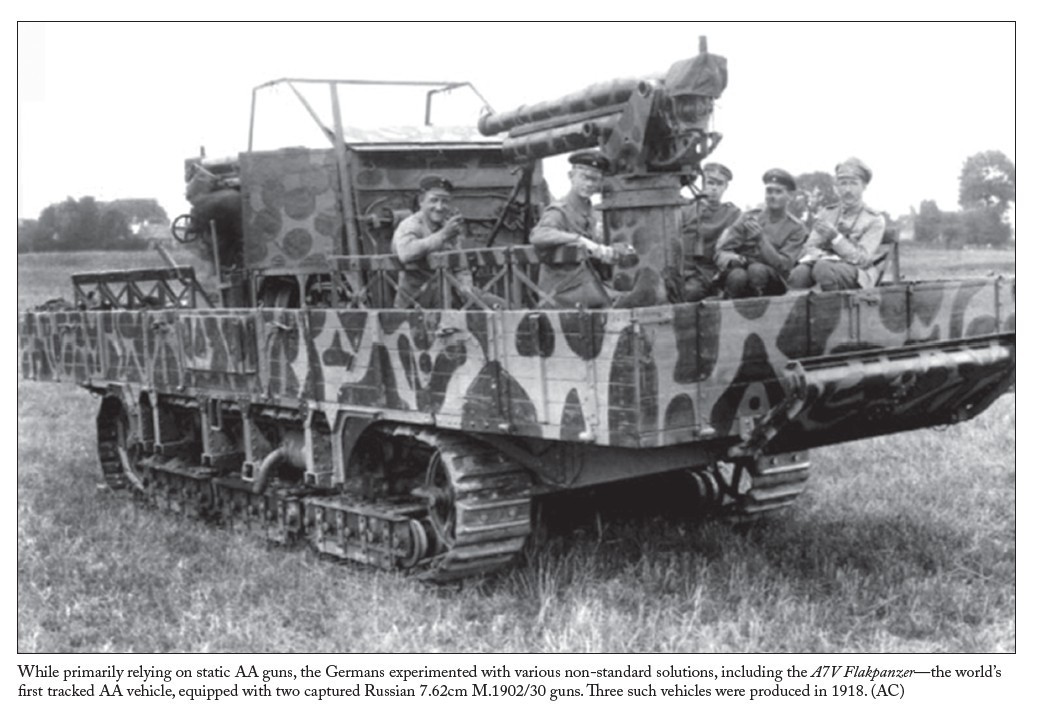
A total of 187 black and white photographs and 5 color photographs are featured in this volume. Author Jacek Zabielski chose subject specific photographs and did not include photographs that strayed from the main subject of the book. The majority of the photographs are static, posed for the photographer type of images. The photographs range from wide angle photographs to close-up detailed photographs. Most of the photographs are clear and easily viewable; however, a few of them are somewhat blurry and a few of them appear to be too dark, while others appear to be too light. This can be typical for the period of history being discussed, and the quality of the photographs is of no fault of the author, and they do not take anything away from the book and the fact that they are over one hundred years old should be taken into consideration. I have seen a few of the featured photographs in other publications dealing with the same subject matter, however the vast majority of them were new to me. The book contains a wealth of period photographs of subjects such as tanks such as the German A7V and the LK 1 and LK II as well as tanks of British manufacture captured by the Germans such as the Mark IV and the Whippet Mark A, numerous types of trucks mounted with anti-aircraft guns, armored cars to include those that were factory produced as well as makeshift field modifications to existing vehicles. Also shown are trucks used as prime movers for artillery pieces, horse drawn equipment such as artillery pieces, staff cars, wagons and wagon mounted searchlights, railcars, small arms, uniforms to include footwear and head gear, etc. The photographs also include images of damaged and wrecked vehicles as well as early camouflage patterns and tactical markings. The majority, if not all, of the photographs will prove to be of great interest, and excellent reference material, to the scale modeler as well as to anyone interested in the armored units, tanks and weapons used by the Imperial German Army’s motorized troops during World War I, due to the details they contain.
ILLUSTRATIONS:
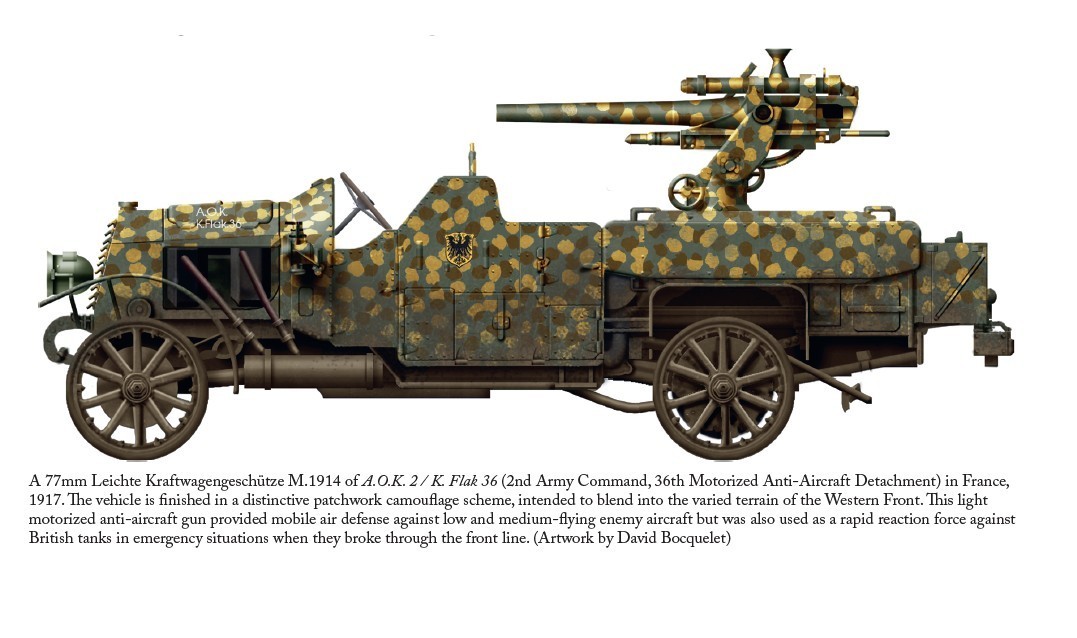
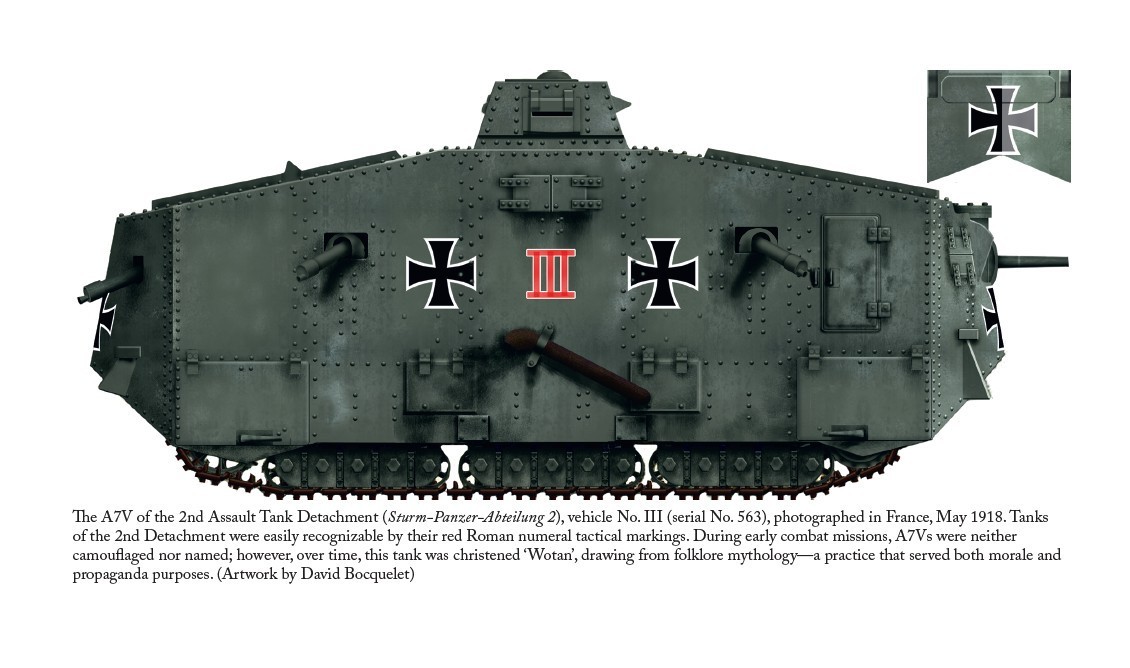
There are 9 color illustrations included in the volume by illustrator David Bocquelet. The illustrations are very well done, nicely detailed and are all left and right-side profile illustrations of:
1. Beutepanzer Mark IV (‘Fritz’)
2. Beutepanzer Mark IV
3. Ehrhardt E-V/4 M.1917
4. Bussing M.1915 A5P “Grobetier’
5. A7V, vehicle no. 5
6. A7V, vehicle no. III
7. Towed 8.8cm cannon
8. A7V Flakpanzer armed with two captured Russian 76mm guns
9. 77mm Leichte Kraftwagengeschütze M.1914
There is also a color illustration showing the colors and markings of the Motorized Transport Troops. The illustration show the parade uniform colors and markings as well as those of the field uniform.
THE CAPTIONS:
The captions are well written and explain the accompanying photographs nicely. The captions go into very specific detail as to the actions taking place, dates and locations, type of vehicle shown, its country of origin, who manufactured it, its model number, the color of the vehicles as well as their role in the military. The captions also detail various weapons shown and their caliber, military units, vehicle markings and other such information. As I read through the captions, I didn’t notice any spelling or grammatical errors. I was impressed by Jacek Zabielski’s captions as they are very helpful to the reader due to their detailed content as opposed to other captions that I have seen that are very brief and lacking in detail.
INFORMATIONAL CHARTS:
There are 4 information charts provided in this volume and they provide information on:
1. Order of Battle – Assault Tank Detachment / Sturm Panzer Abteilung
2. Order of Battle, Assault Troop Battalion / Sturmabteilung
3. Organizational structure of the Imperial German Troops of the First World War
4. The Kraftfahrtruppen (Motorized Transport Troops) uniform specific elements (1914)
CONCLUSION:
As with the other Helion and Company titles, I was impressed with this book. It is a very nice reference book that contains a well written informative text, many subject specific photographs, well detailed captions and more, all detailing the armored units, assault tanks and weapons used by the Imperial German Army’s motorized troops during World War I. This title is a nice companion to Jacek Zabielski’s book, Imperial German Army Motorised Troops 1914-18, Volume 1, Origins, Organization, and Mechanical Innovation in the Great War. I would have no hesitation in recommending this book to others as it will be a welcome addition to one’s personal military reference library.
PRICE:
UK £25.00 / US $39.95
https://www.casematepublishers.com/
This book, from Helion and Company, was provided to me by Casemate Publishers. Please mention that you saw the book reviewed here on the KitMaker Network when making your purchase. Thank you.