












US and Allied Special Operations Forces in Afghanistan, 2009–21
An illustrated study of the development and operations of coalition and Afghan Special Operations Forces in Afghanistan from 2009 until the withdrawal in 2021.
At the end of 2008, the clearly inadequate strength of the coalition's International Security Assistance Force (ISAF) in Afghanistan prompted the US and NATO to deploy troops in numbers that could not be sustained long-term. This shortfall was overcome in 2009, when a newly created Special Forces command (ANASOC) in the Afghan National Army began to partner with the ISAF to undertake counter-insurgency operations against the Taliban, Al-Qaeda and ISIL-K. However, while the burden of operations never diminished, many NATO countries reduced their contribution from 2012 onwards, leading to an over-ambitious expansion of ANASOC and weaker ties between it and US/NATO command.
In this engaging study, former United States Marine Corps officer John Parkinson draws on first-hand experience to examine how this series of events spiralled toward the eventual fall of Kabul and the troubled, hasty withdrawal of coalition forces in 2021. Eight newly commissioned colour plates demonstrate the wide range of equipment and uniforms used by the Special Operations Forces and are complemented by a range of previously unpublished photographs.

Soviet Tanks at Stalingrad 1942–43
Examines and analyses how the Soviet tank forces that fought at Stalingrad were rejuvenated in the months leading up to the battle, and the role they played in this iconic campaign.
The Stalingrad campaign was a major turning point of World War II. The German Sixth Army's 22 divisions and 250,000 troops were encircled and destroyed, while the Soviet 62nd Army's desperate defense of the city and the suffering of the starving German troops receives much justifiable attention.
Here, Soviet armor expert William E. Hiestand draws attention to the less-covered element of the battle: the reborn Soviet tank and mechanized corps that delivered the death blow to Hitler's hopes. He explains how in summer 1942, the Soviet tank forces were failing to reach their potential; despite being equipped with superb T-34 and heavily armored KV-1 tanks, the Red Army's newly formed tank corps were unable to integrate their armored thrusts with supporting infantry and artillery, and their disjoined attacks were repeatedly shattered. By November 19, however, Soviet organization, command and control, training, and tactics had matured, allowing the Fifth Tank Army to launch the decisive penetration through the Romanian Third Army.
Packed with rare archive photos and superb profiles of the tanks involved, this book shows that it was at Stalingrad that the Red Army's armored spearhead evolved into a force that could dominate the Eastern Front.
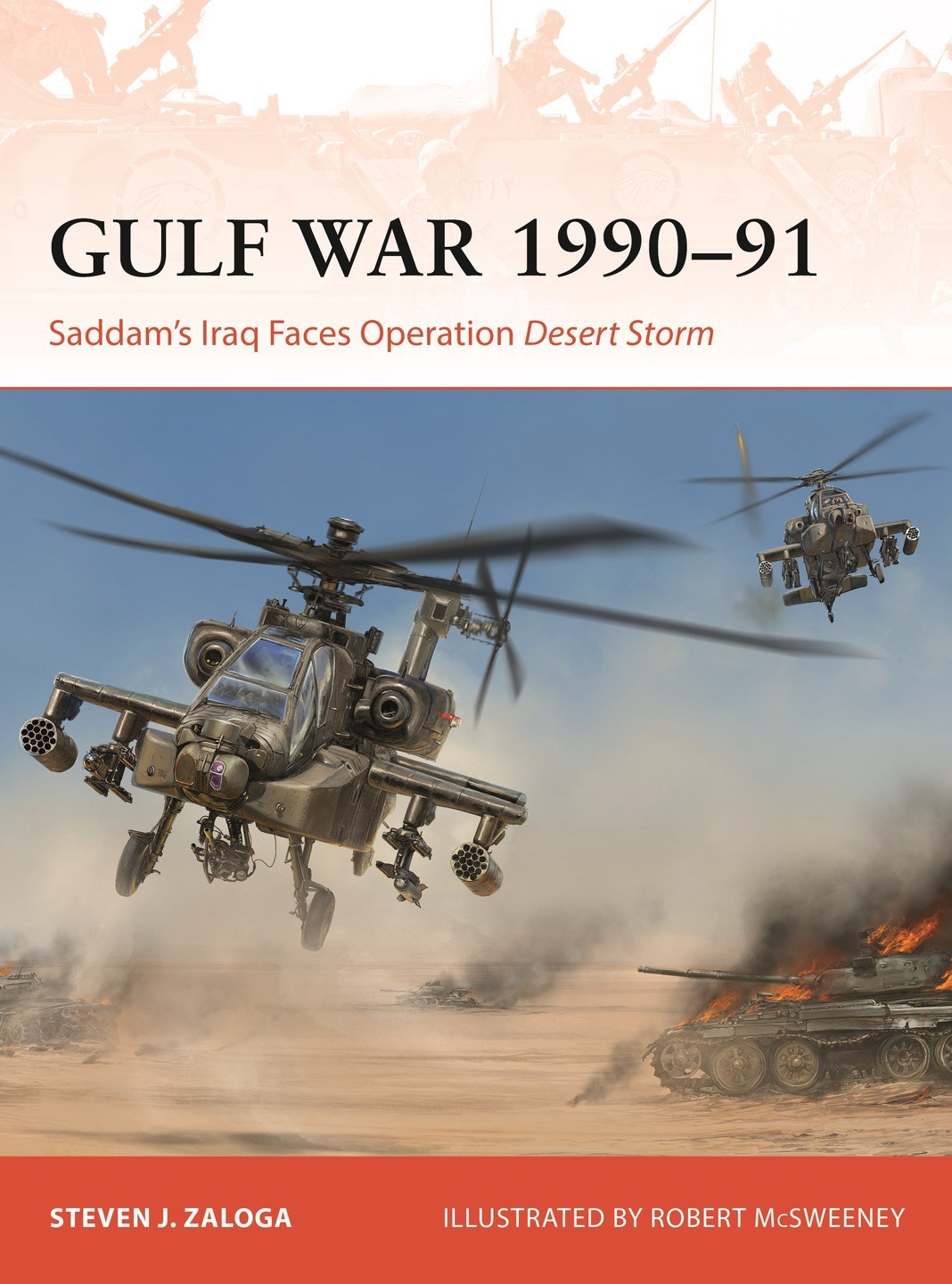
Gulf War 1990–91
An in-depth study of the ground campaign led by the US and Coalition forces against Iraq in the Gulf War.
In 1980, Iraq invaded Iran, precipitating an eight-year war. By the end of the 1980s, Iraq was bankrupt, having amassed enormous debts, and oil-rich neighboring Kuwait, which Iraq had long claimed was rightly part of greater Iraq, seemed like the perfect solution. Saddam Hussein's invasion in August 1990 pitted one of the largest Arab armies against the smallest and Kuwait fell in a few days. Upset at this turn of events and worried about Hussein's military power, Saudi Arabia began negotiations with the US, UK and France to create a coalition to oust Iraq from Kuwait. More than 30 countries joined the coalition force. Operation Desert Shield had begun.
With contemporary images, maps, diagrams and stunning artwork, this book by expert historian Steven J. Zaloga dives into the response from the forces of the Coalition to help liberate Kuwait following the month-long air campaign to weaken the Iraqi forces. While Iraq was defeated, the war did not unseat Hussein and the conflict would resume a decade later. This detailed study brings the ground campaign of the Gulf War to life.
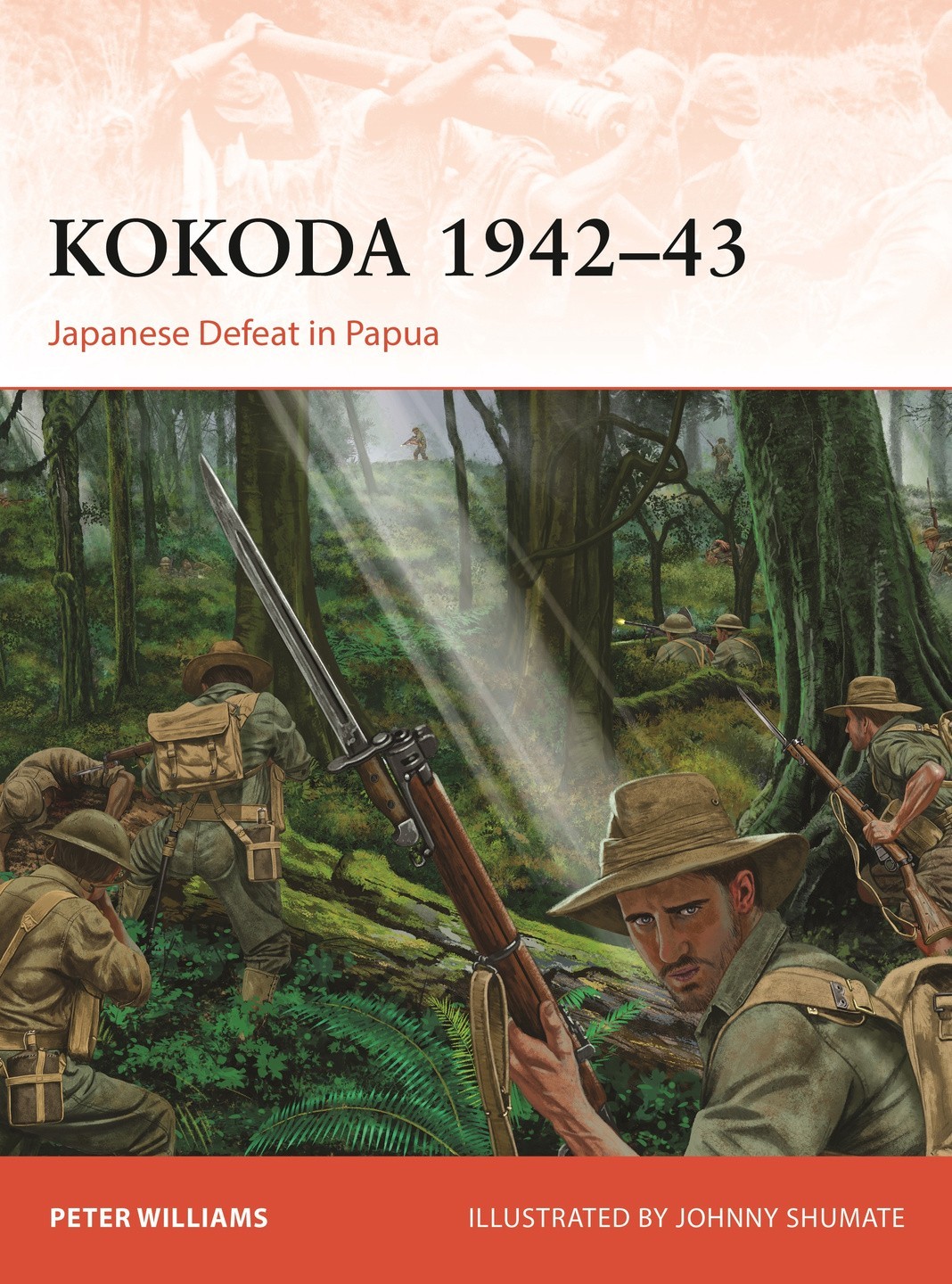
Kokoda 1942–43
An in-depth look at the battles at Kokoda, Milne Bay and Buna-Gona, which saw the Japanese battle the Australians and Americans on Papua.
The Japanese invasion of, and ejection from, the Territory of Papua was a six-month long campaign. From July to September 1942, the Japanese, having landed at Buna, advanced towards Port Moresby along the Kokoda Trail (or Track). They were opposed, at first, by Australian militia and later by Australian veterans of the war in North Africa. In September, a Japanese operation intended to support the advance was defeated at Milne Bay. By November, the Japanese had been driven back to their starting point, where, in a two-month siege, American troops joined the Australians to eliminate the Japanese beachhead at Buna.
With detailed maps, colourful artwork and period images, historian and Kokoda expert Dr Peter Williams examines the strategies and tactics of both sides, along with the limitations terrain, disease and weather imposed on the armies. It also covers the struggles of the American–Australian alliance, both at high command and on the battlefield. Along with Guadalcanal, the Papuan campaign marks the end of the Japanese advance in the Pacific, and the beginning of the Allied counter-offensive.